
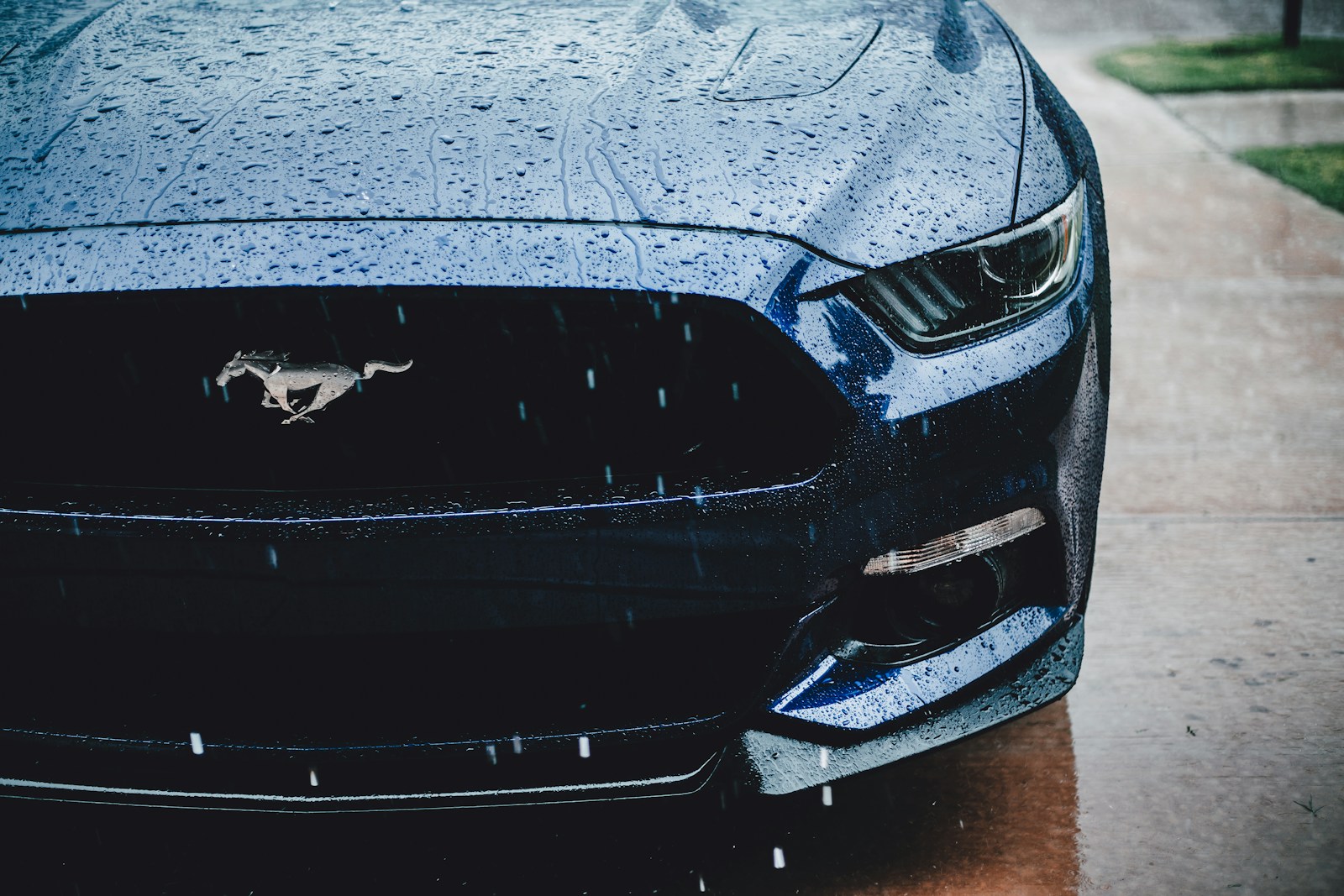

He pitched it like a responsible upgrade, the kind of purchase you tell yourself is basically a parenting decision. A “safer car,” a “more reliable car,” something with “room for everyone,” even though everyone already had a perfectly functional SUV sitting in the driveway. Then, one Friday afternoon, he rolled in with a brand-new Mustang and a grin like he’d just won something.
His wife didn’t even have time to process the color before he started selling it. He kept calling it “our new family car,” emphasizing our in this deliberate way, like he was smoothing down any objections before they popped up. She stared at the coupe shape, the low stance, the shiny wheels, and did the mental math of car seats, grocery runs, and winter weather. He kept talking, fast, like the longer he spoke, the more true it would become.
For about twenty minutes, it almost worked. She smiled, ran a hand along the door, and asked practical questions the way spouses do when they’re trying to meet the other person halfway. Then she said, casually, “Cool—so when do I get to drive it?” And he blinked like she’d asked to borrow his phone password.
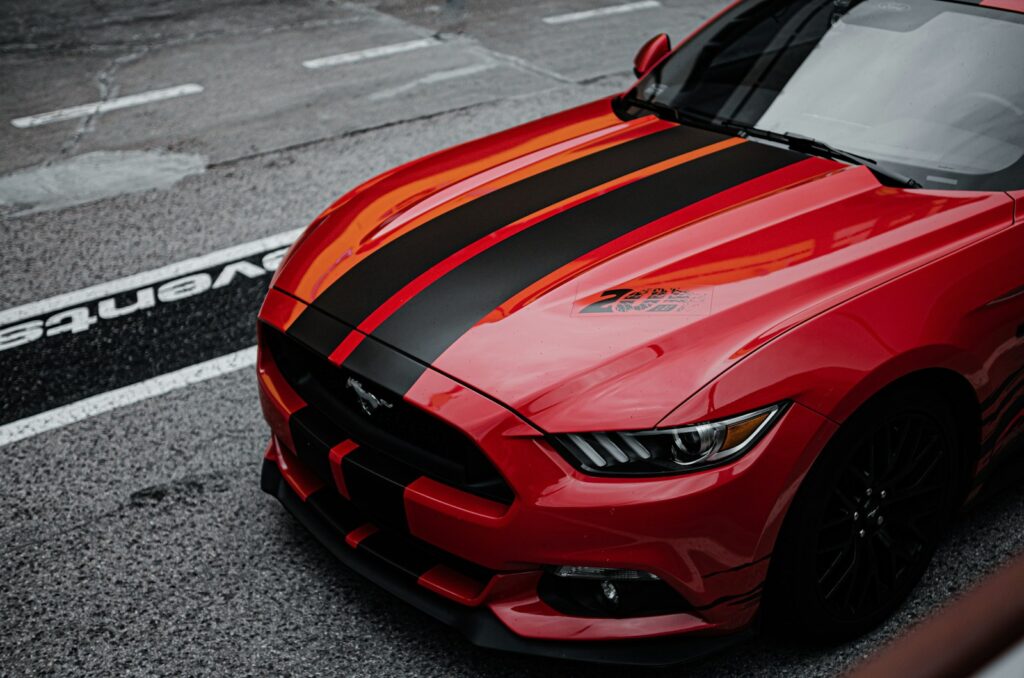
The “family car” pitch that didn’t match the car
The Mustang, according to him, wasn’t a midlife thing or a splurge; it was an “investment” that would “hold value” and “be fun for trips.” He’d apparently been watching videos, comparing trims, and working himself up for months, but he framed it to her as a spontaneous deal he “couldn’t pass up.” The financing paperwork was already done, the plates were temporary, and the salesman’s little keychain tag was still on the fob.
He also kept repeating one particular line: “I did this for us.” Not in a romantic way—more like a preemptive defense. She didn’t like how quickly he switched between “we needed it” and “I deserved it,” depending on which sentence he was in. The SUV was “too boring,” he said, and the Mustang would “make driving enjoyable again,” which sounded suspiciously like he was talking about himself.
Still, she tried to be a good sport. She asked if they were selling the SUV or keeping it as the “actual family car.” He said they’d keep it “for now,” but the Mustang would be the main vehicle because it was “newer” and “nicer.” That was when she made the mistake of treating it like a shared purchase and reached for the keys.
The moment she asked to drive, the story changed
He didn’t snatch the keys, not exactly, but he did that subtle-body-language thing: pivoted his hip, tucked his hand behind his back, and laughed like she was joking. “Oh, you don’t want to drive this,” he said, smiling too hard. She laughed too, waiting for the punchline, and he kept going. “It’s touchy. The wheels are… you know. Easy to mess up.”
She asked what he meant by “easy to mess up,” and he said it like it was common sense: curb rash. Scratched rims. “Those wheels are expensive,” he added, suddenly serious, like she’d threatened to take a hammer to them. Then came the line that made her stomach drop: “I just don’t want you to scratch them.”
It wasn’t even just the words, it was how casually he said it—like this was a known risk associated with her as a person. She asked if he thought she was a bad driver. He didn’t say yes, but he didn’t say no either; he did that soft dodge, the one that’s basically a yes with extra steps. “You’re fine,” he said. “It’s just… this car is different.”
She reminded him she’s been driving for years, that she parks the SUV just fine, and that she’s never had a rim incident in her life. He shrugged, still smiling, still holding the keys. “Let’s not make it a thing,” he said, which was an impressive move considering he’d just turned it into a thing.
Control disguised as caution
Later that evening, the Mustang sat in the driveway like a shiny prop in the middle of a marriage argument. He went out twice just to “look at it,” like checking on a sleeping baby, except this baby had racing stripes and a monthly payment. When she followed him out and asked again—calmly—if she could take it around the block, he sighed like she was asking to borrow his toothbrush.
He switched tactics. Now it wasn’t just the wheels; it was the insurance. “It’s complicated right now,” he said, even though earlier he’d bragged about “getting a great rate.” Then it was the break-in period: “It needs to be driven a certain way at first.” Then it was traffic: “It’s dark out, people drive crazy.” Each reason sounded plausible for about three seconds until it stacked on top of the last one and became obviously about one thing: he didn’t want her behind the wheel.
She asked, directly, if this was his car or their car. He answered like a politician. “It’s for the family,” he said again, and for the first time she heard the edge under it, the irritation that she wasn’t accepting the script. When she pointed out that “for the family” usually includes letting the other adult in the family drive it, he rolled his eyes and said she was being dramatic.
The conversation turned into one of those fights where the actual topic (wheels) is just the wrapper around something uglier. She said it felt disrespectful and controlling. He said she was making him the villain for wanting to protect an expensive purchase, and that she should be happy he “got them something nice.” The word “them” did a lot of work there, like he’d bought a gift for the household instead of a toy for himself.
The weekend test: errands, keys, and little humiliations
By Saturday morning, the Mustang had become the center of their routine in the worst way. They needed groceries, and she suggested taking the new car since it was, allegedly, “the family car.” He said the trunk was too small for a big run, then grabbed the SUV keys like that settled it. On the way there, he kept glancing at the Mustang in the rearview mirror as they backed out, like leaving it alone was a sacrifice.
When they got home, she watched him pull the Mustang forward a few feet to “keep it out of the sun,” which was a new concern she’d never heard him express about any other car. He wiped a spot off the hood with the edge of his sleeve, frowning like the paint was fragile. Then he pocketed the keys again, out of habit, out of ownership. That was the part that landed for her: he wasn’t thinking of it as shared property even for a second.
She asked him what would happen if she needed to take a kid to urgent care or run an emergency errand and the SUV wasn’t available. He waved it off. “Then you take the SUV,” he said, like that was a complete answer, ignoring that the Mustang was supposed to be the main vehicle now. The logic had shifted again: the Mustang was “for the family” when he was justifying buying it, but it was suddenly “too precious” when she wanted access to it.
At one point, she tried a different angle and asked if he’d at least show her the features—lane assist, backup camera, whatever he’d been hyping. He did, but the demo felt weirdly performative, like he was showing a museum exhibit. “And this,” he said, pointing at the wheel settings, “is why you have to be careful.” He said it with the tone of someone explaining a rule to a teenager.
What it turned into: not a car fight anymore
By Sunday, she stopped asking to drive it, not because she accepted it, but because she could feel herself getting smaller each time. The “you might scratch the wheels” comment kept replaying in her head, partly because it was insulting and partly because it revealed how he saw her: as a liability around his things. She started noticing other little patterns she’d ignored before—how he hovered when she handled anything expensive, how he corrected her in public, how he acted like competence was something he loaned her.
He, meanwhile, acted relieved that the conflict had quieted down. He took the Mustang out alone twice, once “to fill it up with premium” and once because he “needed to hear the engine.” When he came back, he talked about how smooth it felt and how people looked at it at stoplights, like he was narrating a dream. She listened, and it hit her that the car wasn’t just transportation; it was status, identity, control—something he could point to as proof he was doing well, even if it cost them peace at home.
That night she brought up the money, because money was the one topic he couldn’t dodge with wheel-anxiety. She asked what they were cutting back on to afford it and why she hadn’t been part of the decision if it was “for the family.” He got defensive fast, said she was trying to ruin something he was excited about, and accused her of being jealous. She didn’t even know what to say to that—jealous of what, the privilege of being allowed to drive a car she’s helping pay for?
The last thing he did before bed was set the Mustang keys on the dresser on his side, right next to his wallet, like a ritual. She stared at them for a second, then turned off her lamp without saying anything. The car was still sitting outside, gleaming under the porch light, and the tension wasn’t about whether she’d ever scratch the wheels—it was about how easily he’d bought himself something shiny, called it “for the family,” and then drew a line around it that didn’t include her.
More from Steel Horse Rides: