

The truck rolled into the independent shop on a Tuesday morning looking almost too clean for its age. Fresh undercoating, shiny wheels, that “just detailed” smell trying to pass as new. The customer—mid-30s, proud-but-nervous energy—kept saying the same two words like they were armor: dealer-certified.
He wasn’t there for anything dramatic, either. He wanted a quick once-over and maybe a baseline service because he’d just bought it and planned to road-trip with his family. He’d been reassured by the dealership that it was inspected top to bottom, that it was “certified,” that it was a safe purchase. Now he just wanted a local mechanic to confirm he hadn’t done anything stupid.
The mechanic, though, had the kind of wary calm people get after they’ve seen enough lies on four wheels. He started like he always does: walkaround, quick scan, then up on the lift. And the moment the tires hung free and the light hit the underside, the vibe changed from routine to quietly ugly.
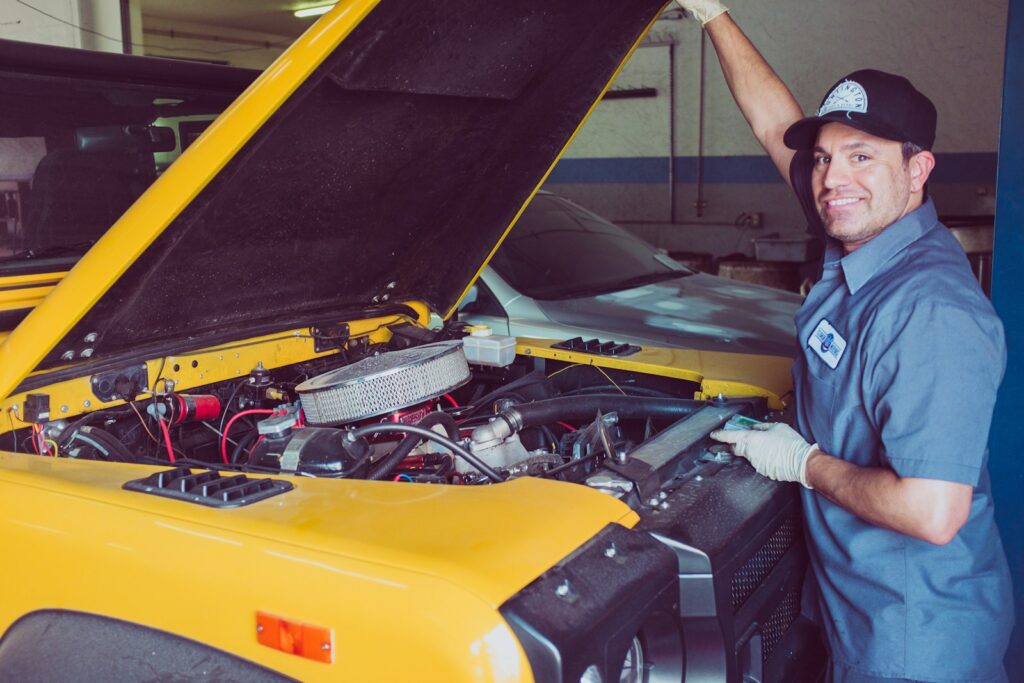
The undercoating that didn’t add up
From the ground, the undercoating looked uniform—dark, even, freshly sprayed. Up close, it didn’t look like protection so much as makeup. It was thick in weird spots, thin in others, and had that slightly glossy, still-too-new sheen like it was applied recently enough to still be “doing a job” in someone’s story.
The mechanic poked at it with a pick where the frame rail met a bracket, expecting the usual grime. Instead, the tool slipped under a soft edge of coating like peeling tape off a box. A small flap lifted, and under it the metal wasn’t clean; it was orange-flecked and scabby, the kind of rust that shouldn’t be hiding under a “certified” inspection.
He didn’t announce anything yet. He just kept moving, looking for patterns: does the rust match the age, does it look like road salt, does it look like neglect. The coating seemed to be hiding more than it was preventing, and that’s when he started looking for the stuff people don’t think about—frame rails, crossmembers, cavities that trap whatever gets in there.
Sand where sand has no business being
The first clue was the sound. When he tapped the frame rail lightly, there wasn’t just a hollow ring; there was a faint, dense rattle like something granular shifting inside. He tried the other side and got the same thing, a weird internal shuffle that didn’t match normal dirt or corrosion.
He found an access hole and angled a light, then shook the rail gently with his hand. A thin stream of pale grit started to pour out, not like road dust but like beach sand—fine, light-colored, and stubbornly dry. The mechanic collected some on a rag and rubbed it between his fingers, because if you’re going to accuse a truck of being flooded, you’d better be right.
He kept working it loose, and more came out. Not a sprinkle, either—enough that it stopped being “maybe it sat on a construction site” and started being “how did this much sand get inside a sealed frame?” The customer was still in the waiting area sipping bad coffee, blissfully unaware that his certified dream truck was quietly emptying a sandcastle onto the shop floor.
That smell under the carpet
Once the sand made the frame rails suspicious, the mechanic switched to the inside. Flood vehicles don’t always announce themselves with a dramatic waterline; a lot of them get cleaned just well enough to sell, then rot in private. The cabin looked great at first glance—fresh mats, tidy dash, nothing obviously stained.
But there was an odor underneath the air freshener, that sweet-chemical scent trying to bully something musty into silence. The mechanic opened the rear door and leaned down, putting his nose near the carpet seam by the sill. It was subtle, but it was there: damp basement, old towel, something organic that had been wet too long.
He pulled a trim piece and lifted the edge of the carpet. The padding underneath wasn’t crisp and clean like it should’ve been—it looked matted and discolored. When he peeled it back farther, the underside showed fuzzy patches, and the metal floor had the kind of surface rust you get when water sits, not when snow melts off boots for a season.
At that point the mechanic did what people do when they’ve found something that could ruin a stranger’s week: he stopped and called the customer over. He didn’t throw accusations. He just asked him to come look and tell him if that seemed normal for a dealer-certified truck.
The awkward confrontation that follows you out to the parking lot
The customer walked into the bay smiling like he expected a thumbs-up. He watched the mechanic point at the lifted carpet edge, at the padding, at the rusty floor, and the smile drained into a confused frown. You could almost see him doing mental math—how much he paid, how proud he’d been telling people, how little he wanted this to be real.
Then they went under the lift together. The mechanic showed him the frame rail, the access hole, the pile of sand on the floor that shouldn’t exist in any normal ownership story. He pointed at the undercoating and lifted another edge, revealing rust that looked older than the coating itself, like someone sprayed a cover-up and hoped nobody would touch it.
The customer didn’t get angry right away. First he got quiet, like he was trying to bargain with the evidence. He asked if it could be from “driving on the beach,” if maybe the previous owner “used it for work,” if that undercoating was “just what they do up north.” The mechanic answered in the calm tone of someone who’s seen the same movie: sand in frame rails and mold under carpet is not normal wear.
Eventually the customer asked the question he already knew the answer to: “So you think it was flooded?” The mechanic didn’t say it like a dramatic reveal. He said it like a diagnosis—he can’t swear where or when without paperwork, but the signs all point one direction, and the truck is telling on itself.
“Certified” starts to sound like a dare
The customer stepped outside to call the dealership while the truck was still in the air, because the idea of driving it home suddenly felt insane. The mechanic could hear his side of the conversation: the polite opening, the explanation that he’d taken it to a shop, the pause where he listened to whoever was on the other end trying to redirect. Then his tone tightened.
When he came back in, his face had that pinched look of someone being talked to like a problem, not a person. The dealership, apparently, wanted him to bring the truck in for their own inspection, as if the sand and mold might disappear under their lighting. They floated the usual soft language—“we stand behind our vehicles,” “we need to see it ourselves,” “certification is thorough”—without actually responding to what he’d just described.
The mechanic offered to document everything: photos of the frame rail grit, shots of the undercoating peeling back from rust, the carpet padding, the floor pan. He’d seen this go sideways before, where the buyer shows up alone and gets steamrolled by confident service writers and a manager who keeps repeating policy until the customer doubts his own eyes. Evidence, the mechanic knew, is the only thing that doesn’t get tired.
They lowered the truck, and the customer just stared at it for a second like it had personally betrayed him. He asked the mechanic if it was safe to drive back to the dealership. The mechanic gave him a careful answer: the truck might drive fine today, but flood damage isn’t about today; it’s about the electrical gremlins, the corrosion that keeps spreading, the mold that never truly goes away, the hidden failures that show up when you’re far from home.
In the end, he drove it anyway, because what else could he do—tow it at his own expense for a truck he’d been told was certified? He left with a folder of photos and notes, and that tight, forced calm people get when they’re trying not to explode in public. The mechanic watched the taillights disappear and didn’t look satisfied or triumphant, just resigned, like he’d handed someone a hard truth and knew the next part would be worse.
Because the real conflict wasn’t the sand or the mold or the rust under fresh undercoating. It was the gap between what the customer thought he bought—a vetted, dealership-blessed truck—and what he was now going to have to prove to people whose whole job is to keep the sale from unraveling. And the last thing he said before pulling out of the lot wasn’t about repairs at all; it was a quiet, angry question about how something can be called “certified” when it still carries half a beach inside its bones.
More from Steel Horse Rides: