

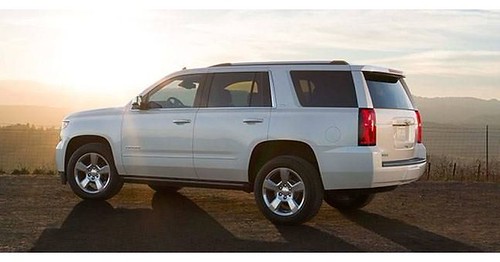
She wasn’t shopping for something flashy. She wanted something big enough for two kids, a double stroller, and whatever chaos came with daycare pickup—snacks, backpacks, that one stuffed animal nobody can lose without a meltdown. When she saw the used Tahoe on the lot, she felt that little jolt of relief you get when a problem finally looks solvable.
The salesperson leaned into it immediately. This Tahoe was “perfect for kids,” he told her, like he’d been waiting all day to say it. Plenty of room, solid SUV, “these things are tanks,” and—this was the part that mattered—“it’s been inspected.” He said it with that easy confidence that makes you want to stop being suspicious for once.
So she did what a lot of tired parents do: she believed the version of reality that let her check one more thing off the list. She signed papers, got the keys, and drove it home already imagining how much easier mornings would be with space and height and those nice wide back doors. The Tahoe even had that clean-ish dealership smell, like someone had tried.
The “family-friendly” pitch
The Tahoe wasn’t new, and she wasn’t expecting new. It had some cosmetic stuff—light scratches, a little shine rubbed off the steering wheel, the kind of wear you get when a vehicle has lived a life. The salesperson framed all of it as normal, almost reassuring, like proof it hadn’t been sitting around with hidden problems.
He made a whole performance out of the back seat, opening and closing doors, pointing at cupholders, showing how the third row folded. When she asked about accidents, he gave the practiced answer: clean history “as far as we know,” nothing major, and anyway it had passed their check. He even nodded at the LATCH points like he was personally invested in her kids’ safety.
She did the test drive on surface streets, listened for weird noises, tested the brakes, watched the dash for warning lights. Everything felt… fine. It wasn’t perfect, but it felt like a responsible choice, and when you’re buying a used SUV, “fine” is sometimes the winning category.
The smell that wouldn’t go away
The first clue wasn’t dramatic. It was a smell that didn’t match the “freshly detailed” vibe—a damp, sour note that showed up after the car sat overnight. At first she blamed a wet umbrella or maybe something spilled in the previous owner’s life that the detail job didn’t fully erase.
Then it happened again after a rain. The air inside had that cold, wet-basement edge to it, and the windows fogged faster than they should’ve. She started sniffing around like a bloodhound, leaning into footwells and lifting floor mats, trying to find the source before her kids turned the back seat into a science experiment.
Under one of the mats in the rear, the carpet felt suspiciously soft. Not “plush,” but “soggy in a way that makes your stomach drop.” She pressed down with her fingertips and felt moisture push up, like the padding underneath had been holding water for a long time. When she pulled the mat back and peeled up the edge, she saw it: dark speckling and fuzzy patches clinging to the carpet.
Mold doesn’t announce itself politely. It just sits there, existing, and suddenly you’re staring at it thinking about kids breathing in the back seat. She didn’t need a test kit to feel the rage rising—just the realization that somebody had cleaned around this, not fixed it.
Digging around and finding worse
Once she found mold, she stopped assuming anything was fine. The next day, she went through the Tahoe like she was preparing it for a courtroom exhibit. Glove box, side panels, trunk compartments, under-seat storage—anything that could hide a problem got opened.
That’s when she noticed something off about the dash. The passenger side panel looked slightly different—subtle, but the texture didn’t match the rest the way it should. When she ran her hand along the seam, it didn’t feel factory-tight. It felt like someone had taken it apart and put it back together quickly, hoping nobody would look too closely.
She checked the vehicle’s manual and started comparing what the interior was supposed to look like. Then she did the thing people do when they’re trying not to panic: she started Googling, reading about airbag covers, SRS systems, and how to spot a replaced dash. Somewhere in that rabbit hole, she learned a phrase she hadn’t expected to need: “missing airbag.”
She booked an independent inspection, the kind you do when you suddenly realize a dealership inspection might be more vibe-based than real. When the mechanic got to the restraint system, he didn’t do a lot of hemming and hawing. He said it plainly: the passenger airbag wasn’t there.
Not “it might not deploy.” Not “the code suggests a fault.” It was physically missing, as in: the space where it should live was empty, and the dash had been messed with to make it look normal. The mechanic’s tone shifted into that careful, controlled seriousness people use when they’re talking to a parent.
The car seat anchor that wasn’t anchored
She’d bought the Tahoe because it was “perfect for kids,” which meant she’d already tried fitting her car seats. They’d clicked in, seemed secure, and she’d felt that brief relief parents get when the straps cooperate. But after the airbag discovery, she stopped trusting “seems.”
Back at the mechanic, she asked him to check the LATCH system and the top tether anchors. It felt almost paranoid to say out loud, like she was accusing the vehicle of lying. He didn’t act like it was paranoid at all; he just got in the back and started pulling panels.
The tether anchor on one of the rear seats—one she’d been using—wasn’t right. The hardware was there, but it wasn’t properly secured to what it should’ve been secured to. It was the automotive equivalent of a screw threaded into drywall with no stud behind it: it holds until it really, really doesn’t.
He explained it in a way that made her chest tighten. In a crash, that anchor takes load. If it isn’t anchored correctly, the seat can rotate forward more than it should, changing how the kid’s body moves, how the belts sit, what gets hit. It was the kind of detail that turns “family-friendly SUV” into “rolling liability.”
The worst part was how mundane it looked. No warning light tells you a tether anchor is basically decorative. No “check anchor” message pops up. You trust it because you’re supposed to be able to trust it.
Going back to the dealer and getting the runaround
She went back to the dealership with photos, an inspection report, and the specific kind of anger that stays polite only because she had to keep functioning that day. She didn’t go in screaming. She went in with documents, like someone who didn’t want drama—she wanted the Tahoe unwound from her life.
The salesperson wasn’t as confident anymore. The first response was confusion, then mild defensiveness, then a pivot to “we didn’t know.” They offered to “take a look,” which sounded less like accountability and more like an attempt to pull the conversation back onto their turf.
She asked how a vehicle could pass an inspection with a missing airbag. She asked how mold could be present like that unless water had been getting in for a while. She asked how a tether anchor could be “never repaired” if someone had clearly been in there. Each question landed like a weight, and the answers got fuzzier.
Someone higher up came out and started talking in that careful way businesses talk when they’re deciding what they can admit without admitting anything. They hinted the previous owner might have done repairs. They said used cars can have surprises. They said they could “make it right” by sending it through their service department, like replacing an airbag and remediating mold was the same as swapping a battery.
She didn’t want repairs. She wanted out. And that’s when the atmosphere shifted into that chilly stalemate where everyone is smiling, but no one is cooperating.
They talked about “as-is.” They talked about their policy. They talked about giving her time to bring it in and “let them diagnose it,” even though she’d already paid for an outside diagnosis because she didn’t trust theirs. She kept pointing back to the “perfect for kids” pitch, because it wasn’t just a line—it was the reason she felt safe buying it.
She left without a resolution, driving the Tahoe home like it was a contaminated object. Every mile felt loud. Every time she glanced at the passenger seat, she pictured that empty space where the airbag should’ve been, and the way the dash had been closed up to hide it.
And the thing that stuck with her wasn’t only the cost or the inconvenience—though both were real. It was how easily the whole mess could’ve stayed invisible if she hadn’t noticed a smell, if she hadn’t peeled back a mat, if she hadn’t asked one extra question about a tether point most people never think to question. The Tahoe was still sitting in her driveway, technically “hers,” but the real problem was sitting somewhere else: the feeling that someone had looked at a family buying a kid-hauler and decided “good enough” was an acceptable standard.