

She’d been enjoying the small thrill of having her own car again—the way the cabin smelled like her shampoo instead of someone else’s cologne, the freedom of grabbing coffee at 9 p.m. if she felt like it. It wasn’t a new car, but it was hers, financed through the same local dealership where her ex still worked. That part hadn’t felt like a big deal at the time, just mildly awkward in a “yeah, I know, don’t start” kind of way.
Then he started knowing things he shouldn’t have known. Not vague guesses, not the kind of stuff you can piece together from social media or mutual friends. Specific stuff: the nail salon she’d tried once and hated, the grocery store that was “out of the way,” the fact that she’d stopped by a park for ten minutes and didn’t even get out of the car.
At first, she chalked it up to coincidence and paranoia. Maybe she’d mentioned the salon in passing. Maybe someone had seen her at the store and told him. But the comments kept coming—too casual, too accurate, always delivered like he was just making conversation. And the more she tried to ignore it, the more it started feeling like she was being followed by something she couldn’t see.
The little comments that didn’t add up
He didn’t come right out and say, “I know where you are.” It was worse than that—he’d toss out observations like they were jokes, like he was still allowed to have opinions about her life. “So, you’re into that place on Elm now?” he texted after she’d swung by a tiny ramen shop she’d never posted about and never mentioned to anyone.
She replied with a simple “What?” and got a shrugging response back. “Just asking. I was in the area.” But he wasn’t in the area; she’d chosen it specifically because it was on the other side of town from his apartment and the dealership. And when she pressed, he pivoted instantly, turning it into a critique of her being “secretive” and “weird lately.”
It kept happening in small, sharp ways that made her feel like she was losing her grip. A “Hope you’re having fun” text when she was sitting in a friend’s driveway. A “Didn’t think you liked that gym” when she’d gone twice and hadn’t told a soul. Each time she asked how he knew, he acted offended she’d even ask, like she was accusing him of something unfair.
When suspicion turns into a search
The turning point wasn’t a dramatic confrontation—it was a slip. She’d driven to an urgent care clinic after waking up with a migraine that wouldn’t quit, the kind that makes light feel like sandpaper. She hadn’t told anyone because she didn’t want the fuss, and she sat in her car afterward for a minute with her forehead against the steering wheel, waiting for the nausea to pass.
Her phone buzzed. “You okay?” he wrote, followed by, “That place takes forever.” No name, no address, but she knew exactly what he meant because she was staring at the urgent care sign through her windshield. It didn’t feel like a coincidence anymore; it felt like someone had been watching her dot move around a map.
That night, she did the thing everyone does when their brain stops trusting the world: she started Googling. “Can dealerships track cars?” led to pages about GPS units used for repossessions and inventory, sometimes installed discreetly. She read about little black boxes with magnets, wired modules tucked into dashboards, trackers that ping locations through cellular networks.
By midnight she was on her hands and knees in the passenger-side footwell with a flashlight, running her fingers along carpet edges and under plastic trim. The car looked normal until it didn’t. Under the front passenger seat, tucked up where you wouldn’t casually see it, she felt a hard rectangle zip-tied to the metal frame.
The tracker under the seat
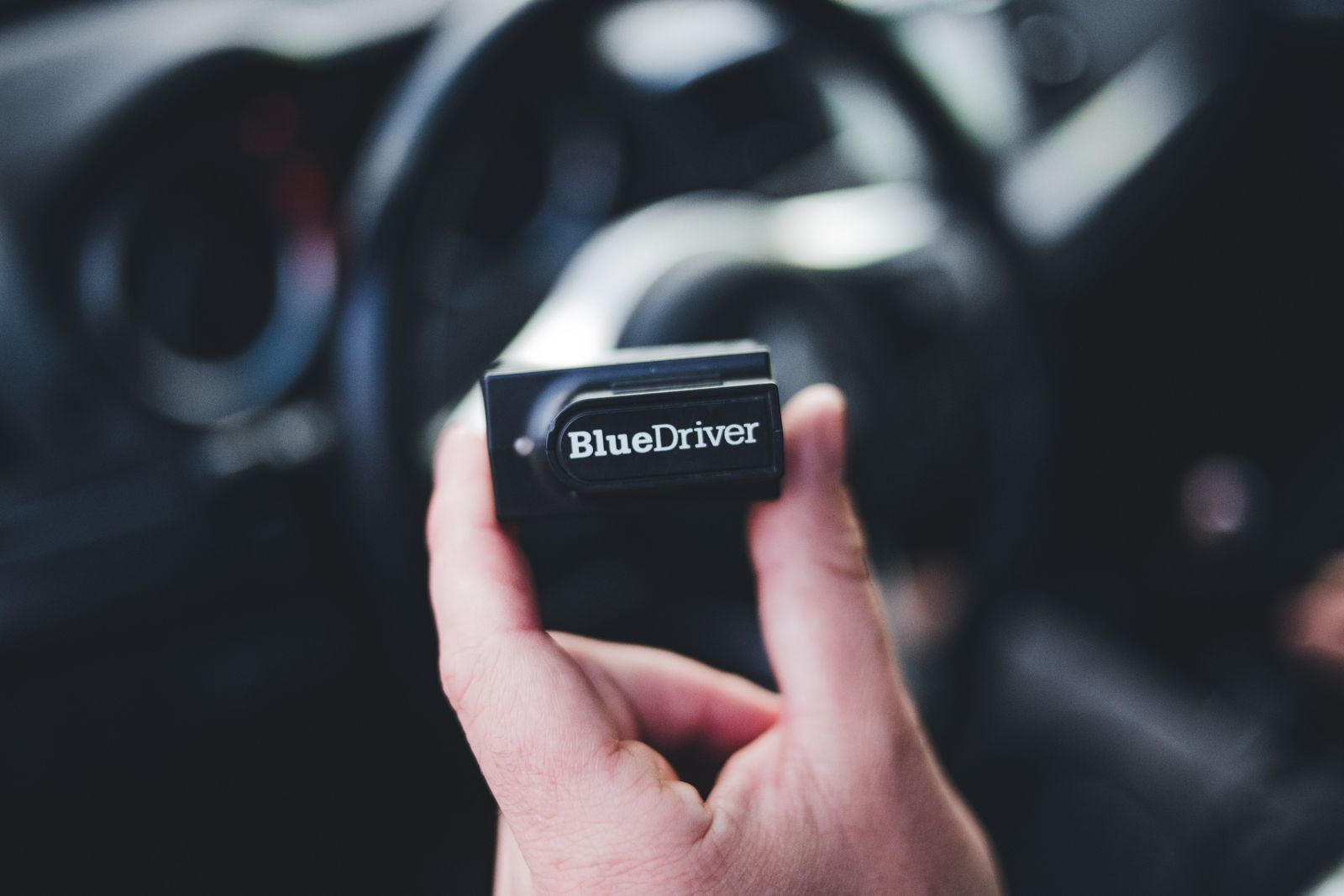
It wasn’t subtle once she found it. A small black device, about the size of a deck of cards, with a sticker that had a serial number and the name of a GPS service company she’d never heard of. Two neat zip ties looped around the seat bracket like somebody had installed it quickly, confidently, and without worrying about her discovering it later.
She sat back on her heels and just stared at it for a second, letting the dread catch up. She wasn’t imagining it. She wasn’t “being dramatic.” There was a literal tracking device in her car, and it wasn’t there by accident.
She took pictures from every angle, close-ups of the label, the zip ties, where it sat under the seat. Then she did the most human thing possible: she called a friend and tried to sound calm while her voice did that tight, high thing it does when you’re trying not to panic. Her friend told her not to touch it yet and to document everything, which made the whole situation feel suddenly bigger and more official than she wanted.
She ended up cutting the zip ties anyway. Not because it was the “right” move, but because she couldn’t stand the idea of driving one more block with it still attached, like it had the right to be there. The device came free into her hand, heavier than she expected, and she put it in a plastic bag like it was contaminated.
Calling the dealership and getting the runaround
The next morning she called the dealership and asked—calmly, at first—if they installed trackers on vehicles sold to customers. She didn’t accuse anyone by name. She didn’t even mention her ex yet. She just asked, “Is there a reason there would be a GPS unit zip-tied under the passenger seat?”
The person on the phone got quiet in a way that wasn’t reassuring. There was a hold, then a transfer, then another hold. When someone finally came back, they gave her the kind of answer that sounds practiced: sometimes vehicles have “inventory devices” on them, sometimes they “forget” to remove them, it’s “not a big deal,” they can “schedule you” to come in and have it looked at.
That would’ve been annoying but manageable if it ended there. But in the middle of this call, her ex texted her: “Why are you calling the dealership about that?” No greeting, no context, just that. She hadn’t told him she’d found anything. She hadn’t told him she was calling. The timing was so perfect it felt like the air got sucked out of the room.
When she responded, “About what?” he didn’t even try to pretend he didn’t know. He wrote back, “The tracker. Don’t make it a thing.” And just like that, the story stopped being about sloppy dealership practices and became about something personal and invasive—someone using workplace access like it was relationship leverage.
The ex who knew too much
She asked him outright how he knew about the device, and he hit her with a string of deflections that didn’t quite line up. First he claimed “everyone” at the dealership knew those cars had trackers. Then he said it was only for “security.” Then, in the same breath, he told her she was “overreacting” and that if she’d just “talked to him” he could’ve “handled it.”
That last part landed like a slap, because it sounded like ownership. Like the problem wasn’t that she’d been tracked, but that she’d dared to treat it as her problem instead of his. When she asked why he’d been texting her about places she’d been, he didn’t deny it; he got angry at the question, like she’d caught him and he hated the feeling.
He started with guilt—“You really think I’d do that to you?”—and when that didn’t work, he shifted into control. He told her she was “making accusations that could ruin people,” that she didn’t understand how dealerships work, that she was acting “crazy.” It was a familiar playbook, except now it was backed by hardware under her seat and an ugly trail of “coincidences” that weren’t coincidences at all.
She didn’t go back and forth with him after that. She stopped answering, and she blocked him when he started calling. But blocking someone doesn’t un-know what they already know, and that was the part that kept crawling under her skin: how much had he been watching, and for how long?
She ended up not taking the car back to the dealership for removal—she didn’t trust them with it, not when her ex could apparently get wind of her calls in real time. She kept the tracker in a bag with the photos saved in multiple places, and she started changing her routine in small, reluctant ways: different routes, different stops, fewer idle moments alone in parking lots. The scariest part wasn’t the device itself; it was realizing how easily someone who already felt entitled to her time had turned a workplace tool into a way to stay in her life. And even with the tracker sitting on her kitchen counter instead of under her seat, she couldn’t shake the question that lingered every time her phone buzzed—how many other “little systems” were still quietly reporting back to him?