

She’d heard about the “cheap beater” for months in the same offhand way you hear about someone’s new office chair or the neighbor’s loud lawnmower. Her husband talked about it like it was a practical little nuisance: an old car he could park anywhere, a clunker he didn’t mind getting door-dinged, something to rack up miles on so their “nice car” could stay nice.
He even had a whole vibe about it—complaining about the smell, joking that the radio only picked up one station, making a show of tossing a greasy rag in the laundry once in a while. He never drove it home, though. That was the part he smoothed over with workplace logic: “Parking’s easier by my building,” “It’s better on gas for the commute,” “I leave early, you’re asleep anyway.” It was always a reason, always delivered like she was silly for even wondering.
Then one afternoon, she ended up near his work for something totally mundane—picking up a prescription, grabbing a gift, killing time before a dentist appointment—and texted him that she was close. He didn’t answer right away, which wasn’t unusual. What was unusual was how quickly he called when he finally saw the message, and how his voice immediately sounded busy, tight, like he was trying to talk with a hand over the receiver.
The “Don’t Come Over Here” Call
He asked where she was, exactly, and when she told him, he pivoted fast: he could meet her down the street, he could step out, he could be there in five. She suggested, casually, that she could just swing by the office lot and say hi. That’s when he slipped—just a tiny, panicked beat before he said, “No, don’t do that. It’s… a mess here.”
People don’t usually say “don’t come to my workplace” unless there’s a reason. Her brain did the thing brains do: flicking through possibilities, trying to land on the least humiliating one first. Maybe he’d told coworkers something dumb about her. Maybe he’d been exaggerating his job title. Maybe he was hiding some harmless purchase he knew she’d roll her eyes at.
So she did what most people would do when their spouse suddenly sounds like they’re directing air traffic: she acted like she was fine with it, got off the phone, and drove toward the office anyway. Not to storm in. Not to catch him in some soap-opera moment. Just to confirm whether she was overthinking it.
The Car Cover That Didn’t Belong
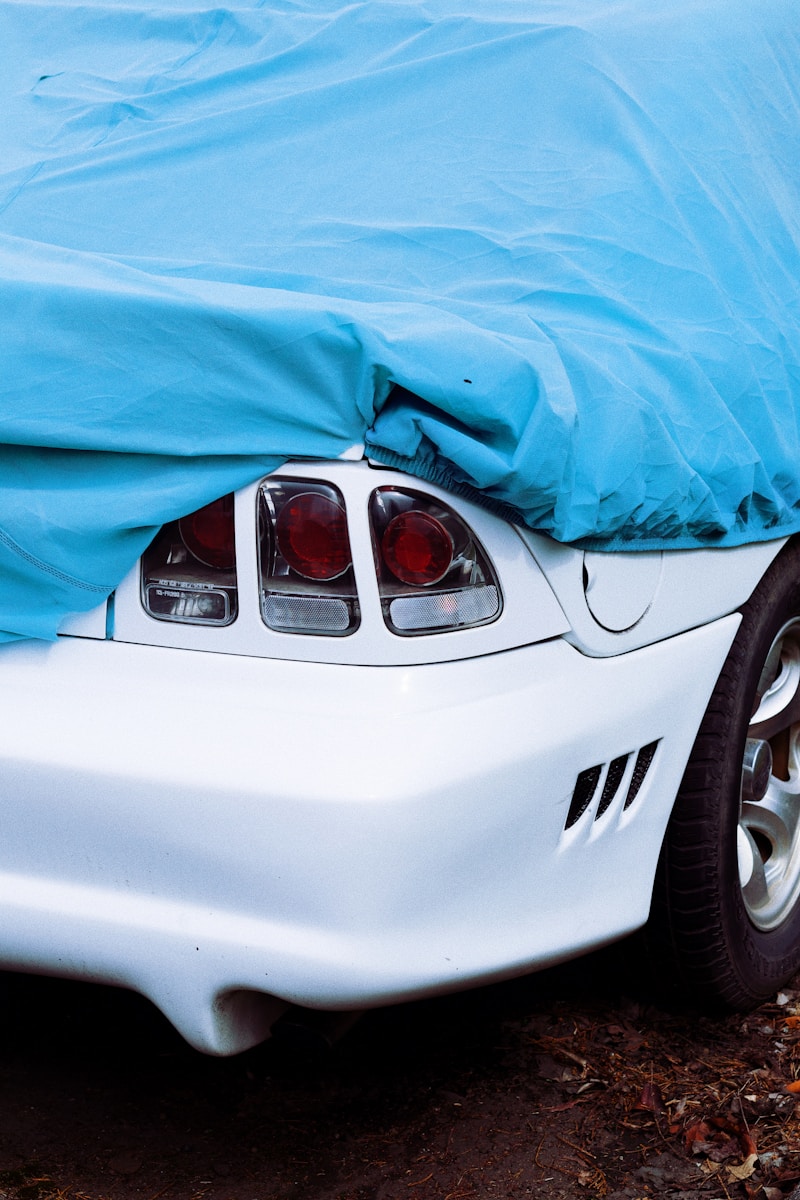
The lot behind his building was half shade, half sun, with the usual lineup of commuter sedans and dusty SUVs. She didn’t know what she expected to see, but it wasn’t the car cover. It was one of those fitted, expensive-looking covers that hugged the shape underneath like a tailored suit, and it was strapped down as if someone was worried about wind… or eyes.
She did a slow pass, pretending she was just looking for a spot or maybe checking her phone. The covered car was tucked in a corner, not right by the building entrance, not where a person casually parks a “beater.” It was positioned like a secret you didn’t want anyone to trip over.
There was also a detail that made her stomach tighten: the cover was clean. Not “hasn’t been rained on” clean—fresh, recently handled, no dusty footprints, no grimy streaks. It looked like something bought with intention, not something thrown over an old rust bucket to keep leaves off the windshield.
She parked a few spaces away and sat there a minute, hands on the wheel, trying to decide whether she was about to be the kind of person who touches other people’s property. Then she remembered: it wasn’t other people’s property. If her husband had been telling the truth, it was his. Their money, their life, their “cheap beater.”
Uncovering the Lie, Literally
She got out, walked over like she belonged there, and pulled at the edge of the cover. The fabric resisted for a second—snug, clipped—then slid back with that soft, expensive swish. Underneath wasn’t peeling paint and a dented bumper.
Underneath was a car that looked like it had no business sitting in a commuter lot. The paint had that deep, glossy finish that doesn’t happen by accident. The wheels looked curated. Even the way the body caught the light—clean lines, deliberate shape—made it obvious this wasn’t a “beater” in any normal-person sense.
She stood there with the cover in her hands, feeling stupidly conspicuous, like someone on a stage who just realized the spotlight is on. Her first thought wasn’t even anger. It was confusion, the kind that makes you check for a rational explanation you missed—like maybe he was storing a client’s car, maybe it belonged to the company, maybe she’d messed up and uncovered the wrong one.
Then she saw the small paper tucked under the wiper, the kind people leave when they’ve bumped a car or when security gives a warning. Except this wasn’t an apology note. It was a printed slip from an auction house—receipt-ish, official, with a lot number and a purchase price that stopped her cold: $42,000.
His Story Started Changing in Real Time
He appeared before she could fully process it, walking fast, eyes scanning like he’d been tracking her car on some imaginary radar. The first thing he said wasn’t hello. It was, “What are you doing?” in a tone that made it sound like she’d broken into his desk drawer.
She held up the paper without a word. His face did this quick sequence—surprise, then calculation, then a forced calm that didn’t reach his eyes. He laughed once, a short little puff, and tried to take it from her hand like it was nothing. She didn’t let go.
He started with denial, the soft kind. “That’s not what you think.” Then it turned into minimizing: “It’s not worth that, auctions inflate stuff.” When she pointed at the number again, he shifted to a new track entirely: “I was going to tell you. I just didn’t want you to freak out.”
That’s when she finally said what had been boiling up since the moment the cover came off: if he thought she’d freak out about a car, why did he think she wouldn’t freak out about hiding it? He tried to answer, but it came out like tangled headphone wires—he’d gotten a “deal,” it was “an investment,” he’d planned to flip it, it wasn’t really “their money” because he used a bonus, it was temporary, it was complicated, it was… basically a lot of words designed to keep her from landing on the simplest truth.
The Fight Wasn’t Really About the Car
They didn’t scream in the parking lot, not full-volume. It was worse than that: tight voices, clipped sentences, the kind of argument where both people are aware of passing coworkers and still can’t stop. She kept her eyes on him while she spoke, like she didn’t trust what he’d do if she looked away.
He kept gesturing at the car like it could explain itself, like the glossy paint was a persuasive argument. He said he didn’t want to “ask permission” for something he’d worked hard for, that it was his hobby, that she wouldn’t understand. She asked him why his hobby needed a car cover at work and a fake story at home.
The word “beater” came back around like an insult. She said he’d been letting her worry about budgeting while he played secret millionaire in a parking lot. He shot back that he’d been handling it, that it wasn’t affecting anything, that she was making it bigger than it was.
And then, because these things always have layers, she started remembering other tiny weirdnesses she’d let slide. The sudden interest in overtime. The way he’d been weirdly protective of his phone lately. The comments about “needing space” that didn’t match how affectionate he acted at home.
She asked him, flat out, if this was the only thing he’d been hiding. His face went blank for half a second—just long enough to feel like an answer even before he spoke. He said yes, of course, but it came out too quickly, like he’d rehearsed what “normal” sounded like.
They drove home separately. He insisted on re-covering the car before he left, hands moving fast and angry, like he was trying to erase the moment. She watched him do it and realized the cover wasn’t just about protecting paint; it was about controlling the story.
By the time she got home, she wasn’t thinking about $42,000 anymore. She was thinking about how easy it had been for him to look her in the face night after night and casually maintain a lie detailed enough to have props. And when he finally walked in later, acting like they could “talk when things calmed down,” she couldn’t shake the feeling that the real issue wasn’t the car he’d hidden under a cover—it was whatever else he’d learned to hide just as neatly.