

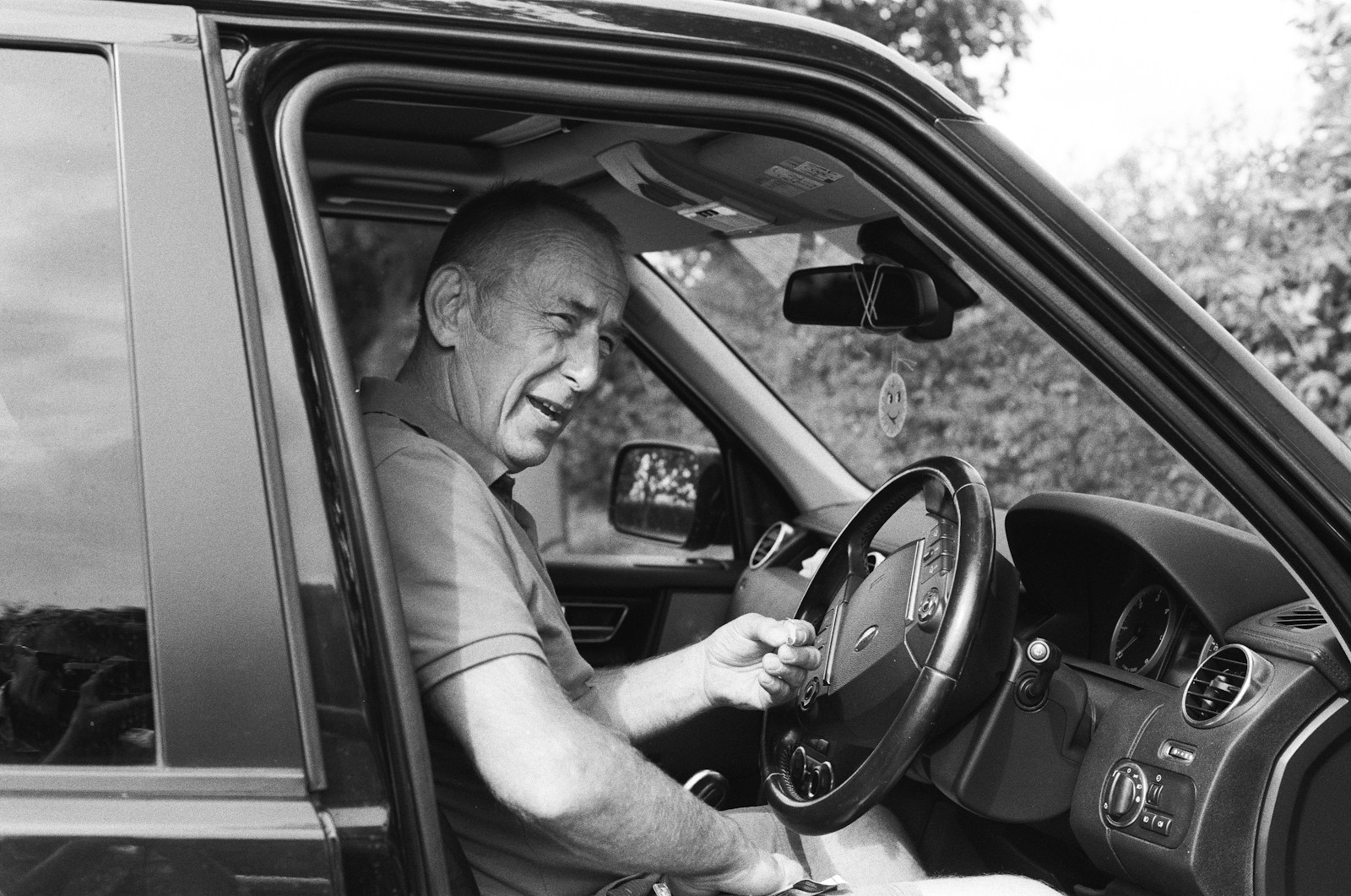
It started the way a lot of domestic blowups start: with someone doing a “small favor” that wasn’t theirs to offer. The wife had an SUV she treated like a little fortress—kept clean, maintained on schedule, insurance up to date, the whole responsible-adult package. It wasn’t a brand-new luxury car, but it was theirs to rely on, and in her mind that made it precious.
Her husband, meanwhile, had a softer spot where his dad was concerned. His father had that older-guy confidence, the kind that says he can handle anything because he’s been driving since before seatbelts were a thing. If he wanted to borrow something, he didn’t always ask like it was a question. He’d float it like it was already decided, and his son would smooth the path.
So when the father-in-law came by one afternoon and mentioned he needed to “run a quick errand,” the husband didn’t even hesitate. He grabbed the keys to his wife’s SUV, handed them over, and acted like he’d just saved everyone a hassle. Nobody texted her. Nobody called. It was the kind of decision that only feels harmless if you’re not the one whose name is on the title.
The keys change hands like it’s nothing
In the husband’s mind, it was practical. The wife’s SUV was the bigger vehicle, easier to get in and out of, and it was already in the driveway. His dad, according to him, just needed it “for like twenty minutes,” and the husband had done this sort of thing before with smaller stuff—tools, a ladder, a pressure washer—without it turning into a full debate.
But the SUV wasn’t a ladder. It was the family’s main transportation, and it carried all the little signs that a person actually lives in it: a phone charger plugged in, a tote bag in the back, a half-used pack of wipes in the console. It also had the wife’s specific settings, her seat position, her mirrors, her whole routine baked into it.
The father-in-law took the keys with that casual nod people do when they assume they’re entitled to the yes. He didn’t ask where the wife was or whether she knew. The husband didn’t say, “Let me check with her.” He just watched his dad back down the driveway like he was doing him a favor by taking the car off his hands.
The call that makes your stomach drop
The errand didn’t take twenty minutes. It didn’t even take forty. And then the husband got a call that had that particular edge to it—someone trying to sound calm while bracing for impact.
His dad had “a little accident.” That’s how it was framed at first, like maybe he scraped a curb or nicked a trash can. The husband asked where he was, and his dad gave a location nearby, adding that he was fine and nobody was hurt, which is always the phrase people lead with when they know the property damage is about to be the main event.
When the husband got there, the SUV was sitting at an angle with the front end too close to a pole that clearly hadn’t moved. The pole was fine. The SUV wasn’t. The front bumper looked chewed up, one headlight was cracked, and the fender was bent in a way that suggested the impact had been more than a “tap.”
The wife finds out in the worst possible way
There are a few ways to find out your car has been in an accident, and “surprise, come outside” is pretty much the worst one. The husband tried to handle it like a manager dealing with a customer complaint—calm voice, vague reassurance, “we’re figuring it out.” He delayed telling her until he had more information, which in practice meant he delayed telling her until there was no way to hide it.
She noticed something was off as soon as the SUV came back. Maybe it was the way it was parked, slightly crooked, like whoever drove it in was trying not to draw attention. Maybe it was the obvious damage, which is hard to miss when it’s on the front corner and the plastic is hanging weird. Either way, she asked what happened, and the husband did that thing where he starts explaining from the middle, hoping the beginning won’t be as bad if he rushes past it.
“Dad borrowed it for a bit. He had a small accident,” he said, like the borrowing was a footnote. Her face apparently changed at the word “borrowed,” because her first question wasn’t about the pole or the bumper. It was, “You gave him my keys without asking me?”
The father-in-law, standing there like he was waiting for a verdict, offered a shrug and a quick, irritated apology—the kind that sounds more like he’s annoyed something went wrong than sorry it happened. He kept repeating that he didn’t get hurt and that it was just “one of those things.” The wife wasn’t yelling, but she had that tight, clipped tone people get when they’re forcing themselves not to explode.
“I’ll pay you back when I can”
Once the immediate shock wore off, the conversation turned to the next obvious question: who’s paying for it. The wife wanted the insurance information and a plan. The husband, still in “smooth it over” mode, assumed his dad would just handle it or at least offer something concrete.
Instead, the father-in-law went with the most infuriating phrase possible: he’d pay her back “when he can.” Not “I’ll cover the deductible.” Not “Let’s take it to a shop tomorrow.” Not “I’m calling my insurance right now.” Just a floating promise with no date, no amount, and no urgency, like she was a buddy he owed lunch money to.
The wife stared at him, then at her husband, waiting for him to jump in and fix it. And this is where the situation curdled. The husband didn’t push his dad. He didn’t say, “No, you need to pay now,” or “We need your insurance.” He started talking about how repairs are expensive, and his dad’s on a fixed income, and it was an accident, and they could “work something out.”
That “work something out” landed like an insult. Because to the wife, it sounded like: you made a decision about my property without me, someone damaged it, and now I’m supposed to be flexible and patient while you protect the person who caused the damage. She wasn’t just hearing money talk. She was hearing hierarchy.
The real fight isn’t about the pole
The argument that followed wasn’t cinematic screaming. It was sharper than that—short sentences, disbelief, long pauses where someone realizes what the other person is actually saying. The wife kept circling back to consent: it was her vehicle, her responsibility, her insurance risk, her daily transportation. The husband kept circling back to intention: his dad didn’t mean to, it was quick, it seemed harmless.
At some point, the wife asked the blunt question nobody likes: “If I handed your dad the keys to something important of yours without asking, and he broke it, would you expect me to just wait until he ‘can’?” The husband didn’t answer cleanly. He tried to soften it with “that’s different,” which only made it worse, because she could hear that “different” meant “my dad.”
The father-in-law, instead of recognizing he’d lost the room, got defensive. He made comments about how people are too precious about cars and how back in his day you didn’t run to insurance for every little thing. Then, like a final twist of the knife, he mentioned that the SUV already had “a couple dings,” as if that made his new damage less real.
The wife went quiet in a way that didn’t look like acceptance. It looked like she was taking inventory—of the dented bumper, of her husband’s unwillingness to confront his father, of how quickly her boundaries became negotiable when it made someone else uncomfortable. And the husband, instead of seeing that as danger, mistook it for the argument cooling down.
By the end of the night, the SUV was still damaged, the money plan was still vague, and the father-in-law had already shifted into his preferred role: wounded pride. He left with a stiff goodbye and the suggestion that everyone was “making a big deal out of nothing.” The husband stayed behind, trying to patch things with apologies that focused on the accident rather than the choice that caused it.
The wife didn’t seem interested in debating whether poles jump out of nowhere. She was stuck on something simpler and uglier: her husband had treated her SUV like a shared household object he could lend out, then treated her anger like an inconvenience to manage. And now there was a crumpled front end sitting in the driveway, a father-in-law who thought repayment was optional, and a marriage problem that wasn’t going to buff out with a little touch-up paint.