

It started the way a lot of household blowups start: a “quick money-saving fix” that wasn’t discussed, wasn’t documented, and absolutely wasn’t reversible once it mattered. The husband had been pacing around their kitchen for weeks, scrolling through bank statements like they were personal insults. Every subscription was a target. Every bill was “out of control.”
His wife wasn’t clueless about the finances—they were both feeling it. Rent had jumped, groceries were weirdly expensive, and the car payment hit like a punch every month. But she had a steady routine: she drove their older sedan to work, ran errands, and did most of the kid-related shuttling for his niece they sometimes watched. The car was boring, but it was their lifeline.
So when she opened the insurance app one afternoon and it kept looping her back to a login page, she assumed it was a glitch. She tried the website, then the automated phone line, then finally got a human who asked for her policy number and paused long enough to make her stomach drop. The agent’s voice went careful and polite. “Ma’am, this policy was canceled.”
The “savings plan” he didn’t mention
She confronted him that night while he was half-watching a game and picking at leftovers. He didn’t even look guilty at first—more like annoyed she’d interrupted. According to him, he’d “handled it” two weeks earlier after realizing they were paying “way too much” for two drivers. He’d kept his policy and removed her as an insured driver, then canceled the whole thing on her car to “re-shop later.”
The way he explained it was almost impressive in its confidence: she “barely drove,” the car “wasn’t worth that much,” and if something happened, they’d “figure it out.” He kept saying “temporary,” like that word could magically protect them from tickets, tow yards, or physics. When she asked why he didn’t tell her, he shrugged and said he didn’t want a fight.
She didn’t scream; she went quiet in that specific way people do when they’re trying not to lose it. She pointed out, very plainly, that she drove every day and could get pulled over any time. He waved it off and told her to be careful for “a couple weeks” while he hunted for a cheaper plan. It was framed like a favor he was doing for the household, and her anxiety was treated like an overreaction.
For the next days, she drove like a nervous criminal, watching mirrors for police cars and taking side streets instead of the highway. She texted him reminders—“Did you re-insure the car yet?”—and got answers like “I’m working on it” or “Stop stressing.” Every time she pressed, he’d act like she was accusing him of something. He’d say, “Do you want us to be broke?” as if insurance was a luxury item like a vacation.
How the hit-and-run unfolded
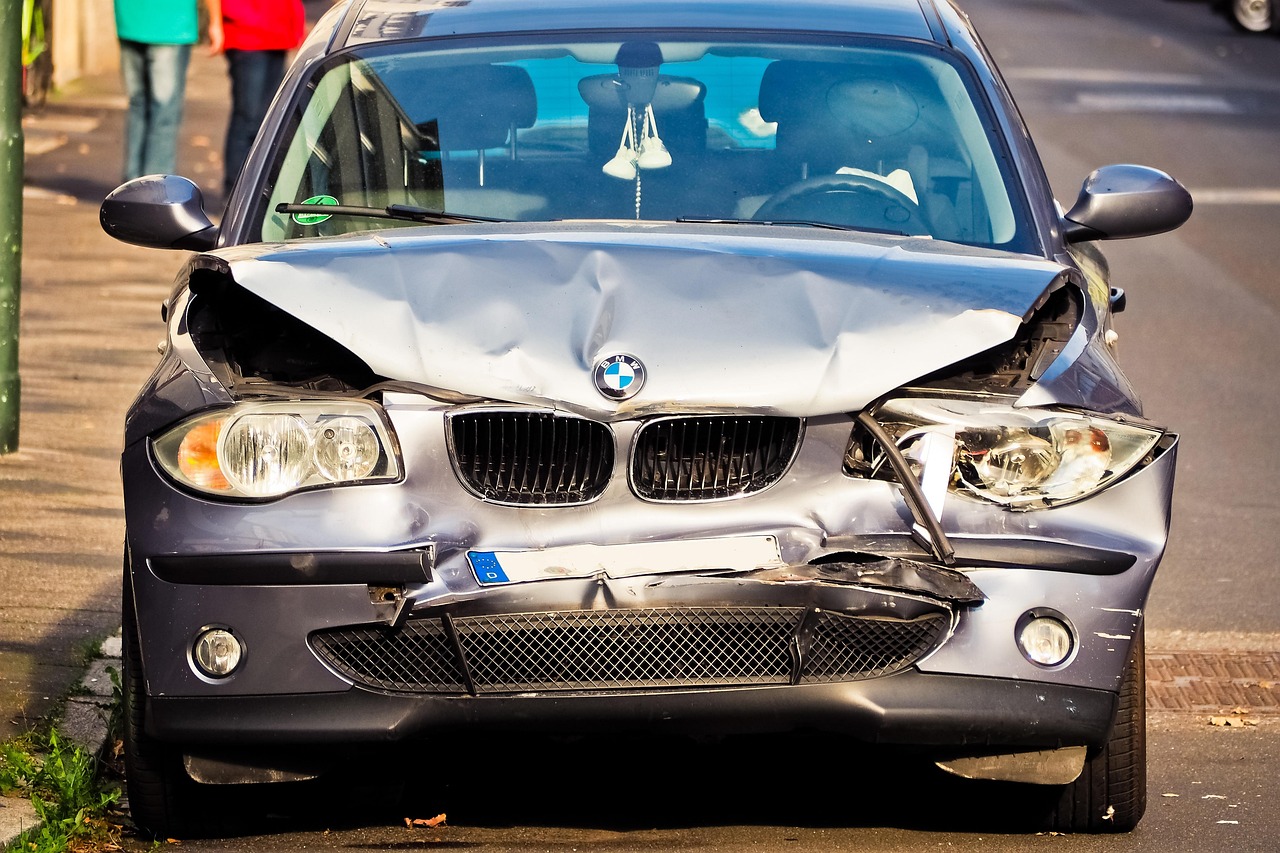
The crash happened on a rainy Thursday, the kind of afternoon where the sky makes everything look gray and flat. She was heading home from work, crawling through traffic near an intersection that always backed up. A car came up fast on her left, swerved like it was trying to beat the light, and clipped her front end hard enough to spin her into the curb. Airbags went off, the sound like a gunshot inside a metal box.
She sat there for a second in that stunned, ringing silence, hands shaking on the wheel. When she looked up, the other driver wasn’t pulling over. They were already gone, streaking through the intersection like nothing had happened. Someone behind her honked, then a stranger got out and ran over, asking if she was hurt.
She called 911 with the adrenaline making her voice wobble. She tried to describe the car—dark SUV, maybe a Honda, maybe a Toyota—but the details wouldn’t stick. Another driver claimed they saw part of a plate, but it wasn’t enough to be sure. The police came, took a report, and asked for her insurance.
That’s when the dread turned into full-body nausea. She couldn’t find proof of coverage because there wasn’t any. She offered her phone to show the app, the canceled policy, the emails she hadn’t even known to look for. The officer’s face did the thing where it goes neutral but the message is clear: this is now her problem in a different way.
The car wouldn’t drive. The front wheel was angled wrong, the bumper was shredded, and something underneath was dripping. A tow truck hauled it away while she stood in the rain with her damp hair sticking to her cheeks, feeling like she was watching money evaporate. She called her husband from the curb, and he answered like it was any other day.
“Why didn’t you watch out?”
He showed up to the tow yard later with the kind of energy people bring to arguments they’ve already decided they’re winning. At first he was mad at the hit-and-run driver, pacing and muttering about how people are “trash.” Then the clerk asked for the insurance info again, and the whole mood flipped. Suddenly the problem wasn’t the fleeing driver—it was her.
He asked her, right there in front of the clerk, why she was driving “if she knew it wasn’t insured.” She stared at him like he’d grown a second head. She reminded him she’d told him, repeatedly, that she needed coverage. He shot back that she could’ve taken an Uber, could’ve carpooled, could’ve “figured something out,” like her commute was a casual preference.
It got worse when they learned the tow and storage fees were racking up daily. Without insurance, there was no adjuster, no rental coverage, no streamlined repair authorization. The mechanic took one look and said the damage was borderline total-loss territory even with insurance, and without it, they’d be paying out of pocket for everything. He started doing frantic mental math, counting on his fingers like that could change the numbers.
On the drive home, he kept circling back to the same point: if she’d been “more alert,” she could’ve avoided it. He said it like a simple truth, like she’d chosen to get hit. She sat in the passenger seat of his car, bruised and sore, listening to him rewrite the day into a story where his decision was fine and her existence was the risk factor.
The domino effect: tickets, fees, and a disappearing safety net
The next week was a slow-motion financial collapse. The police report noted she was operating without proof of insurance, which triggered its own set of consequences. There were fines to deal with, and the possibility of her license being suspended if they didn’t get coverage reinstated fast. The irony was painful: he’d canceled insurance to “save money,” and now money was bleeding from every seam.
They tried to claim the hit-and-run through his policy, and that’s where they hit another wall. His insurer wanted to know why the other vehicle wasn’t insured under the household, why she wasn’t listed as a driver, and why there’d been a lapse at all. Every question sounded like an accusation, and every answer made them look worse. The husband started snapping at representatives on speakerphone, as if volume could substitute for legitimacy.
He also tried shopping for a new policy, but now they weren’t just a couple looking for quotes. They were a household with a recent accident, a lapse in coverage, and a ticket looming. The prices he’d been chasing suddenly looked like bargains from another lifetime. He’d slam the laptop shut and say companies were scamming people, then open it again five minutes later like a gambler convinced the next hand would be different.
The tow yard called with a final date before the car would be considered abandoned. They scraped together enough to release it, but then they had a dead car sitting in their driveway like a monument to one terrible decision. Fixing it meant thousands they didn’t have. Selling it as-is meant accepting a fraction of what they still owed.
And because the car had been their daily workhorse, its loss didn’t just hurt their pride. It messed up everything: her commute, their errands, their ability to take extra shifts. He began complaining about having to drive her, as if he was doing her a favor instead of dealing with a mess he created. Every ride came with a sigh, a pointed glance at the dashboard clock, a comment about gas.
The part that actually broke them
The wife didn’t just feel stressed—she felt tricked. It wasn’t only that the insurance was canceled; it was that he’d done it behind her back, then treated her fear like drama. Now he was acting like she was the reckless one, even though she’d been the person trying to prevent exactly this. She started keeping receipts, screenshots, emails—anything that proved what happened and when.
At home, conversations turned into interrogations. She’d ask how he could blame her for a hit-and-run when he’d removed her safety net. He’d respond by listing everything he paid for, as if money gave him the right to make unilateral decisions about her risk. He’d say he was “trying to provide,” and she’d hear, “I get to decide what happens to you.”
The scariest part was how normal he acted between blowups. He’d joke with her over breakfast, then later weaponize the accident like a lesson she needed to learn. He’d tell her, with this tight little smile, that if she’d listened to him about “being careful,” they wouldn’t be stuck. She began to realize he wasn’t just panicking—he was protecting his ego by sacrificing her.
Friends and family got small, curated versions of the story depending on who he was talking to. When he spoke, it was always “we had an accident” and “insurance is being difficult,” never “I canceled it.” When she spoke, she had to choose between telling the truth and bracing for the fallout. She hated how easily the whole thing could be framed as her mistake if she didn’t correct it.
By the time the final numbers came in—fines, towing, storage, the cost of trying to get insured again—they were staring at a hole they couldn’t climb out of quickly. The car was either a money pit or a loss, and either option came with months of strain. He kept insisting they’d “recover,” but he said it like a threat, like she’d better fall in line and stop making him feel bad.
The last thing that lingered wasn’t even the crash or the missing driver or the crumpled metal. It was the way he’d looked at her in the tow yard, bruised and shaken, and decided the easiest thing to do was make her the culprit. They could maybe rebuild their savings, maybe even replace the car, but she couldn’t un-hear the message underneath all his excuses: when something goes wrong, he’d rather she take the hit than admit he caused it.