

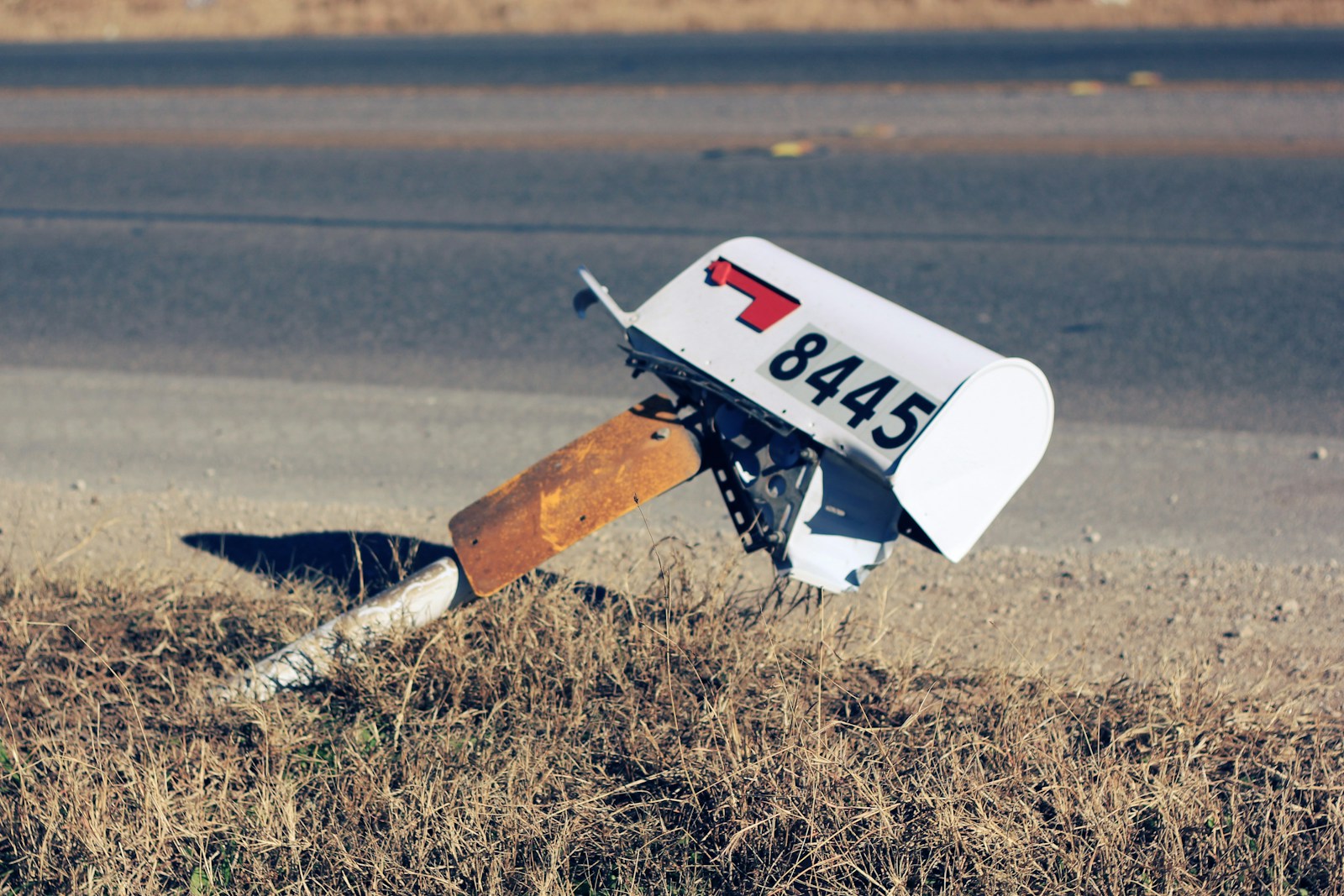
It started the way a lot of suburban problems start: a thud in the late afternoon, followed by that weird silence where you know something got hit but you’re not sure what until you step outside. The homeowner—an older guy who kept his front yard trimmed like it was a hobby—walked down his driveway and saw the mailbox bent at a sick angle, the wooden post split, and a scatter of fresh tire tracks cutting across the edge of his lawn.
His first thought wasn’t even “car,” it was “snowplow,” because that’s usually the culprit when anything near the road gets wrecked. Except it wasn’t winter, the sky was clear, and there were little shards of plastic and a smudge of dark paint on the metal box. He stood there for a minute doing that slow scan people do when they’re trying to reconstruct the physics of something stupid.
Then a car rolled back into view like it had second thoughts about escaping. It stopped a few houses down, and a teenage boy climbed out, shoulders tight, phone still in his hand like he hadn’t quite remembered to put it away yet.
The awkward walk-up and the too-fast apologies
The kid approached in that half-jog, half-shuffle that says he wants to be brave but also wants to vanish. He blurted out an apology before he even reached the mailbox, saying he “didn’t see it” and that he “just drifted” for a second. The homeowner asked if he was okay, because he wasn’t trying to be a villain, but the kid’s eyes kept flicking between the mailbox and his phone like the phone had answers.
When the homeowner asked what happened—gently, normal voice—the teen’s story started to wobble. He said he was “looking at directions,” then said he was “checking a message,” then said his friend “texted something important.” He wasn’t crying or anything, but he had that panicky, caught-red-handed energy that makes adults instantly suspicious.
The homeowner took a couple photos, because a destroyed mailbox is annoying and the post was clearly snapped. The kid watched him do it and got even more tense, like the camera was a courtroom. Then the kid asked if they could “just handle it,” which is teenager code for “please don’t make this a whole thing.”
Parents arrive like they’re negotiating a hostage situation
About twenty minutes later, the kid’s parents showed up in an SUV, arriving with the kind of urgency that suggests they’d heard a very edited version of events. The mom got out first, brisk and tight-lipped, while the dad did that thing where he’s trying to look calm but his jaw is working overtime. They didn’t come over like neighbors; they came over like people walking into a dispute they’d already decided they had to win.
The homeowner expected the usual: apologize, offer to pay, maybe ask if he could get a replacement installed quickly because mail is… mail. Instead, the mom looked at the smashed post and said, “Okay, so, what if we just say this was storm damage?” She said it like she was proposing a clever little workaround, the way someone suggests switching lines at the grocery store.
The homeowner didn’t even respond at first, because it took a second to process what she was asking. The dad jumped in, talking fast, saying their son had “never done anything like this,” and that a police report or insurance claim would “follow him.” The kid stood behind them, staring at the ground like he wanted the earth to open up and swallow the mailbox along with him.
The “storm damage” pitch gets weirdly specific
Once the homeowner realized they weren’t joking, he asked what exactly they meant. The mom explained, with a straight face, that there’d been heavy wind earlier in the week and “mailboxes get knocked around all the time.” She suggested the homeowner could file it under storm damage and the parents would “help out a bit,” which sounded like they wanted the benefits of responsibility without any of the actual responsibility.
They weren’t just asking him to be vague; they were asking him to actively lie. The dad even floated details, like the homeowner could say he’d noticed it “after the storm” and hadn’t gotten around to fixing it until now. It was the kind of over-planning that makes a lie feel more like a project than a split-second bad idea.
The homeowner pointed out, calmly, that there hadn’t been a storm and that he had pictures with the tire tracks and plastic shards. The mom shrugged, like evidence was just another opinion, and said, “Well, it doesn’t have to be exact.” That’s when the homeowner’s patience shifted into that cold, polite firmness people get when they realize they’re being played.
When paying for a mailbox isn’t the real issue
The homeowner told them he wasn’t interested in playing insurance games and asked for their information so they could replace the mailbox properly. That should’ve been the simplest solution on earth. But the parents reacted like he’d accused them of a felony instead of asking for a name and phone number.
The dad’s tone hardened and he said they were “trying to do the right thing” and that the homeowner was being “unreasonable.” The mom kept pushing the idea that “it’s just a mailbox,” like the only reason someone would care is for the money. Meanwhile, the homeowner wasn’t even talking about some fancy custom box; he was annoyed that they wanted him to be complicit in a lie to protect their kid from consequences he’d earned.
The teen finally spoke up, quietly, and admitted he’d been texting. It wasn’t dramatic, just a small sentence that landed with weight: “I was looking down.” The homeowner glanced at the parents like, there it is, and for a moment it looked like the mom might pivot back to reality.
She didn’t. She snapped at the kid—more embarrassed than concerned—and then turned back to the homeowner and said they couldn’t have this “on record.” Not “we’re sorry,” not “we’re glad no one got hurt,” just “don’t make this official.”
The homeowner draws a line, and the parents test it
The homeowner told them he wasn’t filing anything as storm damage and he wasn’t going to lie if anyone asked what happened. He offered a straightforward path: pay for a new mailbox and post, and he wouldn’t call the police because no one was hurt and the damage was contained. That was him being generous, even if he didn’t frame it that way.
The dad asked, pointedly, what it would cost, like he was preparing to argue the price of a mailbox the way someone argues a mechanic’s estimate. The homeowner said he’d get a quote and send it over, and he wanted their insurance information just in case. The mom immediately said no, insisting they could “just give him cash” if he’d stop “making it a thing.”
That’s where it got tense in a quieter way. Cash isn’t inherently suspicious, but the way she said it made it feel like hush money for a mailbox. The homeowner didn’t bite; he repeated that he needed their contact info, and if they refused, he’d file a report because he wasn’t going to get stuck replacing it on his own.
They stood there in the driveway, the broken post between them like a prop in a bad negotiation. The teen looked miserable, not defiant—just stuck watching his parents try to outmaneuver basic accountability. And the homeowner, who probably wanted nothing more than to go back inside and eat dinner, was suddenly in the position of having to be the adult for three people.
In the end, the parents handed over a phone number but still wouldn’t give insurance information, acting like that was a personal boundary instead of standard procedure. They drove off with the teen in the passenger seat, the mood inside the SUV visible even through the tinted windows—tight, quiet, heavy. The mailbox stayed bent and broken at the curb, a small, stupid wreck that somehow exposed a much bigger one: not a kid’s mistake, but the parents’ frantic need to rewrite reality so their son never has to sit in it.