

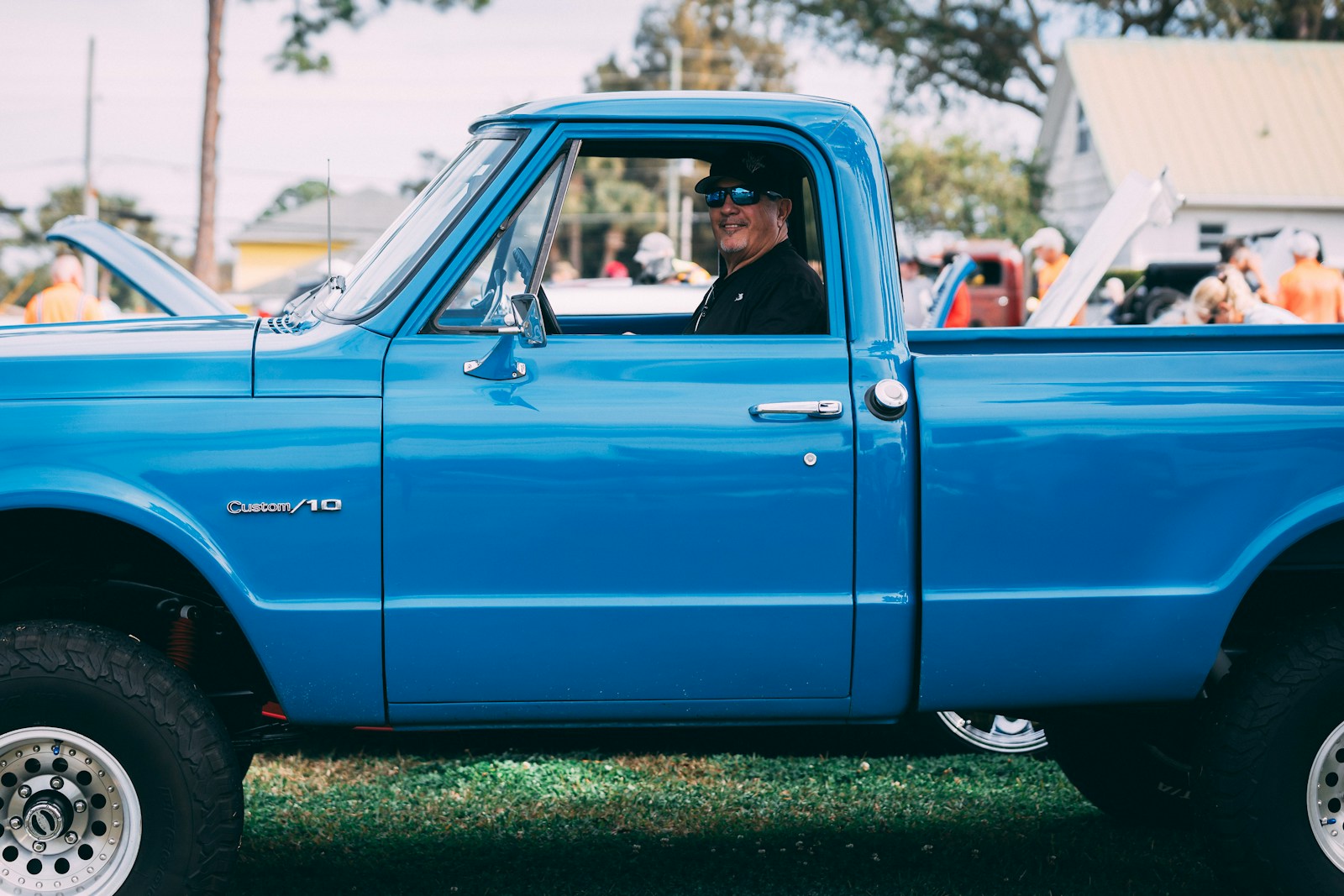
By the time the new truck showed up in the driveway, the couple already knew there were strings attached. Not official strings, not “sign here and follow these rules,” but the kind that come with certain families who treat gifts like they’re still in charge of your life. The husband was excited anyway, because it was a truck—shiny, loud, sitting tall on new tires like it belonged in a commercial.
His parents had been talking about upgrading him for months. They’d frame it as “help,” as if their adult son was still the kid who needed a push to get ahead. His wife had learned to smile politely whenever they got generous, because their generosity always came with a weird aftertaste.
So when they announced they’d bought him a truck, everyone did the appropriate amount of oohing and aahing. Then, two days later, his mother said the quiet part out loud: his wife wasn’t allowed to drive it. Not “please be careful” or “she’s not on the insurance,” but a flat, possessive line—because the truck “wasn’t for her.”
The Gift That Wasn’t Just a Gift
The truck wasn’t a random surprise. The husband—let’s call him Mark—had been using an old sedan that coughed when it idled and had a mystery rattle that even the mechanic seemed tired of discussing. Mark’s parents, who liked being seen as the rescuers, kept bringing up how “a man needs a truck” and how they could “take care of it.”
Mark’s wife, Jenna, heard those comments and recognized them for what they were: his parents reasserting their role as the primary providers in his life. Mark and Jenna were doing fine, but they were budgeting hard—rent, student loans, and the kind of grocery bill that somehow doubles when you blink. A new truck wasn’t in the plan, even if Mark wanted one.
When his parents finally pulled the trigger, they made it a whole event. They invited Mark and Jenna over for dinner, acted suspiciously cheerful, and then “walked them out” to the driveway where the truck was parked, washed, and gleaming under the porch light. Mark’s dad handed him the keys with a grin like he’d just crowned him.
Jenna did the right thing socially: thanked them, smiled, took photos. But she also noticed something weird in the way Mark’s mom kept saying “your truck” with emphasis, like she was stamping ownership into the air. It was subtle enough that nobody could call it out without sounding ungrateful, but it landed.
The First Time Jenna Reached for the Keys
The immediate aftermath looked normal. Mark drove it everywhere for the next couple of days, showing it off to friends, running errands that could’ve waited, offering to “just grab” things so he’d have an excuse to be behind the wheel. Jenna teased him about it, the way you tease someone who’s completely in love with a new toy.
Then came the first moment Jenna actually needed to use it. Her car wouldn’t start on a morning she had to get to work early, and Mark had already left. She texted him, and he said, casually, “Just take the truck,” because in his head it was now their household vehicle.
Jenna called Mark’s mom to ask a quick question about the paperwork, because the parents were handling the title and insurance “for now.” She expected a simple answer. Instead, his mom paused like Jenna had asked for a kidney.
“Oh,” the mom said, with this little laugh that wasn’t a joke. “No, honey. That truck wasn’t for you to drive.”
“It Wasn’t For Her”
Jenna, thinking it had to be some misunderstanding, asked what she meant. Mark’s mom went from fake-sweet to oddly firm in the same sentence. “We bought that for our son,” she said, “not for… everyone.”
There was a beat where Jenna tried to keep the conversation normal, because that’s what you do when someone says something insane in a calm tone. She asked if it was an insurance thing. She offered to be added to the policy or to pay the difference.
Mark’s mom didn’t take the out. She said, “No. I don’t want you driving it. It’s his truck.” Then she added, like she was clarifying something obvious, “He can drive you if you need to go somewhere.”
That last part was the one that made Jenna’s stomach drop. It wasn’t just about a vehicle; it was the implication that Jenna could be managed, like a teenager borrowing a car with supervision. Jenna hung up and sat there staring at her dead car, feeling both embarrassed and weirdly furious.
When Mark got the story later, he didn’t believe it at first. Not because he thought Jenna was lying, but because he couldn’t wrap his head around his mom saying something that blunt. He called his parents, and within minutes the conversation turned into that familiar family pattern: his mom insisting she was “just being practical,” his dad backing her up with grunts, and Mark trying to translate their control into something reasonable.
The Strings Start Showing
Once the topic was out in the open, the “gift” started to look less like generosity and more like a leash. Mark’s parents admitted they’d kept the truck in their name “until things settle,” which was vague enough to mean forever if they wanted it to. They were paying for the insurance, so they felt entitled to dictate who touched the steering wheel.
Jenna pointed out the obvious: if the truck is in their name and they’re paying insurance, then it’s not really Mark’s truck. It’s their truck parked at Mark’s house. She said it carefully, because even saying that much felt like stepping into a trap.
Mark’s dad didn’t like the framing. He hit Jenna with the classic line people use when they want obedience without discussion: “We’re trying to do something nice here.” Mark’s mom acted wounded, like Jenna had taken a sweet family moment and smeared it with suspicion.
And then, because control never travels alone, the comments started drifting. Mark’s mom brought up how “some wives” take advantage, how “people” get entitled once they get comfortable. She didn’t say Jenna’s name, but she didn’t have to.
Jenna could feel the subtext settling into the room like dust: they didn’t trust her. Or worse, they didn’t think she belonged in the circle of “real family” who got to benefit from what they provided. She wasn’t a partner in Mark’s life; she was an accessory, and accessories don’t get keys.
Mark Gets Stuck in the Middle
Mark tried to patch it with logic. He told his parents Jenna would only drive it when needed, that she was a good driver, that it was impractical to have a truck in the driveway that only one person could legally touch. The more he explained, the more his parents acted like he was being manipulated.
His mom asked him why Jenna “needed” to drive it at all. Why couldn’t she take her own car? Why couldn’t Mark “plan better” and make sure Jenna was taken care of? It was like she was volunteering him for a lifetime chauffeur position just to preserve the hierarchy.
Jenna, meanwhile, started pulling back. She stopped participating in phone calls and avoided family dinners, because every interaction felt like stepping into a room where she was being evaluated. Mark noticed, but he also couldn’t fully confront his parents without that old fear flaring up—the fear that if he pushed too hard, they’d yank the gift away and punish him with guilt for months.
The truck sat there as a constant reminder of the fight. Mark loved driving it, but now every time he climbed in, Jenna saw him choosing convenience over solidarity. Mark didn’t say that out loud, but Jenna didn’t need him to; the silence did it for him.
The Awkward Compromise That Isn’t a Compromise
Eventually Mark suggested a “compromise” that sounded more like surrender. He’d ask his parents to add Jenna to the insurance, and if they refused, he’d pay to insure it himself. He floated the idea like it was a practical fix, hoping it would keep everyone calm.
His parents didn’t take it as a fix. They took it as an insult—Mark trying to remove their authority by paying for something himself. His mom said, “So you’re saying our help isn’t good enough?” in that tone that turns any boundary into a personal attack.
When Jenna heard that, she snapped in the quiet way people do when they’ve been holding it in too long. She told Mark, privately, that she wasn’t going to live in a marriage where his parents could decide what she was allowed to do. Not because she was dying to drive a truck, but because she was done being treated like a temporary guest in her own life.
Mark didn’t argue. He just looked tired, like he was realizing the truck wasn’t a gift; it was a test. And the worst part was that the test wasn’t even about driving—it was about whether he’d accept his parents drawing a line between him and his wife and calling it “family.”
By the end of it, the truck was still in the driveway, still technically Mark’s, still technically not. Jenna’s car was getting fixed, but the bigger problem wasn’t transportation anymore—it was that everyone now knew exactly what Mark’s parents thought of Jenna’s place in the family. And Mark had to decide whether he wanted a shiny truck that came with rules, or a marriage where his wife didn’t have to ask permission to turn a key.