

The kid wasn’t even trying to be slick about it. He was seventeen, in his dad’s car, rolling a little too fast down a wide suburban road that basically begged people to treat it like a runway. The kind with fresh asphalt, long sightlines, and just enough tree cover to make you forget there are houses tucked behind it.
He’d borrowed the car for something that sounded harmless on paper—grab a couple things from a big-box store, swing by a friend’s place, be home before dinner. The only detail that mattered later was the car itself: his dad’s pride-and-joy, a newer performance model with a loud-ish exhaust and that “I’m not even trying and I’m already at 55” kind of acceleration. The teen liked it for the exact reason his dad did, and that’s how this whole mess started.
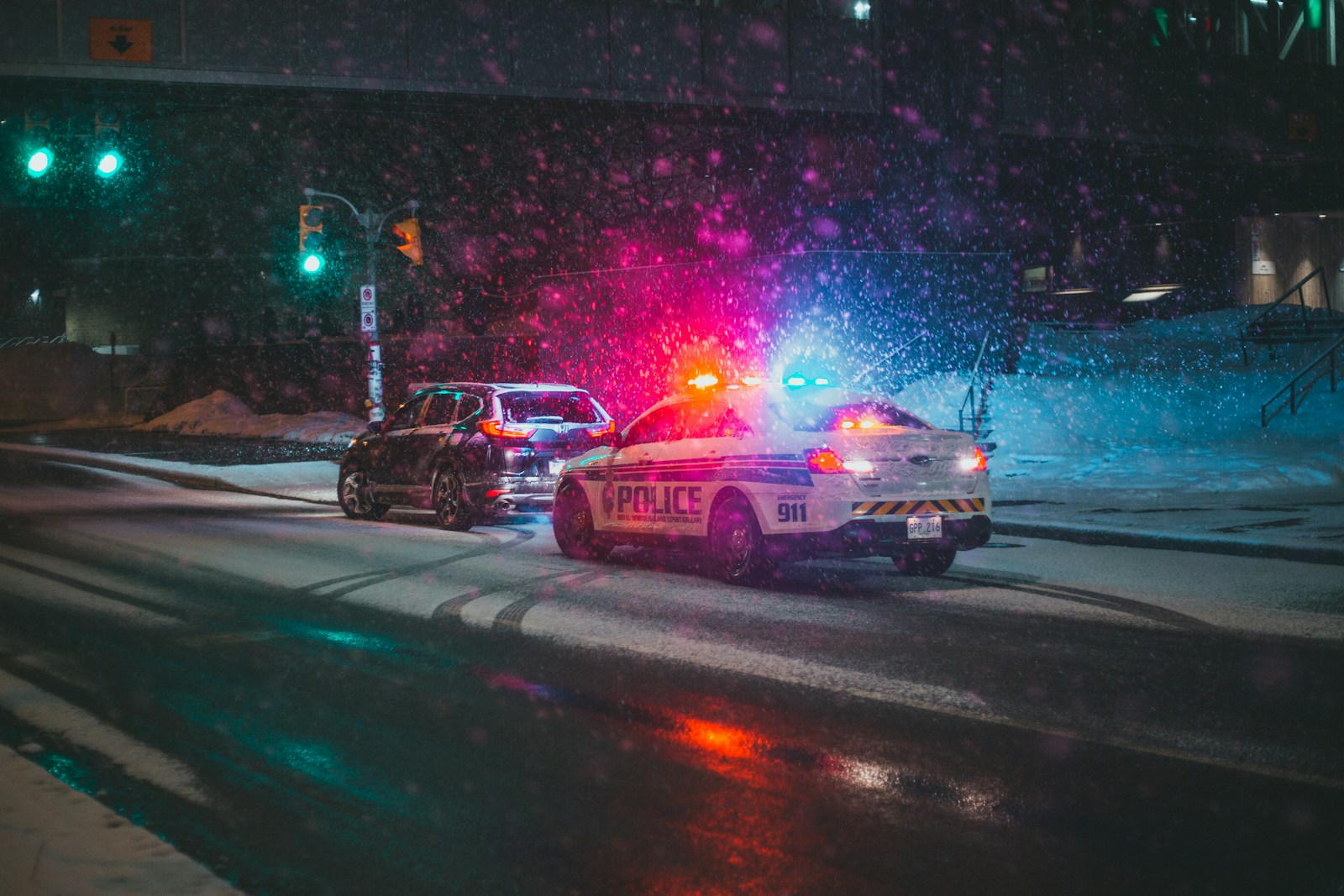
The patrol car was sitting in one of those sneaky cutouts where the curb dips and the trees do the rest. The teen didn’t see it until the lights popped on behind him, and by then his stomach was already dropping. He pulled over cleanly, hazards blinking, trying to look like someone who totally hadn’t been doing what he’d been doing.
The stop starts normal—until it doesn’t
The officer walked up with that calm, practiced posture that says he’s done this a thousand times and none of them ended in a movie chase. “Do you know why I stopped you?” he asked, the classic opening. The teen tried the classic response too—something vague, something hopeful—like maybe it was a taillight or he drifted a little.
But the officer didn’t play along. He told him the speed, specific and non-negotiable, and it wasn’t a “five over, be careful” number. It was the kind of number that makes your insurance company feel a disturbance in the force.
The teen’s hands were on the wheel like he’d seen adults do. He handed over his license, then fumbled through the glove box for registration and insurance, because of course it wasn’t where he expected. The whole time, he kept glancing toward the officer like he was waiting for a miracle in the form of mercy.
That’s when the officer asked whose car it was. The kid said, “My dad’s.” Nothing weird there. The officer nodded like he’d expected that, and asked the obvious follow-up: “Does your dad know you have it?”
“He said it was fine… the car needs to be driven”
The teen, maybe trying to sound responsible, said yes—his dad knew. Then came the line that turned a routine speeding stop into something the officer actually paused at: “He said it was fine because this car needs to be driven.”
It wasn’t said as a joke. It wasn’t even said defensively. It came out like a rehearsed explanation, like he’d been given a script: the car isn’t meant to sit, it needs to stretch its legs, it’ll get “gunked up,” it’s better for the engine if it gets driven hard sometimes. The kid’s face had that earnest confidence of someone repeating something they fully believe counts as permission.
The officer blinked and did that half-second stare that can mean a lot of things—confusion, disbelief, or the mental math of “Is this kid serious?” He asked the teen to repeat himself, just to make sure he heard it right. The teen repeated it, a little softer this time, like maybe volume was the issue.
Now the officer’s tone shifted. Not angry, but sharper, more precise. “So your dad told you it’s okay to speed because the car needs to be driven?” The teen tried to clarify—he wasn’t saying his dad told him to speed, just that his dad said it was okay to “drive it” and it “likes” being driven. The distinction didn’t help.
The kid tries to talk his way out, and keeps digging
Most people, once the ticket starts to feel real, get quiet. This kid did the opposite. He tried to reason with the officer like they were negotiating the rules of physics.
He pointed out the road was empty. He said traffic was flowing faster than him (it wasn’t). He mentioned that his dad always told him to “keep up with traffic” because driving too slow is dangerous, which is one of those half-truths adults say that teenagers turn into a permission slip for anything.
The officer asked where he was going. The teen said the store, then his friend’s house, and you could hear the way he rounded off the details like he didn’t want to give anything the officer could pin down. The officer didn’t bite, just nodded and walked back to his cruiser with the kid’s documents.
Sitting alone in the driver’s seat of your parent’s expensive car is a very specific kind of dread. The teen stared at the dash like it might offer a cheat code. He checked his phone, then remembered that checking your phone while pulled over is also not a great look, and set it face-down in the cupholder.
When the officer came back, he had that paper in his hand. Not a warning. A ticket. He explained the speed again, explained the fine, explained the court option, explained the points. The teen nodded like he understood, but his eyes were doing that frantic thing where they’re trying to find an exit that isn’t there.
The phone call to Dad is where everything curdles
The officer asked if he wanted to call his dad, which sounded generous until you realized it might’ve been curiosity. The teen said yes immediately, like calling his dad was going to magically turn the officer into a buddy. He put it on speaker—either because he panicked, or because he thought transparency would help.
Dad answered with that distracted tone of someone mid-errand or mid-something. The teen launched in fast: he got pulled over, it’s a speeding ticket, he’s in Dad’s car, and he told the officer what Dad said. There was a pause on the line that lasted long enough to feel heavy through the speaker.
Dad didn’t say, “I never said that.” He didn’t say, “Why were you speeding?” His first move was to go defensive and indignant, like the ticket was a personal insult. He asked the teen if the officer was being a jerk, asked where it happened, asked what the speed was.
The teen answered, and Dad’s voice went louder—not yelling at the teen, but inflating into that “I’m going to argue my way out of this” tone. The officer, still standing there, leaned slightly toward the phone and introduced himself in that clipped, professional way. Dad immediately started in on the whole “Everyone drives that speed there” thing, like the officer was going to nod and tear up the ticket.
And then, like he couldn’t help himself, Dad said something that basically confirmed the teen’s line. He didn’t say, “Yes, I told him to speed,” but he did say, “It’s a performance car. You can’t baby those. They’re meant to be driven.” The officer didn’t react dramatically; he just listened, eyes steady, like he was collecting a sample.
What the ticket actually triggered at home
The officer ended the interaction cleanly. He told the teen to drive safely, handed him the citation, and walked away without giving Dad the satisfaction of an argument. The teen sat there for a second, gripping the wheel, then pulled back onto the road like he was suddenly allergic to the gas pedal.
When he got home, the ticket was still warm in his pocket like a brand. He tried to enter quietly, but Dad was already wound up—half mad at the officer, half mad at the inconvenience, and now also mad that his own words had been repeated back to someone with a badge. The teen’s mom (or whoever else was in the house) heard enough of the conversation to piece together the essentials and immediately went cold.
The fight wasn’t just about the money. It was about what Dad had been teaching without realizing he was teaching it: that rules are negotiable if you have a good enough excuse, that cars have “needs” that matter more than speed limits, that consequences are something you talk your way out of. The teen, meanwhile, clung to the one defense he had—he’d done what he thought he was allowed to do, in the car he was told to enjoy.
Dad tried to pivot into blaming the teen—suddenly it was “You should’ve known better,” suddenly it was “I didn’t tell you to do that,” suddenly it was “You made me look bad.” The teen snapped back that he literally repeated Dad’s words, and the whole argument got stuck on that uncomfortable fact: the kid hadn’t invented the logic, he’d just followed it a little too literally.
By the end of the night, the ticket was on the kitchen counter, the keys were no longer freely available, and nobody felt like they’d won anything. The teen was grounded in a way that didn’t fully make sense to him, and Dad was simmering in a way that made it clear he hated being forced to see how his own “cool car guy” attitude landed in the real world. The messiest part wasn’t the fine—it was that the kid had trusted his dad’s philosophy, and now both of them were stuck staring at the cost of it, neither willing to admit whose idea it really was.