

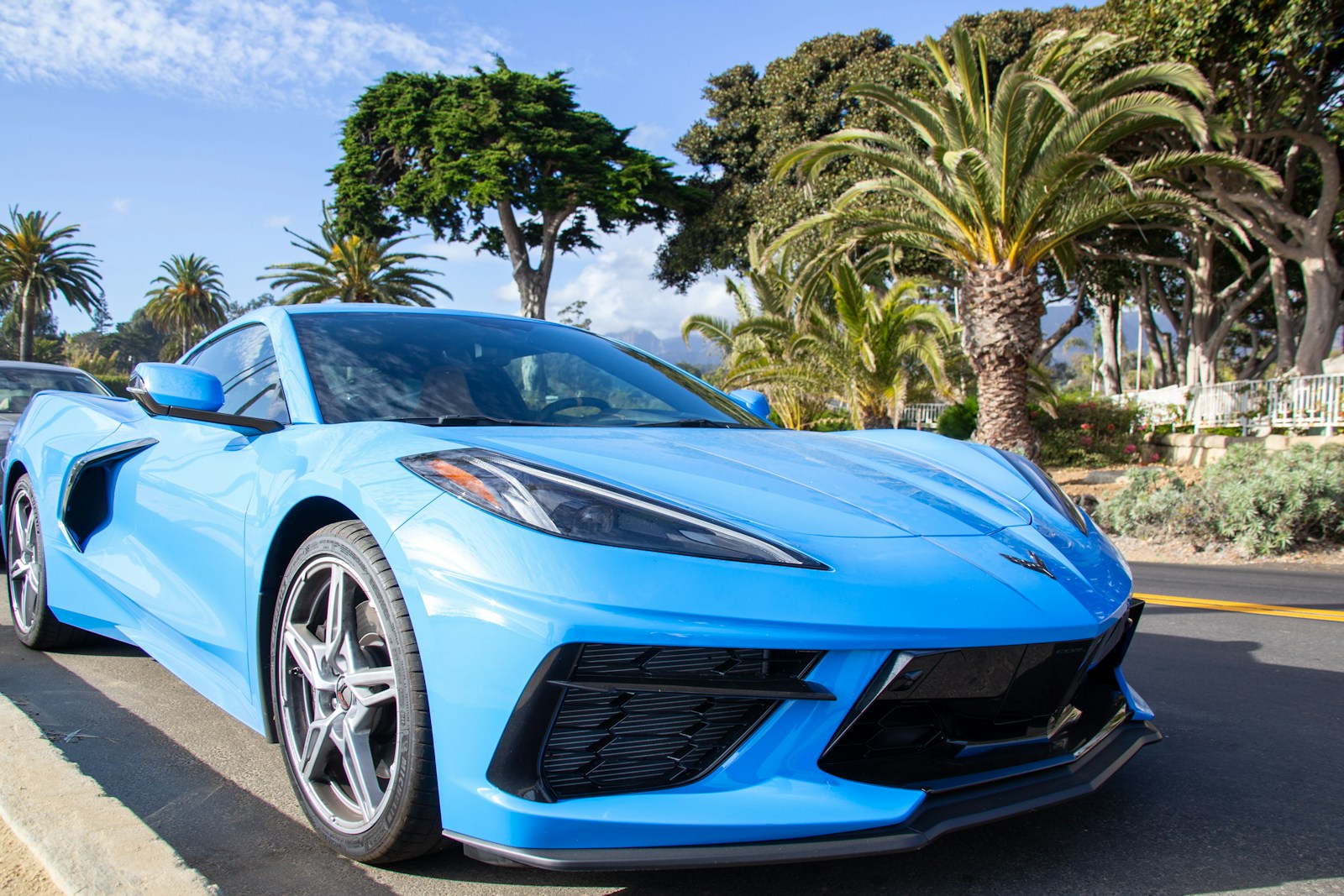
The Corvette wasn’t some weekend toy that sat under a cover in a climate-controlled garage. It was the stepdad’s pride project—the one he washed by hand, backed into parking spots like he was docking a boat, and talked about the way other people talk about their kids’ report cards.
He’d been married to Jenna for a couple years, and part of blending families meant sharing a driveway with her sixteen-year-old son, Caleb. Caleb had just gotten his license and had that brand-new-driver energy: equal parts confidence and impatience, the kind that makes adults suddenly start hiding keys and counting seatbelts.
So when the stepdad—Mark—said, plainly, more than once, “Do not touch the Corvette,” it wasn’t a power play. It was a boundary drawn with a thick black marker. Caleb nodded the way teens do when they’re hearing you but not absorbing a single word.
The Corvette Rule
Mark’s rule was simple: Caleb could drive the family SUV and, if he needed something smaller, Mark would help him find a cheap used car. The Corvette was off-limits, full stop. Mark didn’t even want Caleb sitting in it, not because he thought the kid was a thief, but because Caleb treated cars like video game controllers—press button, go fast, see what happens.
Jenna half-supported the rule in that wishy-washy way that sounds supportive until there’s friction. She’d say, “Yeah, yeah, Mark’s car is Mark’s car,” but she also liked being the “cool mom” who didn’t clamp down too hard. When Caleb complained, she’d roll her eyes like Mark was being precious about “a hunk of metal.”
Caleb, meanwhile, did what teens do when you tell them not to do something: he turned the Corvette into a personal challenge. He started asking questions that weren’t really questions—how fast it goes, how much it costs, what the insurance is like—like he was collecting ammunition for a future argument.
Mark tried to head it off with one of those calm, adult talks that’s supposed to sound reasonable and final. He explained horsepower, rear-wheel drive, torque, and how the car was touchy even in experienced hands. Caleb said, “I get it,” but he said it too fast, like he couldn’t wait for the conversation to end.
The Day the Keys Were “Right There”
The problem wasn’t that Mark handed Caleb the keys; it’s that Mark was living like a normal person in his own house. One afternoon, Mark ran inside to grab a package he’d missed, left his keys on the hook by the door, and started juggling the usual distractions—phone buzzing, grocery delivery, Jenna asking him to check something.
Caleb was home from school early, which apparently meant free time and a house with weak supervision. He’d been talking for weeks about taking a “quick spin,” and that day he decided the universe had provided an opening. The keys were right there, the garage door opener was right there, and Mark was distracted enough that Caleb could tell himself it wasn’t really stealing.
He didn’t ask. He didn’t even announce it. He just slid the keys off the hook like he’d done it a hundred times, headed for the garage, and climbed into the Corvette with the casual entitlement of someone borrowing a sweatshirt.
When Mark realized the keys were gone, the feeling wasn’t even anger at first—it was that cold, sinking “no, no, no” panic you get when you know exactly what happened but you don’t want to believe it. He stepped into the garage, saw the empty spot, and his voice changed instantly. Jenna came in behind him, saw Mark’s face, and knew it was bad.
The “Quick Spin” Turns Into a Wreck
Caleb didn’t make it far. Depending on who you ask, it was either two blocks or “barely out of the neighborhood,” but it was close enough that the neighbors heard it. The Corvette’s engine barked in a way that didn’t match the calm suburban afternoon, and a couple people looked up from their yards like, “Who’s doing that?”
He took a corner too hot—rear-wheel drive, too much gas, teen reflexes that think they’re faster than physics. The back end swung. He overcorrected. The car snapped the other way, hopped a curb, and ended up kissing something that doesn’t move: a mailbox cluster, a low brick wall, and the edge of a landscaping boulder that someone thought looked classy.
It wasn’t a slow, gentle crunch. It was airbags, smoke, and that horrible, sudden quiet after metal stops moving. The front end was folded in a way that makes your stomach tighten even if you’re not the one paying for it.
Caleb got out, shaken but walking, which is the only part of the story that doesn’t make people wince. He started doing that frantic teen thing where they talk too much—hands shaking, voice pitching up, trying to narrate their way out of reality. He called his mom before he called Mark, and that choice set the tone for everything that came after.
Mark Sees It Up Close
Mark didn’t hear about it from the police or a neighbor; he heard Jenna’s phone ring, saw her expression shift, and watched her step into the hallway to take the call like she was trying to contain the blast radius. A minute later she came back with that tight, protective look and said Caleb had been in an accident. Mark asked one question: “In what car?”
Jenna tried to soften it—“He’s okay, that’s what matters”—but Mark was already grabbing his shoes. They drove to the scene in silence, the kind where nobody wants to be the first person to say the thing that can’t be unsaid. When they turned the corner and Mark saw the Corvette’s shape all wrong, he made a sound that wasn’t quite a word.
Caleb was standing on the sidewalk with an officer, looking small for the first time in the story. His hoodie sleeves were pulled over his hands, and his eyes kept darting between his mom and the wreck like he was waiting to wake up. When Mark got out, Caleb started talking again—“I didn’t mean to,” “It just slid,” “I barely hit anything”—like minimizing the damage would change the shape of the car.
Mark didn’t scream. That’s what makes it worse, honestly. He just stared at the crushed front end and asked, quietly, “Why did you take it?” Caleb’s answer was a mess of excuses: he wanted to practice, he was going to be careful, it was only for a minute, everyone makes mistakes.
Jenna stepped between them at one point, more instinct than strategy, like she was physically blocking Mark from saying something harsh. Mark looked at her like he didn’t recognize her. The officer asked for registration and insurance, and Mark handed it over with hands that were steady but white-knuckled.
“He’s Just a Kid” Becomes the Battle Cry
The real fight didn’t happen at the scene; it happened later, at home, when the adrenaline faded and the consequences started forming into numbers. Towing fees, damage estimates, potential insurance headaches, and the fact that a “totaled” car doesn’t get untotaled because someone’s feelings are hurt. Mark sat at the kitchen table with paperwork and that rigid posture of someone trying very hard not to explode.
Jenna moved into crisis-management mode, but her version of it was mostly emotional triage for Caleb. She made him tea, told him to breathe, kept repeating that he could’ve died, like that alone should close the case. When Mark brought up the cost, she said, “We’ll figure it out,” in a tone that implied it was just another household hiccup.
Mark wasn’t interested in “figuring it out” as a vague future concept. He wanted accountability, and he wanted it now: Caleb should lose driving privileges, get a job, pay back whatever insurance didn’t cover, and—most importantly—actually acknowledge he’d done something wildly disrespectful. Jenna heard that and immediately went to the line that would poison every conversation after: “He’s just a kid.”
It wasn’t the idea that Caleb was young that set Mark off; it was how Jenna used it like a shield and a broom at the same time. Shield Caleb from consequences, broom the whole thing under the rug. She kept saying they should “move on” and not “ruin the family” over a car, like Mark’s attachment was childish and his anger was the real problem.
Caleb, for his part, latched onto his mom’s framing like it was a life raft. He apologized in that quick, slippery way that sounds like an apology until you realize it’s just a way to end the conversation. “Sorry, okay? I said I’m sorry,” he snapped at one point, as if Mark was being unreasonable for still having feelings about his wrecked Corvette.
Mark finally asked Jenna a question that landed like a stone in a quiet room: if it had been her belongings, her money, her boundary, would she still be telling everyone to “move on”? Jenna got defensive and said that wasn’t fair, that Mark was acting like Caleb committed a crime. Mark answered, flatly, “He did. He took my car after I told him not to.”
The last anyone heard before doors started closing was Jenna insisting Mark was “holding a grudge” and Mark saying, “I’m holding a boundary.” And that’s where it stuck—because the Corvette wasn’t just totaled metal; it was the moment Mark realized he was living with two people who expected his trust to be automatic and his limits to be negotiable, and Jenna realized Mark wasn’t going to play along just to keep the peace.