

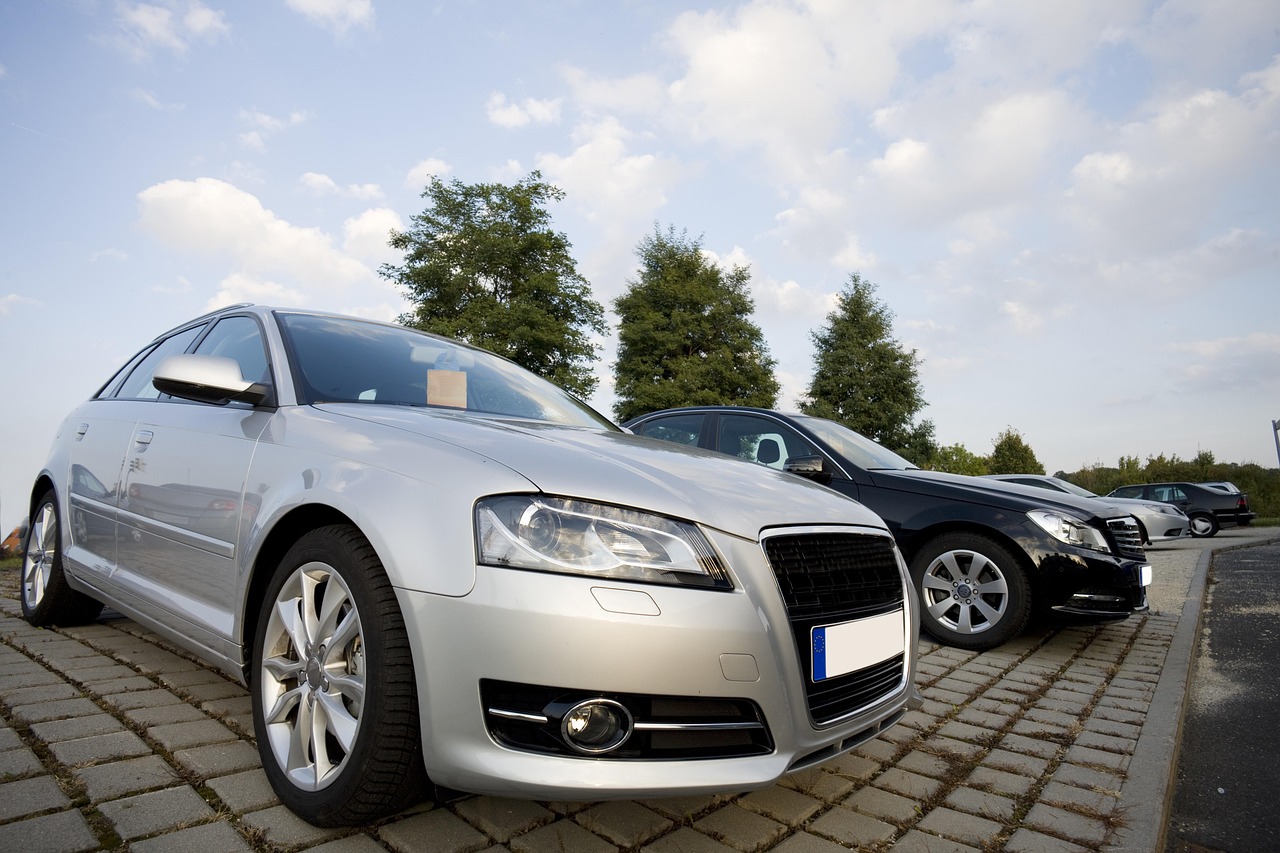
It started the way a lot of neighborhood nonsense starts: with a car that didn’t belong there, sitting a little too comfortably in someone else’s space. The homeowner—let’s call him Mark—came home on a Tuesday afternoon and found a silver sedan parked halfway up his driveway like it had always lived there. No note, no heads-up, no “hey, just for an hour.” Just a car, angled toward his garage, blocking the spot where he usually pulled in.
Mark figured it was a one-off. Maybe a delivery guy got turned around, maybe someone visiting across the street. He walked over and knocked on the neighbor’s door anyway, because if you’re going to live next to people, you at least try the civilized approach first. That’s when he noticed the little paper tucked under the wiper: a handwritten “FOR SALE” sign with a phone number and “Facebook Marketplace” scribbled underneath.
And suddenly it clicked. This wasn’t a mistake. This was someone using Mark’s driveway like a free showroom.
The “It’s Just For A Bit” Phase
The neighbor, Dave, came out with that casual, half-smile that’s supposed to smooth over inconvenience. He didn’t apologize so much as explain, like Mark was being brought up to speed on a plan everyone had already agreed to. Dave said he’d been selling cars online and it was “easier” if buyers had somewhere obvious to pull up and look at them.
Mark pointed out the obvious: Dave had a driveway. Dave had a curb in front of his own house. Dave had, presumably, the entire world that wasn’t Mark’s private property. Dave shrugged and said Mark’s driveway was “more visible” from the main road, and anyway, he’d only do it during the day and would “move them if it’s an issue.”
Mark told him it was an issue right now, because Mark couldn’t even park his own car. Dave sighed like Mark was being dramatic, then went inside to grab the keys. The sedan got moved… but not far, just down the driveway apron to the curb line, still close enough that the message was clear: Dave wasn’t hearing “don’t do this.” He was hearing “don’t do this in a way that embarrasses you.”
The Driveway Becomes a Dealership
Within a week, it wasn’t one random sedan. It was an ongoing rotation. One day it was a dented SUV with mismatched tires, the next day a little hatchback with a “new brakes!” note taped inside the window. Mark would leave for work and come back to a different vehicle sitting on his concrete like it was on consignment.
It wasn’t just the cars, either. Buyers started showing up. Mark would be inside eating dinner and hear engines idling outside his front window, then two or three voices chatting in that overly friendly, transactional way people do when they’re trying to sound confident about spending money. Once, Mark opened his blinds and saw a stranger doing the classic “kick the tire, nod thoughtfully” routine while Dave hovered nearby, pointing at something on the dash.
The awkward part was that the buyers thought they were on the right property. They’d walk up Mark’s driveway, stand near Mark’s garage, and sometimes knock on Mark’s door if Dave wasn’t outside yet. Mark found himself explaining, over and over, “No, I’m not selling it. Wrong house. Next door.” It made him feel like a crank even though he was the one being inconvenienced.
After the third time Mark got blocked in, he started taking photos. Not in a dramatic, waving-the-phone way—more like quiet documentation. License plates, timestamps, the Facebook listing screenshots he managed to find when he typed the phone number into the search bar. He wasn’t trying to start a war; he just wanted to be able to prove he wasn’t imagining it when it inevitably got weird.
The Confrontation That Turned Personal
It got weird when Mark finally drew a hard line. He walked over again, calmer than he felt, and told Dave directly: no more cars on his driveway, period. Dave’s expression changed instantly, like the friendly neighbor mask got set down on a shelf. He said Mark was “making a big deal out of nothing” and asked why Mark had a problem with him “trying to make some extra money.”
Mark said he didn’t care how Dave made money; he cared that Dave was using his property to do it. Dave pushed back with a bizarre logic that sounded rehearsed, like he’d already justified it to himself: Mark’s driveway was “empty most of the day,” and it “wasn’t hurting anything.” Mark told him it was hurting plenty—his ability to park, his privacy, and the fact that strangers were wandering up to his house because Dave couldn’t be bothered to keep his sales on his own side.
That’s when Dave hit him with the line that made the whole thing feel less like a misunderstanding and more like a power play. Dave said, flatly, “Well, if you want to start claiming spaces, don’t park where you’re not supposed to. Because I can have your car towed.”
It was so backwards Mark almost laughed. Dave had been using Mark’s driveway like a staging area for his side hustle, and now he was threatening towing like he was the one enforcing the rules. Mark asked him what he meant, because Mark’s car was literally parked in Mark’s driveway. Dave said he’d noticed Mark sometimes parked “close to the line” and that if Mark ever “blocked access,” he’d call a tow company and “see what happens.”
The Tow Threat Becomes a Weapon
After that, the vibe shifted from annoying to hostile. Mark started parking his car dead-center in his driveway like he was docking a spaceship, leaving no ambiguity about whose space it was. Dave responded by parking his own personal car right at the edge of Mark’s driveway entrance on the street, not blocking it enough to be illegal, but close enough that backing out became a careful, annoying maneuver.
Then Dave started doing the thing people do when they want confrontation without being the one to start it. He’d stand outside when Mark got home, phone in hand, pretending to scroll while clearly watching. When buyers came by, Dave would make a point of gesturing broadly, like he owned the whole stretch of pavement. Mark caught him one afternoon telling a potential buyer, “Yeah, this side’s clear. Neighbor’s just picky.”
The towing threat hung in the air like smoke. Mark called the non-emergency number to ask about property towing and got the usual careful answers: yes, a homeowner can have an unauthorized vehicle removed from their driveway, but you need to follow local rules, signage helps, and don’t escalate unless you’re ready for fallout. Mark looked up the local ordinances himself, because once someone threatens to tow your car from your own home, you stop assuming things will stay normal.
He also started noticing the potential legal mess Dave was creating. If a buyer tripped on Mark’s uneven paver edge while inspecting a car, who would they blame? If one of Dave’s “for sale” cars leaked oil onto Mark’s driveway, who would clean it? Dave had turned Mark’s property into a place where money changed hands and strangers loitered, and Mark was the one who’d be dealing with the consequences.
Drawing the Line Without Losing the Neighborhood
Mark tried one more diplomatic move, mostly for his own conscience. He wrote a short, clear note and put it in Dave’s mailbox: no permission to park vehicles on the driveway, any unauthorized vehicle will be reported and may be towed, please keep sales activity on your own property. It wasn’t poetic; it was the kind of language you use when you want to sound reasonable in case someone screenshots it later.
Dave didn’t respond with a note back. He responded by leaving a different car in Mark’s driveway the next morning—this time positioned so it fully blocked the garage door. Mark stood there staring at it with that slow, hot disbelief people get when they realize the other person isn’t confused; they’re daring you. When Mark knocked, Dave took his time answering, then said, “I’ll move it when I’m done. Don’t touch it.”
That was the moment Mark stopped treating it like a neighborhood disagreement and started treating it like trespassing. He called again, documented again, and made it clear—out loud, to Dave’s face—that he’d involve authorities if a strange car stayed on his property. Dave rolled his eyes and said, “Go ahead. See who they believe.”
The car got moved eventually, but not with an apology. Dave moved it like he was doing Mark a favor, then went right back to listing vehicles online. Mark could still spot the pattern: a new listing would pop up, and within a day, the matching car would appear somewhere near Mark’s driveway, like Dave couldn’t help himself. It was less about convenience now and more about proving he could push Mark around.
By the end of it, nothing was neatly resolved. Mark had his driveway back some days and lost it again on others, and every interaction came with that tense, brittle politeness that means both people are keeping score. The strangest part was the imbalance: Dave was the one trespassing, but he acted like the wronged party, like Mark’s refusal to donate his property for free was some personal betrayal. And every time Mark pulled into his own driveway, he did it with that little spike of anxiety—because when someone threatens to tow your car from your own home, the fight stops being about parking and starts being about who gets to feel safe on their own block.