

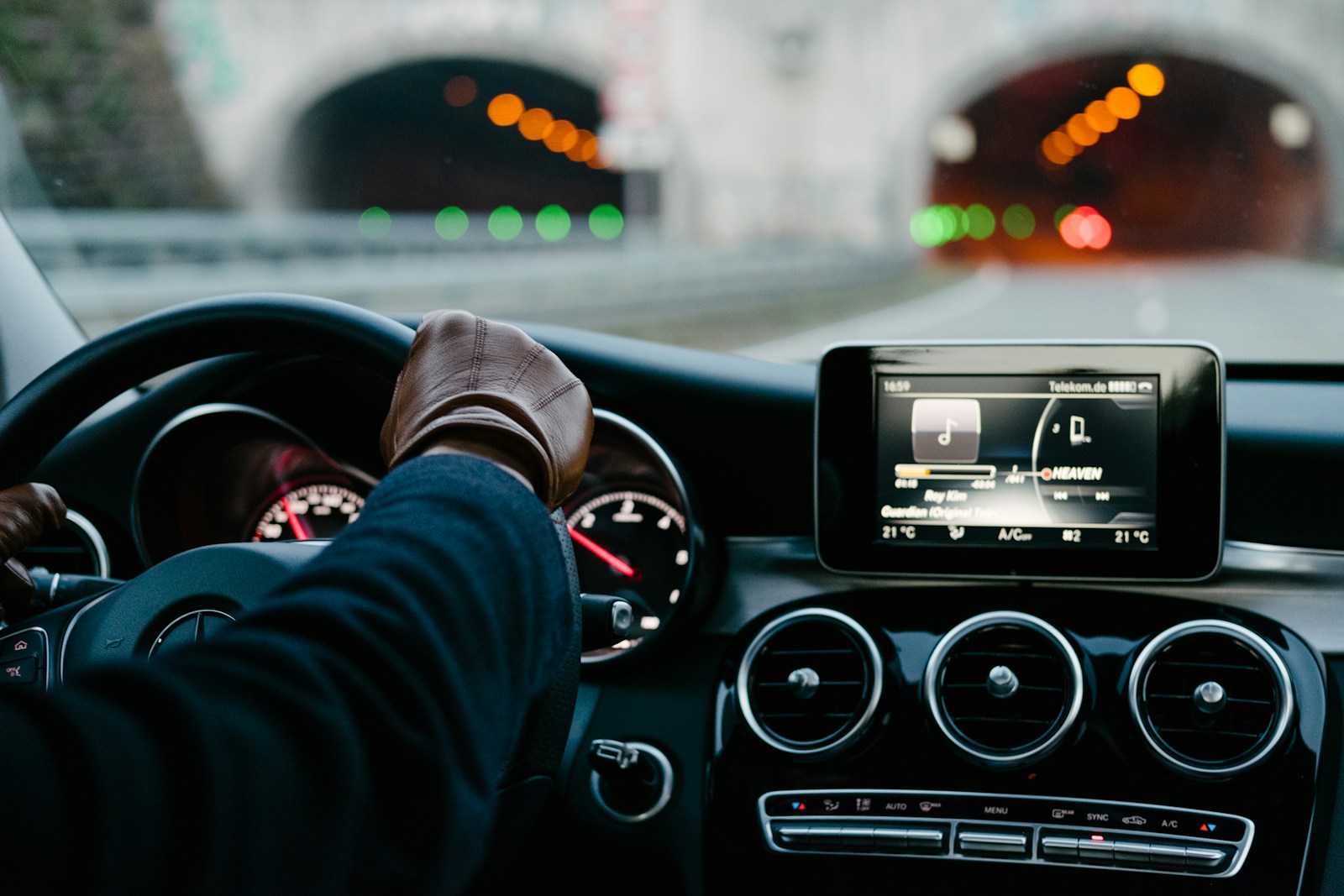
By the time he got the text, his stomach already knew what it was going to say. His mom didn’t usually message him in the middle of a workday unless something needed fixing, moving, or paying for. This time it was a casual little line that hit like a brick: “Hey, I let Darren take your car to run a quick errand. He’ll bring it right back.”
He stared at it for a second, reread it, and felt that hot, familiar anger climb up his neck. It wasn’t just that she’d “let” someone use his car. It was that she’d said it like it was a normal thing she had the authority to do, like the car was a shared household toaster and not the one reliable asset he’d worked overtime to keep on the road.
And Darren wasn’t a cousin or a longtime family friend. Darren was the new boyfriend—new enough that the son still couldn’t remember his last name without thinking about it, new enough that the relationship still smelled like cheap cologne and fast decisions.
The car wasn’t “the family car,” no matter how she framed it
The son had moved back in with his mom a few months earlier, not because he wanted to, but because rent had spiked and his previous roommate situation imploded. He paid her a set amount every month, bought his own groceries, and generally tried to stay out of her way. The car was his, title in his name, insurance in his name, repairs on his credit card.
His mom, though, treated the driveway like a community parking lot. If her sister needed a ride, she’d “borrow” his car keys with a breezy, “You’re not using it right now.” If she needed to get to an appointment, she’d ask after she’d already started putting on her shoes. He’d pushed back before, and it always turned into her acting wounded, like he’d accused her of stealing instead of asking for basic respect.
So when Darren entered the picture, the son already had his guard up. He’d met Darren twice: once at dinner, where Darren talked over his mom and called the son “buddy” like they were in a commercial, and once in the living room when Darren sat too comfortably on the couch and asked what kind of mileage the car got. That second meeting stuck in the son’s mind, because it didn’t sound like curiosity. It sounded like inventory.
The “quick errand” turned into radio silence
The son texted back immediately: “No. He can’t drive my car. Bring it back now.” He got the kind of reply that made him want to throw his phone: “Relax, it’s fine. He’s a good driver.”
Fine. Good driver. Like that covered the part where Darren wasn’t on the insurance, wasn’t the owner, and wasn’t even someone the son trusted enough to hand his spare phone charger to. The son tried calling his mom, but it went to voicemail, which made it worse—because she wasn’t “busy,” she was dodging.
He tried calling Darren, except he didn’t have Darren’s number, because why would he? So he did the only thing he could do from across town: he left work early, half-expecting to come home and find his car missing, his mom acting confused, and Darren nowhere to be found.
When he pulled into the driveway, the car still wasn’t there. His mom’s car was, parked at an angle like she’d been in a hurry. The house felt too quiet, the kind of quiet that happens when someone knows they’ve done something wrong and is waiting to see if you’ll explode.
Darren finally shows up like nothing happened
The car rolled in almost an hour later, and Darren stepped out like he’d just returned from a pleasant Sunday drive. He didn’t look apologetic. He looked smug, like he’d just proven something.
He swung the keys once on his finger and walked toward the door, but the son met him at the edge of the driveway. “Hand me my keys,” he said, keeping his voice level in a way that took real effort. Darren blinked, then laughed like the son was doing a bit.
“Your mom said it was cool,” Darren said, as if that settled it. He made a show of patting his pockets, slow and exaggerated, and then—like he was granting a favor—he held the keys out just barely within reach. The son took them without thanking him, because why would he thank a guy for returning something he never had permission to take?
Darren’s expression shifted in this subtle way, the smile still on his face but colder. “No need to get weird about it,” he said, and that line—get weird—landed like a tiny confession. Darren knew it was weird. He just didn’t like being told no.
Mom comes in hot, offended on Darren’s behalf
His mom came out onto the porch as soon as she heard voices, already wearing that defensive posture she got whenever she knew she’d crossed a line. “What is going on?” she asked, even though she knew exactly what was going on.
The son told her, calmly at first, that she didn’t have the right to loan out his car. He told her Darren wasn’t insured, that if anything had happened, it would’ve been on him—his policy, his rates, his problem. His mom waved a hand like he was reciting boring fine print, then said the thing that always made him feel twelve years old: “You’re being disrespectful.”
Disrespectful, because he didn’t want her boyfriend driving his car. Disrespectful, because he wanted his property treated like his property. Darren leaned against the car like he was part of the conversation now, nodding along, throwing in a soft little, “I told him I’d be careful,” like careful was the same thing as authorized.
The son didn’t yell. He did something that, in that moment, was somehow more insulting to them: he walked past them, went inside, and put the keys somewhere his mom couldn’t casually swipe them. Then he came back out and said, “This isn’t happening again.”
The second ask: “Just give him the keys”
The mom’s face did this quick flicker between anger and disbelief, like she genuinely couldn’t process that the answer was no. “So you’re saying Darren can’t use it at all?” she asked, drawing out “at all” like it was a childish punishment.
The son said, “Correct. He can’t drive my car.” He didn’t add a speech. He didn’t justify it beyond what he’d already said, because he’d learned that the more reasons you give, the more they treat it like a negotiation.
That’s when his mom tried to pivot into guilt. Darren had “needed” to pick something up. Darren was “helping her.” Darren was “part of this household now,” which was a wild statement considering the son was the one paying to live there and Darren was basically a frequent guest with opinions.
Then she asked again, more bluntly: “Just give him the keys when he needs them. You’re not always using the car.” It wasn’t a request. It was her trying to reestablish the old dynamic where she decided and he complied.
The son said no again, and this time the mom acted truly shocked, like she’d expected him to fold under the pressure of her tone. Darren’s jaw tightened. The son could practically see the power struggle forming behind Darren’s eyes—this idea that if he couldn’t get access to the car, he wasn’t really in control of anything here.
Locking it down turns into a household war
Over the next day, the son started keeping the keys on him at all times. He also looked into a steering wheel lock, not because he thought Darren was going to hotwire the car, but because the thought of waking up to an empty driveway made his skin crawl. His mom noticed immediately and took it personally.
She started doing that thing where every interaction becomes a referendum on your character. If he made dinner and didn’t offer her some, it was “selfish.” If he didn’t chat with Darren, it was “rude.” If he stayed in his room, it was “sulking.” The car wasn’t just a car anymore—it was the symbol of her losing control over her adult kid and her new boyfriend not being automatically granted access to everything in the house.
Darren, meanwhile, got passive-aggressive. He made little comments like, “Must be nice to have your own ride,” and once, while the son was in the kitchen, Darren joked to the mom about “taking the other car” like it was some clever workaround. The mom laughed too hard, like she needed Darren to feel validated.
The son’s boundary held, but the atmosphere shifted. It wasn’t loud fights all the time; it was worse. It was that constant tightness in the air, the sense that at any moment his mom might decide the real problem wasn’t Darren borrowing the car, but the son refusing to “be part of the family.”
And that’s where it landed: not with some tidy resolution, but with a household split down the middle. The son still had his keys, still had his car, but now he also had a mother acting like he’d betrayed her and a boyfriend treating his “no” like a personal humiliation. The car stayed in the driveway, locked and untouched, while the bigger question—how long he could live in a place where his basic boundaries were treated like an attack—just sat there idling, waiting for the next time someone decided his things were up for grabs.