

He’d brought the car in on a Tuesday because he couldn’t ignore it anymore. The steering wheel had started doing this faint shudder at highway speeds, and every once in a while the brakes made a soft grinding noise that felt like a warning you don’t get twice. Nothing catastrophic yet—just enough to turn every commute into a little negotiation with anxiety.
The shop was one of those independent places wedged between a tint place and a pawn shop, with a sun-faded sign and a waiting room that smelled like burnt coffee and rubber. The mechanic came out wiping his hands on a rag, did the quick “what’s it doing?” interview, and told him they’d take a look. Before the customer even handed over the keys, he asked the question people ask now like it’s a safety harness: “What am I looking at, roughly?”
The mechanic didn’t flinch. He said something along the lines of: probably front brakes and maybe a wheel bearing, maybe a couple other small things, but he’d estimate around $900. He made it sound like a slightly annoying expense, not a financial event, and the customer agreed because, honestly, $900 hurts but it’s within the range of “fine, I’ll just eat ramen for a week and move on.”
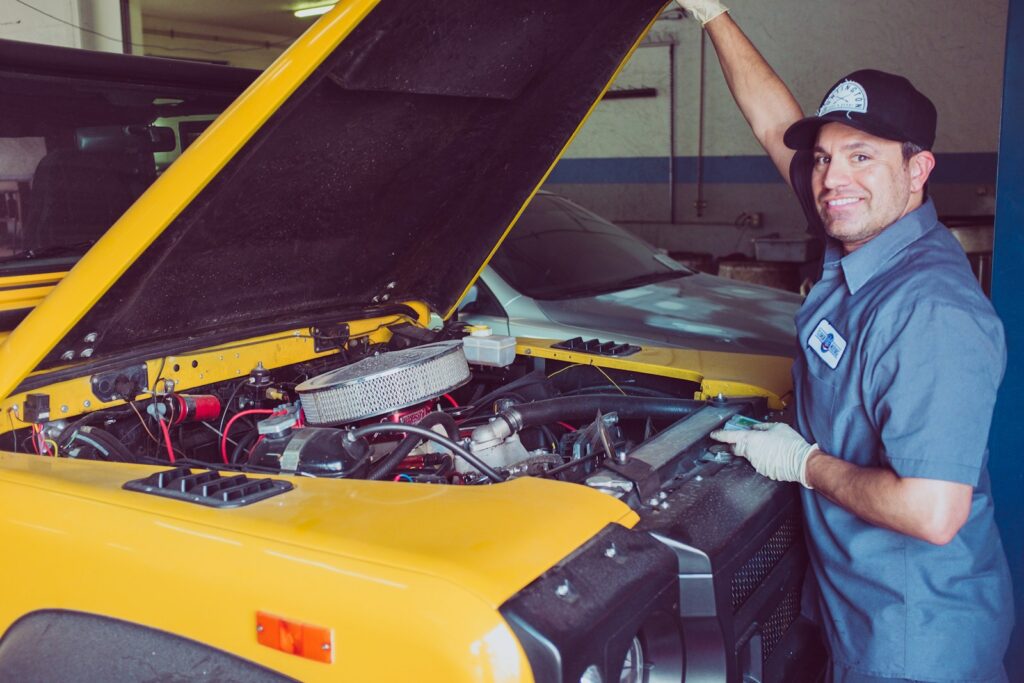
The $900 “Estimate” That Wasn’t Really an Estimate
The customer did what most people do when they’re trying to be responsible: he asked for a call before any major work happened. The mechanic nodded like that was standard procedure and wrote something on the work order—something the customer assumed was the estimate, because why wouldn’t it be? Then the keys were gone, the car was in the back, and the customer went home to wait for the verdict.
Except the call never came. No “Hey, we found X,” no “Do you want to proceed?” Just silence that stretched into the afternoon, then into the next day. The customer texted once—polite, short—asking for an update, and got a vague reply about them being busy and still diagnosing.
By the third day, his patience had that thin, brittle edge. He wasn’t even angry yet; it was more the creeping sense of being stuck in someone else’s process, where you can’t see the clock or the meter running but you can feel it anyway. He drove past the shop after work and saw his car in the lot, untouched-looking, which somehow made it worse.
The Pick-Up Call and the Number That Didn’t Make Sense
On Friday, the mechanic finally called and said it was ready. No preamble, no breakdown, just a casual “You can come pick it up.” The customer asked how much, expecting to brace for something like $1,100 if there were surprises. There was a pause long enough to feel intentional, and then the mechanic said: $3,800.
The customer actually thought he misheard him. He did the whole “I’m sorry—how much?” routine, like repeating it would force the number to become reasonable. The mechanic repeated it, same tone, like he was reading off a menu item: thirty-eight hundred and change.
That’s when the customer reminded him about the $900 estimate, and the mechanic responded in a way that set the whole thing on fire. He said the $900 was just a rough guess and once they got in there, they found “a lot more,” plus “labor adds up.” He didn’t sound apologetic, just mildly impatient, like the customer was being difficult by not keeping up.
“We Already Did the Work”
The customer showed up anyway, because there’s this specific kind of dread that makes you need to see the damage in person. The mechanic met him at the counter with an invoice that looked like it had been assembled from five different problems. Brake pads and rotors, sure—but also calipers, a wheel bearing, some suspension component the customer didn’t recognize, shop fees, diagnostic fees, and multiple line items that were basically “labor” written in different fonts.
He asked the obvious question: why didn’t anyone call before adding thousands of dollars in work? The mechanic gestured at the paper and said they tried to reach him—no proof offered, just that shruggy certainty people use when they’re hoping confidence will end the argument. The customer pulled out his phone and showed there were no missed calls, which made the mechanic’s expression tighten in this annoyed, cornered way.
Then came the line that turned it from a dispute into a standoff: “We already did the work.” It wasn’t framed as a mistake or a misunderstanding; it was framed like a completed fact that ended the conversation. The customer asked for the old parts back, a common move when you’re trying to verify anything, and the mechanic said they’d already been disposed of.
At this point the customer wasn’t even talking about money the way people usually do—he was talking about consent, about authorization, about how you can’t just triple a quote without approval. The mechanic kept returning to the invoice like it was a shield. He pointed to a signature at the bottom of the initial intake form, the one customers sign like it’s a formality, and said it authorized diagnostics and repairs as needed.
The Moment They Realized the Car Was a Hostage
The customer told him he wasn’t paying $3,800 and asked for his keys. The mechanic’s tone dropped into something colder and more official: if the bill wasn’t paid, the car wasn’t leaving. He said it wasn’t personal, it was policy, and he used the phrase “mechanic’s lien” like it was a magic spell that ended arguments.
The customer tried to negotiate in real time, offering to pay the original $900 estimate and figure out the rest later. The mechanic refused and slid the invoice back across the counter with one finger, like the paper itself was a boundary. The customer asked if the car could at least be towed out, and the mechanic said it wouldn’t be released to a tow company without full payment either.
That’s when the room got awkward in that specific way where voices aren’t yelling but everyone can hear the tension anyway. A couple of people in the waiting area pretended not to listen, staring too hard at a wall-mounted TV playing daytime court shows. The customer stepped outside, called a friend, and paced next to his now-unreachable car, trying to decide what kind of fight he was about to have.
He came back in and asked for an itemized explanation, line by line, like he was trying to slow the chaos down with detail. The mechanic started explaining in broad strokes—parts were expensive, the job was bigger than expected, it took longer. The customer pointed out that even if everything was true, the missing step was the call, the consent, the choice.
Paperwork, Threats, and the Long Weekend Clock
Once it was clear the customer wasn’t folding, the mechanic’s posture changed. He stopped explaining and started repeating: pay the bill, or the car stays. The customer asked for a copy of everything—the intake form, the authorization, the invoice—and the mechanic acted like he was doing him a favor by printing it out.
The customer mentioned calling the police, which the mechanic brushed off. He said it was a civil matter and the police wouldn’t do anything, which is the kind of statement that can be true enough to make you feel helpless, even if it’s not the whole story. The customer stood there for a second, reading the invoice again, like the right combination of staring would reveal a hidden “just kidding” line.
But it was Friday afternoon, and the shop was already shifting into weekend mode. You could feel it in the way the mechanic started cleaning up instead of talking, in the way the front desk stopped making eye contact. The customer realized time was now part of the pressure tactic: every day the car stayed there was another day he couldn’t get to work easily, couldn’t run errands, couldn’t move on.
He left without the car, because what else could he do in that moment? He spent the evening calling around—consumer protection office, local legal aid, anyone who’d pick up—only to hear variations of “keep all documents” and “it depends.” He also learned, the hard way, how complicated it gets when your property is behind a closed gate and someone else is claiming they’re owed money for touching it.
By Sunday night, the dispute had turned into something bigger than a bill. It was about feeling tricked, about the humiliation of being talked down to, about realizing you signed a form you didn’t fully read because you assumed basic good faith. And somewhere in the middle of it all was a car that might be fixed, might be half-fixed, might now be a very expensive chess piece sitting in a lot while two people argued over whose reality counted.
What makes the whole thing stick in your head isn’t even the number—though $3,800 has a way of echoing. It’s the picture of him standing there with his phone in his hand, proving there were no missed calls, and still being told, basically, that it didn’t matter. The car wasn’t just transportation anymore; it was leverage, and he drove home in a ride-share wondering how much of that invoice was real work and how much was the price of getting his own keys back.
More from Steel Horse Rides: