
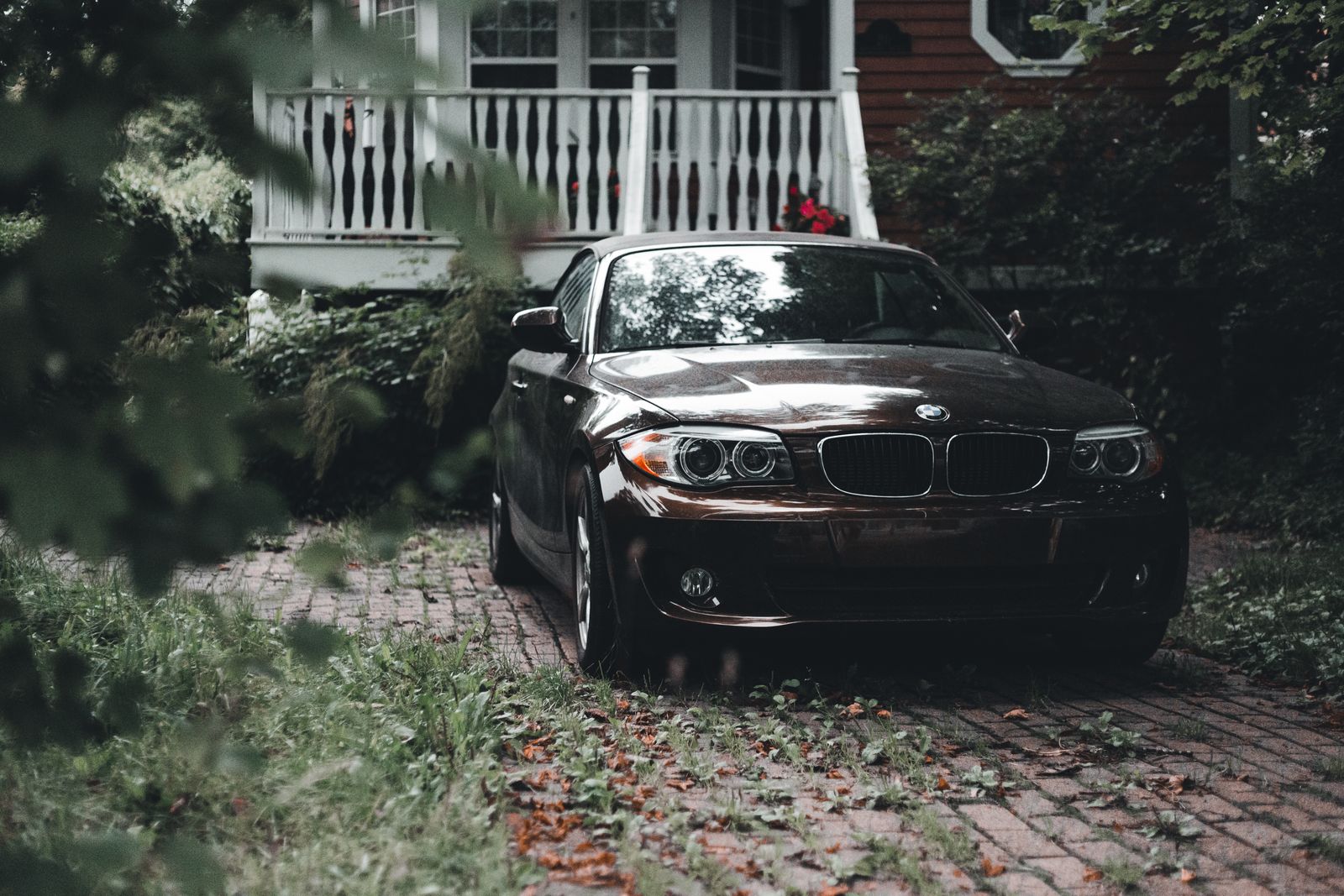

She didn’t notice anything was wrong until she stepped outside with her coffee and her work bag and felt that little mental hiccup you get when something familiar isn’t where it’s supposed to be. The driveway looked… too empty. Her car, the one she parked in the same spot every night, was just gone.
For a few seconds she did the stupid hopeful thing—looked down the street, checked the curb, scanned for a tow truck like maybe she’d misremembered where she left it. Then her stomach dropped into the more realistic possibilities: stolen, towed, or some weird neighbor misunderstanding. She ran back inside, barefoot, and started checking for her keys even though she already knew they were in the bowl by the door.
Her husband was in the shower. She knocked once, then twice, trying to keep her voice calm and failing. When he finally cracked the bathroom door and asked what was going on, she said it fast: the car was missing, her keys were still here, and she was about to call the police.
The “Wait, Don’t Call Yet” Moment
That was when his face did this tiny, split-second flicker—the kind you only catch when you’re married to someone and you’ve seen all their tells. He didn’t look surprised. He looked like someone who’d just realized a secret had an expiration date.
He told her to “hold on” and asked her not to call anyone “until he made a quick call.” That alone was enough to make her pulse spike, because if your spouse is asking you to delay reporting your car missing, there are only a few explanations and none of them are good. She pressed him: did he move it, did he lend it out, did he know where it was?
He stalled for another beat, then admitted his sister and her boyfriend “borrowed” it. Apparently, they’d taken it late the night before for a road trip, and he “didn’t think it would be a big deal.” He said it like he was announcing they borrowed a book, not a vehicle that belonged to his wife, had her insurance policy tied to it, and contained a whole mess of her personal stuff.
How They Got the Car Without the Keys
Once she got past the initial “you let someone take my car?” part, the next question was obvious: how? Her keys were still in the house. They hadn’t rummaged through her purse or grabbed them off the counter, because she would’ve noticed that.
Her husband hesitated again, and that’s when the story got even uglier. He’d handed his sister the spare. Not the spare hidden for emergencies, but the spare he knew about and could access—because he’d apparently decided “family” didn’t need to ask permission.
It wasn’t just that they’d taken the car. It was that they’d taken it in a way that required planning. Someone had asked for a spare key, he’d gone and gotten it, and then he’d chosen not to mention any of it to his wife before she woke up to an empty driveway.
She asked him what exactly his sister had said. He told her they’d wanted something “reliable” for the trip, their own car was “acting up,” and they didn’t want to put miles on her boyfriend’s truck. And he, being helpful, figured her car was “basically just sitting there” this weekend anyway.
The Phone Call That Made It Worse
She told him to call his sister on speaker. Not later, not after he “figured it out,” but right then, with her standing there, because she wasn’t going to play telephone games about her own property.
When his sister picked up, she didn’t open with an apology. She opened with a breezy, half-laughing, “Oh my god, did she notice?” like it was some harmless prank. The wife asked where the car was, and the sister answered like she was giving an itinerary: they were a couple hours out, heading toward the coast, planning to hit a few spots, “nothing crazy.”
The wife asked why nobody asked her. The sister made this little pivot that people do when they know they’re wrong but don’t want to admit it: she said her brother said it was fine. Then she added, “I didn’t think you’d care,” followed quickly by, “We’re being careful,” as if careful driving cancels out the part where they took someone’s car without consent.
The husband tried to smooth it over mid-call, telling his sister to bring it back by that night. His sister sounded annoyed at the request, like it was inconvenient, like she’d been promised something and now it was being yanked away. The wife could hear the boyfriend in the background asking why they had to turn around, the tone already sliding into that aggrieved, defensive energy that always shows up when people get caught.
The Inventory of What Was Actually Taken
Once the call ended, the wife did the math of what “borrowing the car” really meant. Her registration was in the glove compartment. Her insurance card. A small emergency kit she’d stocked herself. The garage opener that could open their home. The dash cam. The gym bag in the trunk with her shoes and a water bottle and a couple of things she didn’t want strangers handling.
And then there was the liability piece, which her husband seemed to be treating like some abstract worry. If his sister got into an accident, got pulled over, hit someone, or left the car somewhere it got towed, the mess would land on the wife’s lap. It wasn’t his policy. It wasn’t his name on the title. It wasn’t his call to make.
She asked, point-blank, if his sister was even on their insurance. He shrugged in that maddening way that says “probably?” without saying it. That shrug alone took the situation from “marriage fight” to “this could wreck us financially.”
Her husband kept saying he was trying to help his family, that they “needed” it, that his sister had been stressed and this was supposed to be a nice getaway. She stared at him, because all she could hear was: he’d rather be the hero to his sister than the partner to his wife, and he’d done it by volunteering something that wasn’t his.
The Fight About Permission (And What It Actually Meant)
They argued the way couples argue when the real issue isn’t the immediate crisis, it’s the pattern behind it. He insisted he didn’t mean any harm, and she snapped that intent doesn’t change the fact that she woke up thinking she’d been robbed. He said she was “overreacting,” and that word hit like gasoline on a match.
Overreacting was what people say when they want your feelings to be smaller because your feelings are inconvenient. She told him it wasn’t just the car—it was the choice to keep her in the dark. The casual way he’d decided that her boundaries didn’t matter because his sister wanted something.
He tried to reframe it as a communication slip. He said he “forgot” to tell her because it was late and they’d asked last minute. She didn’t buy it, and honestly it was hard to, because forgetting doesn’t usually come with that “wait, don’t call yet” panic when the truth is about to surface.
At some point she asked him if he would’ve done the same with her laptop, her credit card, her passport—things that are obviously personal. He said that was different. And that’s when she said, quietly, that it wasn’t different to her, because the car was hers in every way that mattered, and he’d treated it like family property to hand out.
Where It Was Left, and What Didn’t Get Fixed
By late afternoon, his sister texted that they were “on the way back,” with a photo of the dashboard like proof of life. She didn’t say sorry. She said they’d fill the tank “to be nice,” like a full tank was the price of admission for ignoring someone’s consent.
When the car finally pulled into the driveway that evening, it didn’t arrive with a sheepish, apologetic vibe. The sister climbed out acting irritated, talking fast, saying they’d had to cancel plans, saying she hoped everyone was happy now. The boyfriend didn’t even bother making eye contact; he just walked around the car like he was checking for damage and then stood there like he was waiting to be thanked for returning it.
The wife noticed the little things immediately—the seat shoved back farther than she keeps it, her console rearranged, fast food smell embedded in the upholstery, a new scratch on the plastic near the trunk latch. The sister waved off the scratch as “probably already there” and tried to hand the spare key back to the husband, not to the actual owner, like that was the natural order of things.
That was the part that lingered: even in the return, they behaved like he was the gatekeeper and she was a cranky obstacle. The husband hovered, caught between embarrassment and loyalty, trying to make the moment go away instead of naming what had happened. And the wife, standing in her own driveway with her own car finally back, realized the real missing thing that morning hadn’t been the vehicle—it had been the basic respect that keeps a marriage from turning into a tug-of-war with someone else’s family.
More from Steel Horse Rides: