

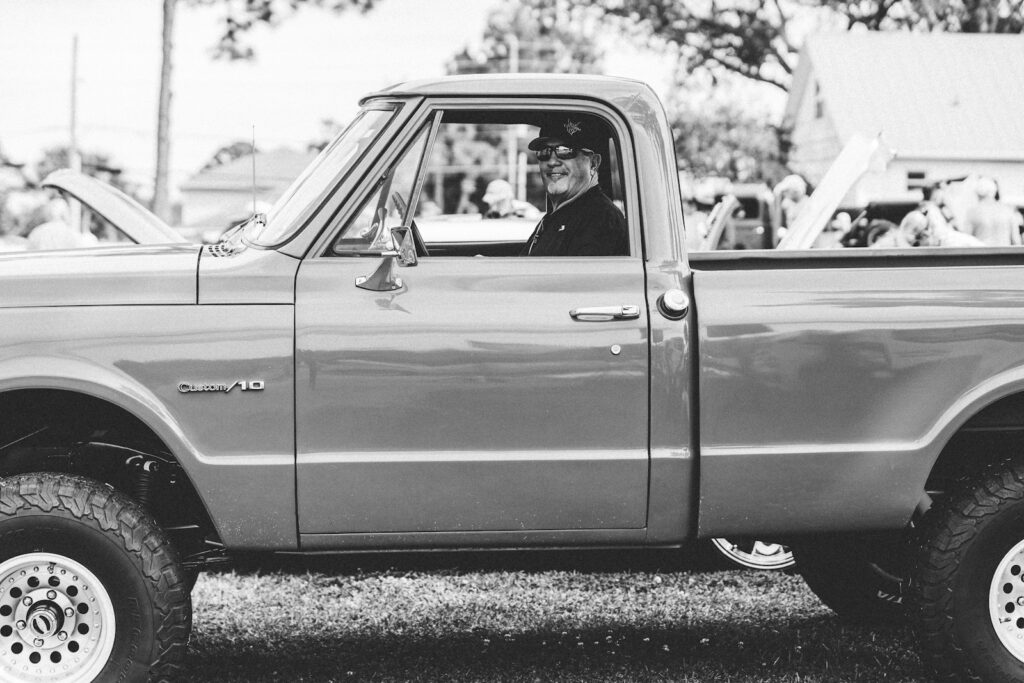
For years, the truck was the family’s running joke and their not-so-secret plan. It was Dad’s old pickup—sun-faded paint, a cracked dashboard, and that one door that had to be slammed like you meant it. It sat in the driveway like a loyal dog that didn’t do much anymore, but it was always there.
His daughter had grown up hearing the same line whenever birthdays, permits, or “when I’m sixteen” talk came up: “That truck’s yours.” Sometimes he said it while tossing her the keys to move it up the driveway. Sometimes he said it when she’d point out a friend’s shiny hand-me-down car and try not to look jealous. And every time, she filed it away like a promise with a date on it.
By the time she was fifteen, the truck wasn’t just transportation in her head—it was a symbol. She was picturing freedom, late shifts at her first job, driving herself to school without begging for rides, and not having to share the family car schedule like it was a custody arrangement. And Dad loved that image too, at least when it made him look generous.
The promise turns into a plan
Once she had her learner’s permit, the truck became part of their routine in a more serious way. Dad would have her practice in empty parking lots, barking reminders about mirrors and stopping distances while pretending he wasn’t nervous. He made a big show of “teaching her right” in a way that felt half parental duty, half pride.
She started saving for the stuff Dad insisted would be her responsibility: insurance payments, gas, basic upkeep. She picked up babysitting, did extra chores for relatives, and stashed cash in an envelope in her dresser. Anytime someone asked what she wanted for her birthday, she’d shrug and say, “Just help me with insurance, I guess,” like she was already mentally sitting in the driver’s seat.
Even the adults around them treated it like a done deal. Her mom would mention it when scheduling who needed the car on which days: “Once she has the truck, this will be easier.” Dad nodded along, soaking up the credit, talking about how it would “teach responsibility” and “build character.” The truck got brought up so many times it stopped sounding like a hypothetical and started sounding like a contract.
A week before the birthday, the truck vanishes
Then, the week before her sixteenth birthday, the truck was gone. Not “moved to a different spot,” not “in the shop,” just gone—empty driveway, faint oil stain where it used to sit. She noticed immediately because she’d been counting down, and the truck had become part of the scenery she stared at while daydreaming about driving alone.
She asked her mom first, because moms are usually the keeper of normal explanations. Her mom didn’t have one. She looked surprised, then confused, then annoyed in a way that told her this wasn’t some cute birthday surprise. The daughter’s stomach dropped before anyone even said a word.
Dad came home later acting like nothing had changed. When she asked where the truck was, he didn’t offer a dramatic pause or a gentle setup—he said it like he was announcing he’d switched phone plans. “I sold it,” he told her, already walking toward the kitchen like the conversation was basically over.
“Cash was smarter” and the fight that followed
She followed him, voice going sharp, asking what he meant sold it. Dad leaned back against the counter and hit her with the kind of reasoning that sounds reasonable only if you say it fast: the truck was old, it needed work, prices were good right now, and they “could use the money.” Then he delivered the line that made it sting more: cash was “smarter” than handing an old truck to a teenager.
The daughter didn’t cry at first—she got angry in that stunned, disbelieving way where every sentence comes out too loud. She reminded him, over and over, that he’d promised it to her for years. Dad’s face tightened, and he went straight to the parental authority script: it was his truck, his decision, and she was acting entitled.
That word—entitled—landed like a slap. It wasn’t just that he’d changed his mind; he was reframing the entire history like she’d been greedy for believing him. She pointed out she’d been saving for insurance because of that promise, and Dad shrugged like that was her problem for taking him seriously.
Her mom tried to step in, but it didn’t soften anything. She asked Dad why he hadn’t even discussed it, why he’d waited until the week before the birthday, and where the money was going. Dad’s answers stayed vague—bills, expenses, “stuff you don’t worry about”—but his tone stayed firm, like the details were none of their business.
The stranger buyer and the humiliation factor
As if the sale itself wasn’t enough, Dad couldn’t resist telling the story of the buyer. Some guy from a few towns over had come with cash, looked at the engine, and didn’t even haggle much. Dad said it like he’d pulled off a clever deal, like he’d won a small victory in a world where everyone else was getting ripped off.
For the daughter, that little brag was salt in the wound. This wasn’t a truck that broke down and got towed away; it wasn’t a necessity sale with tears and hard choices. Dad had let a stranger walk into their driveway, inspect the exact vehicle she’d been practicing in, and drive off with it while she was at school or in her room—while he chose not to say a word.
And once she knew it was a stranger, her brain did what anxious brains do: she pictured the moment the truck left. She imagined Dad shaking the guy’s hand, laughing, handing over the keys. She imagined the sound of the engine starting without her inside it, the exact sound she’d been attaching to her future.
That night, she barely spoke at dinner. Dad kept trying to normalize it with casual talk about “finding something better” later, maybe helping her look for a different car. But every time he said later, it sounded like the same vague later adults use when they want you to stop asking.
Fallout: broken trust and a birthday that didn’t feel like one
The week crawled. The daughter stopped talking about her birthday entirely, which should’ve been a flashing warning sign, but Dad didn’t seem interested in reading the room. He acted mildly irritated that she was “making it a big deal,” as if her disappointment was a behavioral issue he could correct.
Her mom tried negotiating behind the scenes—asking if they could at least set aside some of the money for the daughter to buy a different car, or use it for insurance for whatever she ended up driving. Dad resisted that framing, like earmarking the money would be admitting the promise mattered. The more her mom pushed, the more he dug into the idea that he’d done something financially responsible and shouldn’t be questioned.
On her actual birthday, the daughter got the usual stuff—cake, a card, maybe a small gift. But the air in the house felt off, like everyone was forcing normalcy through clenched teeth. Dad made a point of being cheerful, which somehow made it worse, because it suggested he expected gratitude for… what, exactly?
The daughter didn’t blow up at the party or scream at relatives. She did something colder: she went quiet and stayed quiet. When people asked about driving, she gave short answers, and when Dad tried to jump in and explain, she’d stare at him long enough to make him stop talking.
And that’s where the story leaves the most uncomfortable tension hanging. It isn’t really about a truck anymore—it’s about the moment she realized her dad could build a whole future out of his words, watch her plan her life around them, and then sell it off to a stranger because it suited him, calling it “smarter” while expecting everyone else to adjust. The truck is gone, the money is somewhere in the adult world of “expenses,” and what’s left in the driveway is the space where a promise used to be.
More from Steel Horse Rides: