

By the time the husband rolled into the driveway, the wife already knew something was off. Not because she’s some psychic spouse who senses bad decisions from a mile away, but because he had that weird, pumped-up energy—talking too fast, smiling too hard, acting like he’d just “solved” a problem they weren’t even finished arguing about.
They were a three-kids-and-one-car family, the kind of household where the calendar is basically a battlefield map. School drop-offs, daycare, grocery runs, pediatric appointments, soccer practice, and the random emergencies that always show up when someone’s paycheck has already been spoken for. The car wasn’t just transportation; it was the entire system.
And the whole reason they’d been talking about money in the first place was because gas had gotten brutal. The wife had brought it up like a normal person: maybe they could tighten up their routes, combine errands, cut down on unnecessary driving. The husband had nodded along, then pivoted into his favorite genre of solution—something shiny, expensive, and purchased immediately.
The “No” That Didn’t Really Land
When he first mentioned a motorcycle, it wasn’t framed like a question so much as a pitch. He talked about fuel efficiency, how bikes “barely sip gas,” and how it could be his commute vehicle. He said it the way people say “we should get a Roomba,” like it’s a harmless upgrade and not another machine that requires money, maintenance, and insurance.
The wife didn’t even have to think that hard before saying no. Not a dramatic no, not an ultimatum, just a practical, exhausted one. They had one car and three kids, and the idea of turning their only reliable transportation plan into “car for her, motorcycle for him” sounded like a logistical prank.
She also didn’t love the safety aspect, which he dismissed with a wave like she was being paranoid. “I’ll wear a helmet,” he said, as if that settled it. She tried to explain that it wasn’t just about him—it was about what happens to a family’s routine when the main income earner wipes out, even if it’s not catastrophic.
He heard the no the way he heard a lot of her concerns lately: as temporary resistance. He got quiet in that way that wasn’t peace, it was buffering. And then he started dropping little comments over the next few days, like he was laying track for the decision he’d already made.
He Came Home With It Like It Was Milk
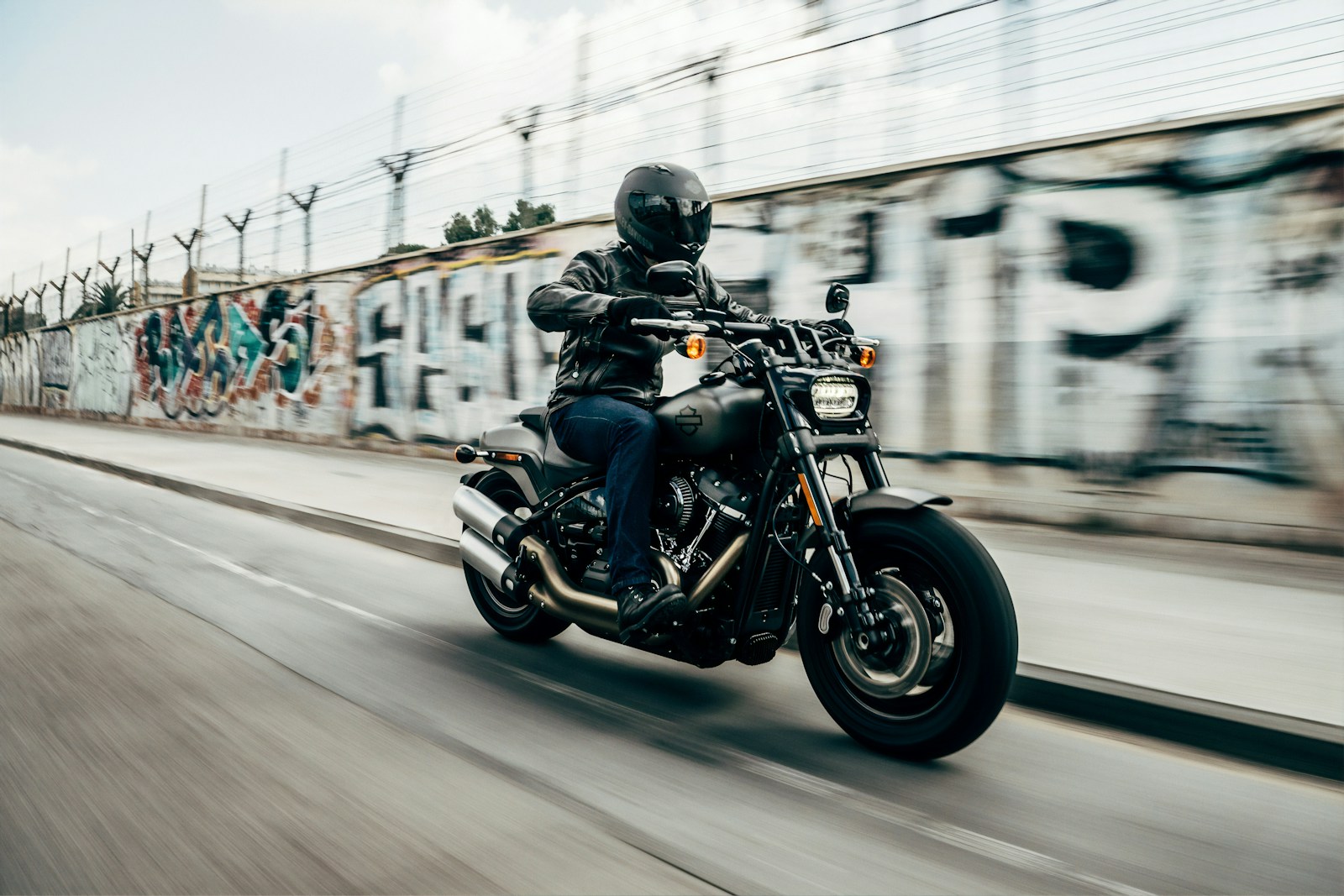
It happened on a weekday, the kind of day where she’d already been wrangling someone’s lunch, someone else’s lost shoe, and a third child’s meltdown because their favorite cup was dirty. She heard the sound first—different from a car, sharper and louder—and looked out the window to see him cruising up like he was starring in his own commercial.
He parked it in the driveway with this proud little flourish and killed the engine. Before she could even fully process what she was seeing, he was already talking, already narrating. “I got a great deal,” he said, like this was a thrift store find and not a several-thousand-dollar purchase.
The wife stepped out onto the porch, arms crossed in that way people do when they’re trying to hold in ten emotions at once. The kids were behind her, curious and excited because to them it was basically a loud toy. He looked from the bike to her face and seemed to realize, too late, that this wasn’t going to land as a fun surprise.
She asked the most direct question: “How did you pay for that?” And his answer didn’t soothe anything—it inflamed it. He said he used their savings because it “made sense,” because he’d done the math, because it would “pay for itself” in gas.
The Gas-Saving Math That Made No Sense
He came prepared with numbers, but they were the kind of numbers that work great in a vacuum and fall apart the second you introduce real life. He talked about miles per gallon and how much he drives to work. He said this like the family’s driving needs began and ended with his commute.
The wife pointed out the obvious: gas wasn’t their only transportation cost, and the car wasn’t just for leisure. If he took the bike to work, she’d still need the car all day for kid logistics, and if something happened—sick kid, school call, a broken washing machine part that needs picking up—she couldn’t exactly toss three children onto a motorcycle. He said she could “figure it out,” which is the kind of phrase that sounds small until you realize it’s code for “I’m making you responsible for the fallout.”
Then the practical stuff started stacking up like bills on a counter. Insurance. Registration. Gear he “needed” now that he owned it. Maintenance. And the fact that a motorcycle might save gas, but it doesn’t eliminate the car’s costs, because they can’t get rid of the car—they still need it for literally everything involving kids.
His final move was to act offended, like she was refusing to see his brilliance. He said she was “always negative” and that he was trying to help. When she asked why he didn’t just talk it through and agree on a plan, he shrugged and said he “knew she’d say no.”
Three Kids Don’t Fit Into His New Plan
The next few days were where the purchase stopped being an argument and started becoming a problem. The first morning, he wanted to take the bike to work, but it was raining. He stood in the kitchen looking out at the weather like the sky had personally betrayed him, and then he asked for the car keys.
She handed them over, but she didn’t do it warmly. She did it the way someone hands over the last clean towel, already knowing they’ll be blamed when there aren’t any left tomorrow. He promised it would just be “today,” but she clocked the pattern instantly: the bike was going to be the reason she had to adjust, and the car was still going to be his whenever it suited him.
When the weather was good, he took the bike and acted like that proved his point. But then the daycare called one afternoon because their middle child had a fever, and the wife had to juggle pickup with the other two kids in tow. Meanwhile, he was unreachable for a chunk of time because he “didn’t feel the phone vibrate” under his jacket.
That’s what made her snap, not the motorcycle itself. It was the way he’d unilaterally introduced a new variable into their lives and then expected her to absorb the complications. He got a new toy and she got new stress, and he still wanted praise for “saving gas.”
The Real Fight Was About Permission
Eventually the conversation stopped being about finances and started being about respect. She told him flat-out that the issue wasn’t just the money, it was that he made a major purchase after she said no, using shared savings, and then tried to rebrand it as a favor. He argued that he shouldn’t need “permission” to buy something for himself.
That word—permission—hung in the air like smoke. Because she wasn’t asking to be his boss; she was asking to be his partner. He could frame it as independence all he wanted, but she was the one counting school lunches and co-pays while he was counting miles per gallon on a bike that couldn’t carry groceries.
He tried the classic pivot: he works hard, he deserves something, he never buys anything for himself. She didn’t even deny that; she just pointed out that “something” doesn’t come from the family’s safety net without discussion. And the most insulting part was that he kept saying it was “for the family,” while the family couldn’t even use it.
By then, the kids had started noticing the tension, which is always the grim milestone in fights like this. They’d ask if they could ride it, and the wife would tense up because the last thing she wanted was the motorcycle becoming a symbol in her own home. The husband, meanwhile, basked in their excitement because it made him feel like the purchase was validated.
The fallout didn’t come with a neat resolution. The bike stayed in the driveway like a metal monument to a decision he wouldn’t admit was selfish, and the savings account stayed lighter in a way the wife could feel every time she opened their banking app. He kept saying he’d “make it work,” but he’d already made the most important part work—for himself—and now the family was stuck living around it.
More from Steel Horse Rides: