
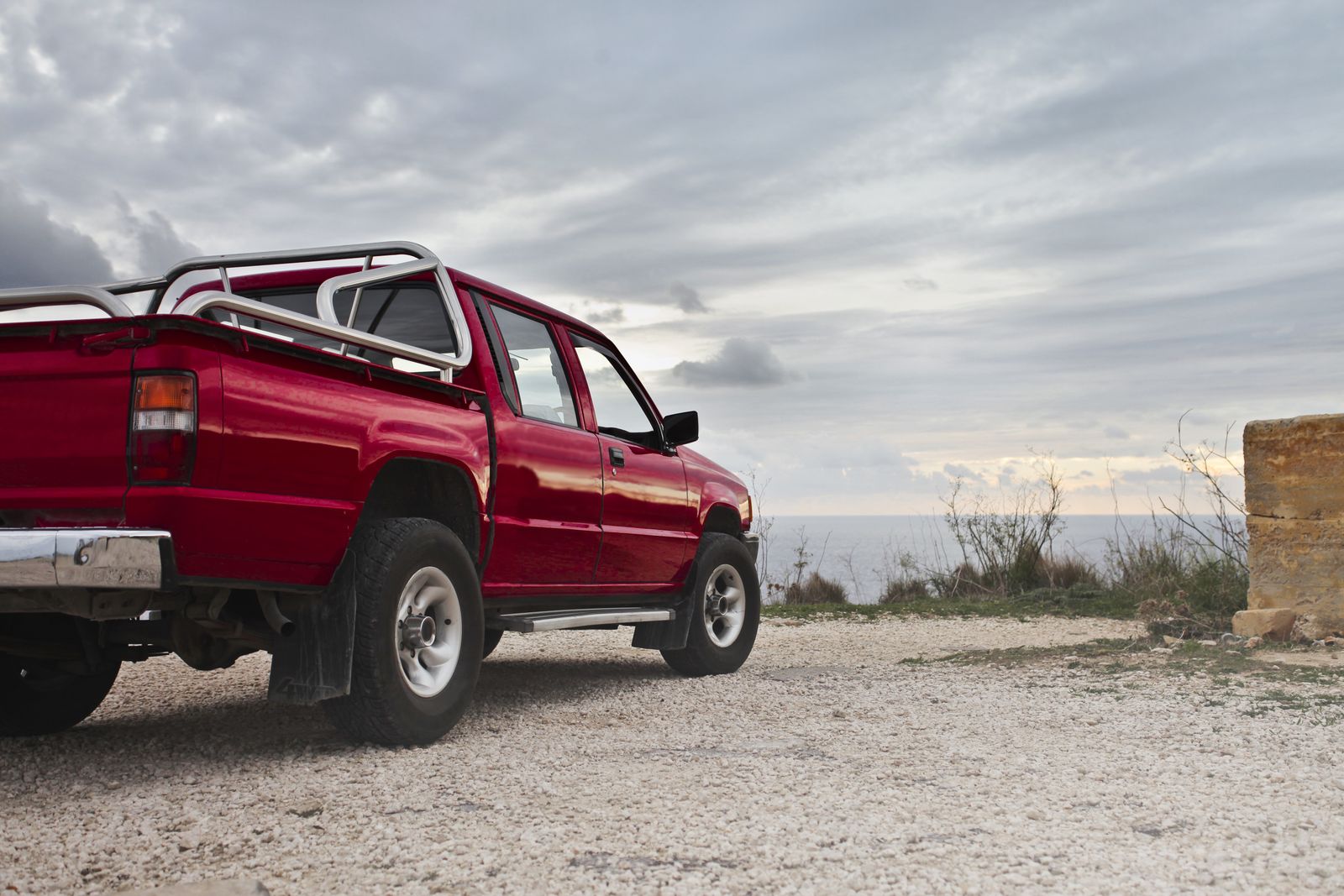

He’d started calling it “the work truck” like it was a piece of equipment, not a vehicle. It was always “I’m taking the work truck,” “Don’t move the work truck,” “I’ve got to gas up the work truck,” said with that clipped, practical tone that shut down questions before they formed.
His wife didn’t think much of it at first, because couples get into little routines. He had a job that involved driving around, he kept some tools in the back, and the truck was older and dirty in a way that felt consistent with honest labor. The only thing that pinged her nerves was how protective he’d gotten about it—how he’d appear in the doorway if she so much as walked toward the keys.
Then one afternoon, she ended up in the cab by accident. He’d left it in the driveway, running late, and asked her to grab his sunglasses from the console because “my eyes are killing me and I can’t find them.” She slid into the seat expecting the usual mess—receipts, pens, a stray socket wrench—and instead found a single clean receipt folded like someone wanted it saved.
The receipt that didn’t match the story
It was a gas station receipt, timestamped for a night he’d said he was “out on an emergency call.” The station wasn’t near their house, and it wasn’t near his usual job sites either; it was a random place off the highway on the other side of town. That alone could’ve been nothing—people stop wherever—except the purchase wasn’t just fuel.
Along with gas, it listed two fountain drinks, a bag of ice, and a pack of cigarettes he didn’t smoke. She stared at the line items long enough that the numbers started to blur, then read them again like the words might rearrange themselves into something normal. Two drinks, two straws, and ice for… what, a solo late-night shift?
She tried the calm route first, the one where you don’t let your mind sprint ahead. When he came home, she held up the receipt and asked why he’d been at that station, and why he’d bought cigarettes. He barely glanced at it before saying, “Must’ve been for a guy at work,” then asked if she’d seen his sunglasses.
That’s when the defensiveness hit, sharp and fast. His jaw tightened, and he snatched the receipt like it was evidence—because it was—and tossed it into the console with a little too much force. “Why are you digging around in my truck?” he asked, even though he’d literally told her to open the console.
A new obsession with the “work truck” schedule
After that, the truck became the center of her week. Not in a dramatic, tracking-his-phone way at first, but in a quiet observation way: the sudden errands, the “quick stops,” the weirdly consistent pattern of leaving around the same time and coming back with the same excuse. He started showering as soon as he got home, not because he was dirty, but because he “felt gross.”
She noticed smaller details too, the kind you only clock when something’s off. The passenger seat, which used to be a dumping ground for gloves and receipts, was always oddly cleared. The air freshener changed to a sweet scent she’d never bought, and the radio stations were set to a pop channel he used to complain about.
She asked again about the receipt, softer this time, offering him an easy out. Maybe a coworker had asked him to grab stuff. Maybe he’d had a weird night. He rolled his eyes, told her she was “spiraling,” and said he couldn’t deal with “interrogations” after work.
That word—interrogations—was like gasoline on her suspicion. People with nothing to hide don’t talk like they’re being hunted. They clarify, they laugh, they show you the context; they don’t weaponize your curiosity and turn it into a character flaw.
The moment she found the second clue
A few days later, she had a reason to be in the truck again that he couldn’t argue with: he’d left a tool bag she needed for a house project, and he wasn’t home. She told herself she was just grabbing the bag, nothing else, but her hand went to the console like it had its own memory.
This time it wasn’t a receipt. It was a hair tie—thin, black, the kind she didn’t use because they snapped in her hair. It was looped around a pen, sitting right on top of his registration papers like someone had set it there absentmindedly and forgotten it.
She stood there in the driveway with the door open, staring at that stupid little circle of elastic. It was such a small thing, and that’s what made it feel so brutal; it wasn’t a smoking gun, it was a lived-in detail. Somebody else had been comfortable enough in that seat to take off a hair tie and leave it behind.
When he got home, she didn’t even bother with a gentle approach. She held it up between two fingers and asked whose it was. He looked at it, blinked, and said, “Probably yours,” then immediately followed it with, “You’re always losing those.”
When the story collapses in real time
She didn’t yell, at least not right away. She did that quieter thing people do when they’re trying to keep themselves from exploding: short sentences, steady tone, no room for him to wiggle out. “It’s not mine. I don’t buy these. Why is it in your truck?”
He pivoted hard into offense. He accused her of snooping, of trying to “catch” him, of being bored and making drama because she didn’t have enough going on. It was like watching someone stack flimsy boards into a wall and pretend it was solid.
She asked him to show her his call log or the address he’d been “sent” to on that emergency night. He refused, said she wasn’t his boss, and that she needed to trust him. Then he did the thing that really gave it away: he tried to grab his keys and leave mid-argument, claiming he was “late” for something that hadn’t existed ten minutes earlier.
She blocked the doorway without touching him, just standing there like a question mark. “Where are you going?” she asked. He said, “To clear my head,” but his eyes flicked toward the driveway, toward the truck, toward the exact object at the center of the whole mess.
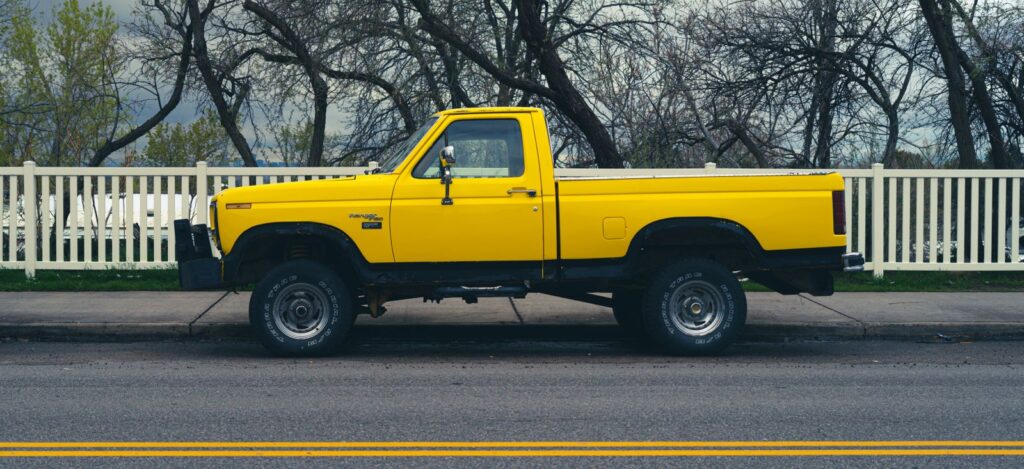
The pickup that finally confirmed it
That night, he left anyway. Not with a slammed door or a shouted threat, but with a cold, clipped “I can’t do this,” like she was the unreasonable one for wanting reality. She waited, not because she had a master plan, but because her body wouldn’t let her go to bed without knowing.
When his location wasn’t an option and his explanations weren’t worth anything, she did the oldest thing in the book: she watched the driveway the next time he pulled out. The following evening he said he was “running to grab supplies,” and she let him go without a fight, heart thudding like it was trying to outrun her thoughts.
About twenty minutes later, her phone buzzed with an alert from their shared card—another charge at that same gas station. Same side of town. Same little cluster of purchases, right down to two drinks, as if whoever he was with always wanted something cold in their hand.
She drove there—not fast and furious, just steady, hands tight on the wheel. She didn’t even have a speech prepared; she only had that receipt in her mind, folded and refolded. When she pulled into the lot, she saw the truck immediately, parked off to the side like it was trying not to be seen.
He wasn’t alone. A woman was in the passenger seat, leaned slightly toward him in that casual, familiar way that doesn’t belong to strangers. The scene wasn’t explicit, but it didn’t need to be; the way he turned his head to talk to her, the way she laughed, the way his body softened—those were intimacy tells.
She didn’t storm up screaming. She parked a few spaces away and sat there long enough for the shock to harden into something colder. Then she got out and walked toward the truck, and as soon as he noticed her, his face changed so fast it was almost comical—like he’d been caught stepping out of a costume.
He jumped out, spilling words everywhere at once. “It’s not what it looks like,” “I can explain,” “You’re embarrassing me,” as if the problem was her presence, not his double life. The woman stayed seated for a second, eyes wide, then got out and hovered behind the open door like she didn’t know if she was allowed to exist in the argument.
His wife asked one question, simple and surgical: “How long have you been using our money to pick her up?” He tried to answer a different question, talked about stress, about feeling “unappreciated,” about how it “just happened.” The woman finally muttered something about thinking they were separated, which only made the whole thing feel worse, like everyone had been given a different script.
He reached for his wife’s arm, not violently, but with that familiar, controlling instinct—trying to move her, guide her, lower the temperature. She pulled away and told him not to touch her, loud enough that the woman in the passenger seat flinched. For a second, the parking lot felt too bright, too public, like their private mess had been dragged into fluorescent light.
They didn’t resolve it there. He followed her back to her car talking too fast, promising conversations he’d avoided for weeks, suddenly eager for transparency now that he’d been seen. She drove home alone, hands shaking at stoplights, while he sat in the truck for a while as if he couldn’t decide which life to chase.
Back at the house, she didn’t pack his bags in a dramatic montage or throw his clothes onto the lawn. She did something quieter and more devastating: she took a photo of that gas station receipt she’d rescued from the console, then placed it on the kitchen counter where he couldn’t pretend it was “nothing.” When he finally came in, the receipt was still there, a thin slip of paper that somehow held the weight of an entire marriage, and the only question left was how long he’d been comfortable lying in such small, repeatable ways.
More from Steel Horse Rides: