
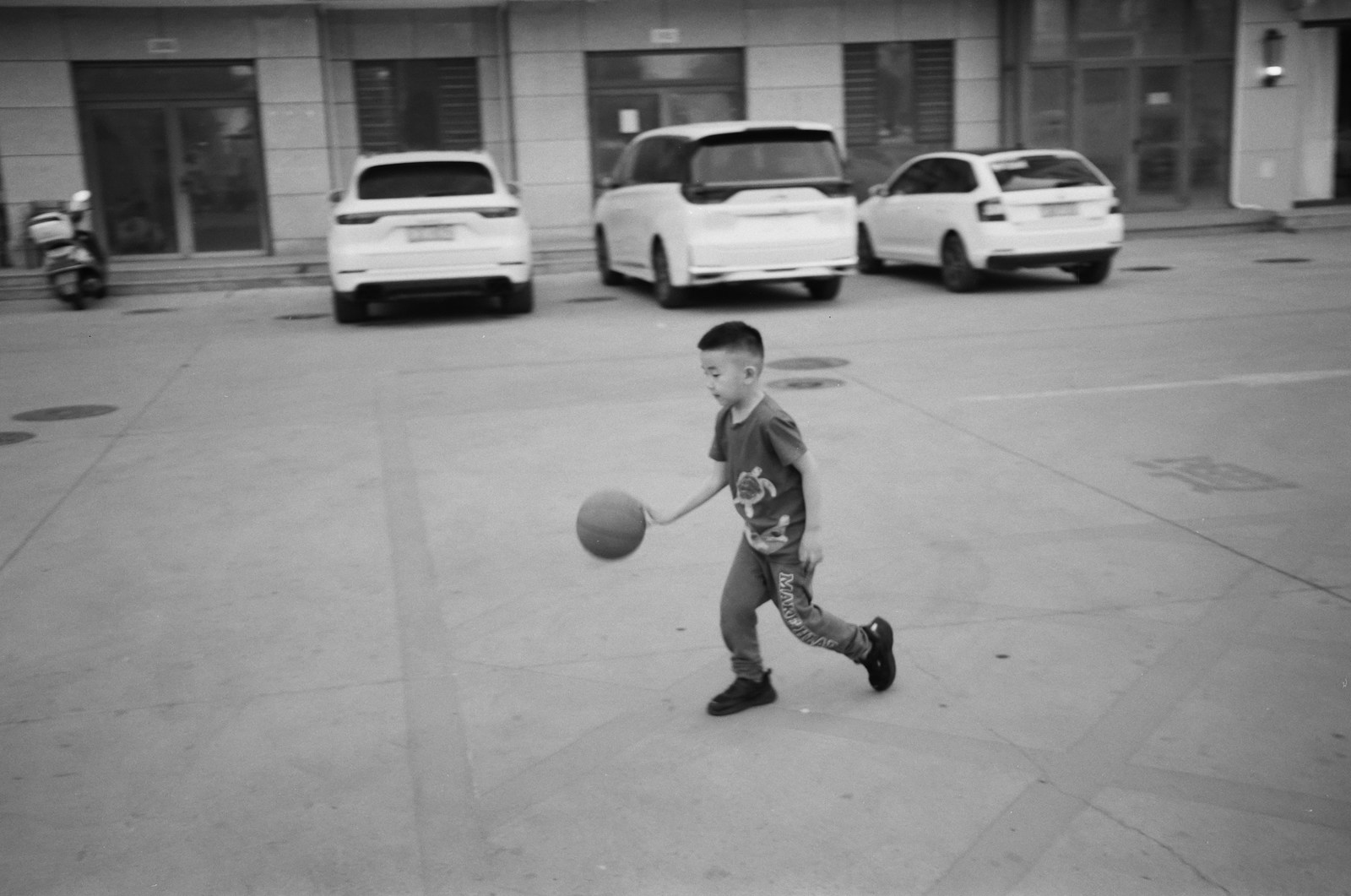

On a quiet Tuesday afternoon, the kind where the loudest thing on the street is usually a lawnmower two houses down, Mark came home and did what he always did: pulled up, parked along the curb in front of his place, and started unloading groceries. He’d barely gotten the trunk closed when he heard that familiar hollow thump-thump of a basketball on asphalt.
Across the street, the neighbor’s kid—Eli, maybe ten or eleven—was out in the driveway practicing shots at a portable hoop. The ball kept skittering into the street, Eli kept chasing it, and Mark didn’t think much of it. It was summer, kids were out, and the neighborhood had the usual unspoken agreement: don’t be a jerk about normal kid noise.
Then there was a sharper sound, different from the dribble. A fast, flat smack followed by a small, ugly metallic pop, like someone had flicked a spoon against a frying pan. Mark looked up in time to see the basketball carom off his driver-side door and bounce away, and he felt his stomach drop before his brain even caught up.
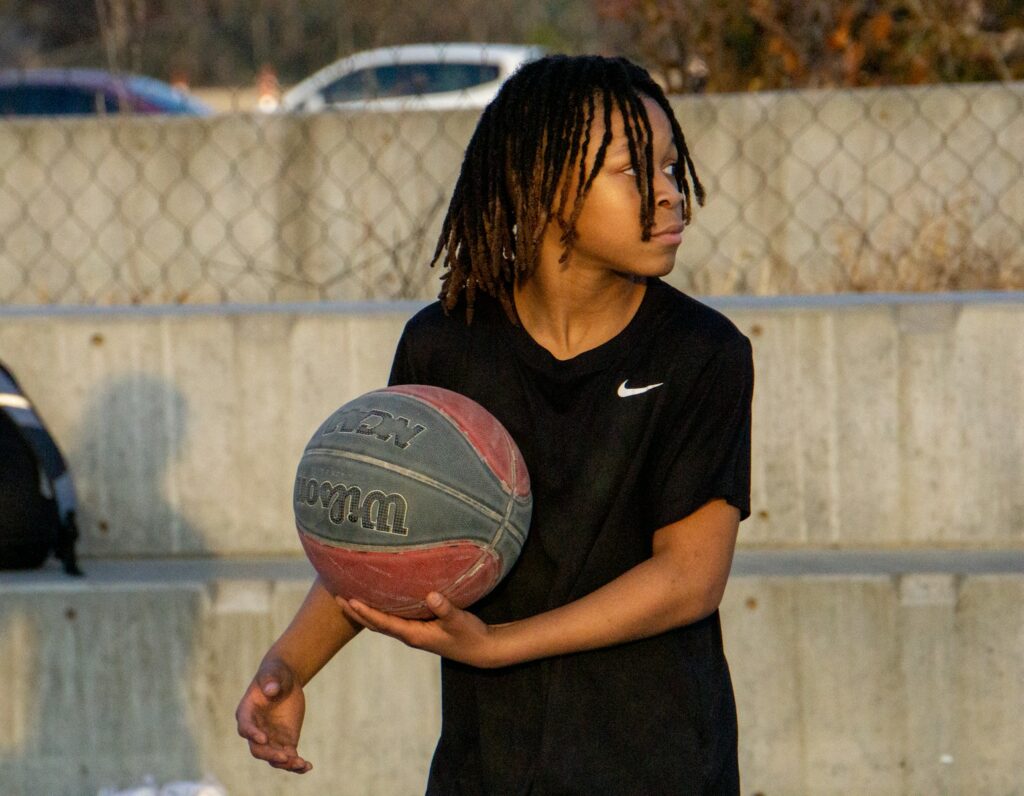
The dent that shouldn’t have been there
Mark walked over and saw it immediately: a fresh dent right in the middle of the door panel, with a little crescent-shaped scuff where the ball must’ve hit hard and spun. It wasn’t catastrophic—no shattered glass, no dangling mirrors—but it was the kind of damage you can’t unsee once you know it’s there. The paint had a faint scrape, too, like the ball had picked up grit from the driveway.
Eli froze in the street with the ball tucked against his chest, eyes wide. He didn’t run, didn’t laugh it off, didn’t pretend it didn’t happen; he just stared at Mark like he was waiting to see what kind of adult he was dealing with. Mark took a breath, tried to keep his voice even, and asked, “Hey, bud—are you okay? That hit the car pretty hard.”
That’s when Eli did the kid thing: he blurted, “I didn’t mean to!” and then, almost immediately, “My dad’s inside.” He said it like a shield, like that was the part that mattered. Mark nodded, asked him to grab his parents, and stayed by the car so it didn’t turn into one of those situations where everyone suddenly develops selective memory.
Parents at the door, and the vibe shifts fast
Eli jogged up the driveway and vanished into the house. A minute later, his mom came out first, wiping her hands on a dish towel like she’d been interrupted mid-task. His dad followed, slower, already wearing a tight expression that made it clear he wasn’t thrilled to be summoned for anything.
Mark didn’t storm over; he met them halfway at the curb and pointed at the door panel. “Your son’s ball hit my car and left a dent,” he said, keeping it simple. The mom leaned forward, squinted at the metal, and did that little head tilt people do when they’re deciding whether they can deny what they’re looking at.
The dad’s eyes flicked from the dent to the hoop to Eli, who was hovering behind them with the ball held like it was evidence. “It’s a basketball,” the dad said, flat. Not “Sorry,” not “Let’s take a look,” just that—like the object itself was supposed to explain away the impact.
Mark held his phone up and took a quick photo, partly because he wanted a record and partly because he could feel the conversation sliding somewhere stupid. “Yeah,” he said, “and it dented the door. I’m not trying to make this a big scene. I just need it fixed.”
“Kids play outside” becomes the whole argument
The mom finally said, “Eli was just playing. Kids play outside,” like she was offering a neighborhood-friendly reminder. The dad picked up the thread immediately, leaning into it with more confidence than the situation deserved. “We’re not paying for that,” he said. “If you park on the street, stuff happens.”
Mark blinked at him. It wasn’t that he expected them to write a check on the spot, but the outright refusal landed like a slap. “Stuff happens?” Mark repeated, keeping his voice low, because now he could feel his own temper trying to climb up his throat. “He hit a stationary car. That’s not a random act of nature.”
The dad shrugged, like they were discussing a minor inconvenience. “He didn’t do it on purpose,” he said. “And it’s not like he threw a rock.” Eli’s face tightened at that, a quick flash of panic—like even he knew his parents were about to make him the villain in someone else’s story.
Mark pointed at the dent again, closer now. “Accidents still cost money,” he said. “If I accidentally back into your mailbox, I’d still pay for it.” The mom’s mouth pressed into a thin line, and she glanced back at their driveway, the hoop, the ball, the whole scene, as if she was suddenly annoyed that their normal routine had consequences.
Awkward escalation on a perfectly normal street
Mark asked for their contact info so he could get an estimate and handle it like adults. The dad said no, straight up, and told him to “take it up with your insurance if it bothers you.” That was the moment the conversation stopped being about a dent and started being about disrespect.
Mark tried one more time, calmer than he felt. “I’m not trying to ding your kid for playing,” he said, nodding toward Eli. “But your kid caused damage. I need you to take responsibility.” Eli’s mom crossed her arms and said, “We’re not doing this. He’s a child.”
The kid, meanwhile, stood there absorbing every word. He looked like he wanted to disappear into the driveway, but he also kept glancing at the dent with this guilty, trapped look, like he was realizing he couldn’t rewind the ball’s path. Mark could’ve yelled, but he didn’t. He just pulled his phone back out and took a wider photo that showed the car parked legally, the hoop’s position, and the clear line-of-sight from the driveway to the street.
That’s when the dad snapped, “Don’t take pictures of my house.” Not pictures of the kid—Mark wasn’t doing that—but the house. The dad stepped closer, invading the little pocket of space that’s normally polite in a neighbor conversation, and Mark took an instinctive half-step back. Suddenly it felt like the dent was the least of the problem.
The paper trail, the quiet threats, and the new neighborhood tension
Mark went inside, sat at his kitchen table, and did what people do when they realize “talking it out” isn’t going to happen: he started documenting. He wrote down the time, what was said, and saved the photos in a folder with the date. Then he called his insurance, not because he wanted to file a claim immediately, but because he wanted to know what his options were if the neighbors kept stonewalling.
The insurance rep told him the usual: he could file under his own policy and let them try to subrogate, or he could handle it privately if the neighbors cooperated. The rep also asked if he had the parents’ names and contact info, which—of course—he didn’t, because they’d refused to give it. Mark felt that hot, helpless frustration of knowing the system is designed for people acting in good faith, and he’d just run into a couple who weren’t interested in that.
Later that evening, Mark saw Eli’s dad outside, moving the hoop slightly deeper into the driveway like he was making a point. When Mark walked out to bring in his trash bins, the dad said, loud enough to carry, “Maybe don’t park where balls can reach.” It wasn’t an invitation to talk; it was a warning dressed up as casual advice.
Mark didn’t respond. He just rolled his bins up, stared at the dent when he passed the car, and felt the weird shift settle over the street—like the whole block had become a stage for a petty standoff. You can live next to someone for years and barely speak beyond small hellos, but once money and blame enter the chat, every glance starts to feel loaded.
By the end of the week, Mark had an estimate from a local body shop: not outrageous, but not nothing—enough that you’d notice it in your checking account. He could eat the cost and resent it every time he opened his car door, or he could file the claim and risk turning a dent into a full-blown neighbor war. The kid still played basketball outside, a little more carefully now, but every bounce sounded different to Mark—less like summer and more like a countdown to the next “stuff happens.”
More from Steel Horse Rides: