

He didn’t even hesitate when his friend asked. It was one of those “moving day is tomorrow and the rental place screwed me” texts, the kind that comes with a little panic baked into every word. The friend—Kyle, late twenties, chronically underprepared—said he just needed a truck “for a few hours” to haul a couch, a dresser, and some boxes across town.
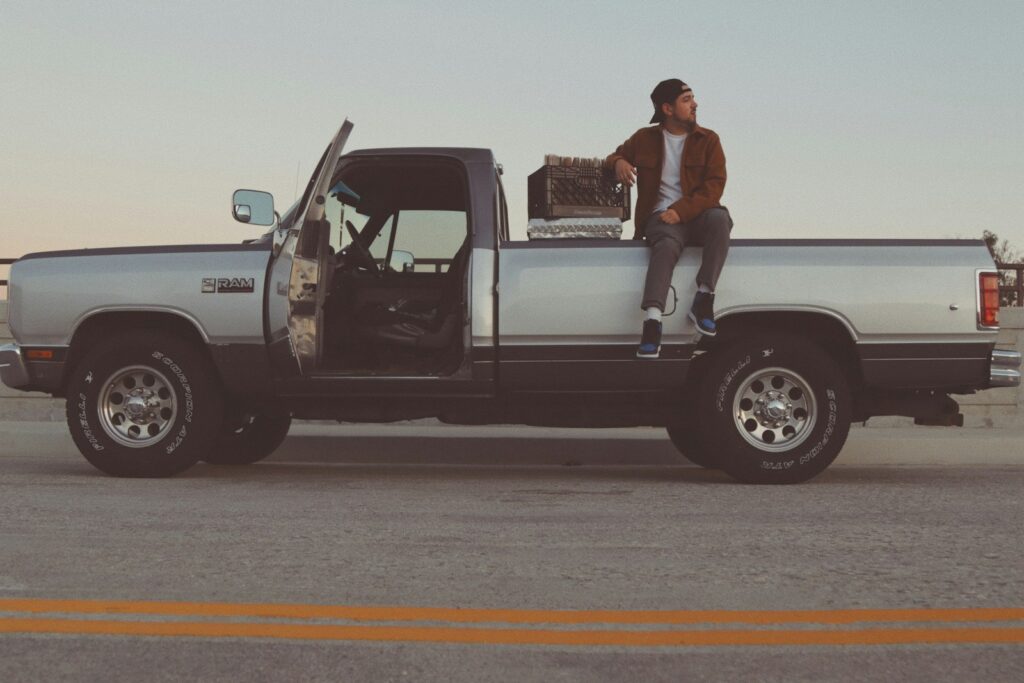
Mark had a decent pickup. Nothing fancy, but reliable, clean, and paid off, which made him weirdly proud of it in the quiet way people get proud of practical things. He’d lent it to friends before, and it had always come back with a half-hearted wipe-down and a “thanks, man” and maybe a few bucks tossed at him for gas.
This time, Mark did the whole responsible adult thing: he asked what time Kyle would pick it up, what time he’d be back, and reminded him—nicely—that it needed to come back with gas. Kyle promised all of it with the breezy confidence of someone who believed the universe would fill in the blanks for him. Mark handed over the keys, told him to be careful, and went back inside like it was no big deal.
The “Couple Hours” That Turned Into an All-Day Silence
Kyle showed up in the morning with that restless moving-day energy, wearing gym shorts and a T-shirt that already had deodorant streaks. He did the quick walk-around of the truck like he was checking out a rental, not borrowing something a friend used to get to work. Mark watched him toss a roll of packing tape onto the passenger seat and said, “Please don’t scratch it up,” half-joking, half not.
“Dude, obviously,” Kyle said, and then added, “I’ll be back by lunch, I swear.” He drove off with the confidence of a man who had never had to replace a windshield in his life.
Lunch came and went. Mark texted around one: “How’s it going? You almost done?” No response. By three, Mark’s tone had shifted from casual to pointed: “Hey, I need the truck later. When are you bringing it back?” Kyle finally replied with a one-liner: “Almost done. Just finishing up.”
It was the kind of message that looked harmless until you really pictured it—someone saying “almost done” when they hadn’t even started cleaning, refueling, or thinking about the fact that the truck belonged to another adult who had plans. Mark tried to keep his irritation in check, telling himself moving days were chaotic, that Kyle was probably stressed, that he’d make it right when he returned.
The Return: A Sound, A Crack, And a Tank on Empty
The truck didn’t come back until after dark. Mark heard it before he saw it—tires crunching on gravel, the door shutting a little harder than usual, Kyle’s footsteps rushing like someone trying to get this over with. When Mark opened the door, Kyle was already halfway up the walkway, keys in hand, talking fast.
“Man, what a day,” Kyle said, pushing the keys into Mark’s palm like a baton handoff. He gave a tight smile, the kind that tries to glide past consequences. Mark didn’t even look at Kyle at first; his eyes went straight to the truck.
The windshield had a long crack spidering out from the passenger side, catching the porch light at an angle that made it impossible to miss. Not a tiny chip, not something you could pretend might’ve been there already—this thing looked like it had been hit by a rock on the highway at speed. Mark walked closer, stared for a second, and then let out a slow breath that wasn’t quite a sigh and wasn’t quite a laugh.
Then he noticed the gas gauge through the window. The needle was sitting below empty like it had given up trying to warn anyone. Mark climbed in, turned the key just enough to confirm the dash lit up, and watched the fuel light glow back at him like an accusation.
The Awkward Non-Apology That Lit the Fuse
Mark turned around and held up a hand, pointing at the crack. “What happened?” he asked, keeping his voice level in a way that took effort. Kyle glanced over like he was seeing it for the first time, then did this quick little shrug that made Mark’s stomach drop.
“Oh, that?” Kyle said. “Yeah, I think a rock hit it or something. It was on the freeway. You know how it is.” He said it like he was describing a bird landing on the hood—an act of nature, no one’s fault, nothing to discuss.
Mark waited for the rest of the sentence. The apology. The offer to pay. Even a “my bad.” But Kyle just kept talking, pivoting immediately to how his new place had stairs and how his buddy bailed and how the couch almost got stuck in the doorway.
“And you brought it back on empty,” Mark said, nodding toward the dash. Kyle made a face like Mark was being picky about a speck of dust. “I was gonna fill it,” Kyle said, “but everything was closed by the time we finished. I’ll get you next time.”
There was something about “next time” that did it. It wasn’t just the crack or the gas—it was the assumption that there would be a next time, like Mark’s truck was just part of Kyle’s toolset. Mark told him, calmly, that a windshield replacement wasn’t cheap and that he needed Kyle to cover it.
Excuses, Deflection, and the Old “We’re Friends” Card
Kyle’s expression changed fast, like a switch got flipped from friendly to offended. “Dude, seriously?” he said. “It’s not like I did it on purpose.” He said it louder than the situation required, which made it feel like he was auditioning for an audience that wasn’t there.
Mark pointed out that intent didn’t matter, that it happened while Kyle had the truck, and that Kyle hadn’t even mentioned it. Kyle acted like the real issue was Mark’s tone, not the cracked glass. “I was gonna tell you,” Kyle insisted, even though he’d walked up the driveway talking about his day like nothing had happened.
Then Kyle went for the classic move: “We’re friends, man.” As if friendship meant Mark was supposed to absorb the cost and thank him for the privilege. Mark didn’t bite. He told Kyle he was happy to help him move, but helping didn’t mean paying for damage and getting stranded with an empty tank.
Kyle started listing expenses like he was building a case: how much he’d spent on pizza for the guys helping, how he had to buy new curtains, how deposits were expensive. It was a weird argument because none of those things had anything to do with the windshield, but Kyle said them like Mark should feel guilty for bringing up money at all.
The Quiet Fallout: A Friendship That Suddenly Had a Price Tag
Mark didn’t yell, but he got colder. He told Kyle he needed him to Venmo at least something right now—gas money, a start on the windshield—anything that showed Kyle understood this was his responsibility. Kyle stared at his phone, sighed dramatically, and said he didn’t have it right then.
When Mark suggested they call a glass shop tomorrow for a quote, Kyle tried to soften it with jokes. “Maybe it’ll just… not spread,” he said, like cracks on windshields were held together by good vibes. Mark didn’t laugh. The silence after that was the kind that makes you realize you’ve been carrying more of a friendship than you thought.
Kyle left with a slap on the back and another “I’ll get you,” spoken like a magic phrase that should end the conversation. Mark stood in his driveway after the taillights disappeared, staring at the windshield and doing the mental math of how much it would cost to fix, and how long Kyle could dodge him if he wanted to.
The next day, Kyle didn’t text. Mark didn’t either—not because he didn’t care, but because he knew exactly how this kind of thing usually went: a week of vague “busy” replies, then annoyance, then somehow Mark being the one who “made it weird.” And that was the part that stuck with him more than the crack itself—the idea that Kyle could treat someone else’s property like a disposable convenience, and still walk away feeling like the injured party.
By the time Mark got a quote from a glass place, he already knew the money would be the easy part. The harder part was accepting that lending the truck hadn’t just cost him a windshield and a tank of gas. It had put a number on their friendship, and Kyle was acting like even acknowledging that number was an insult.
More from Steel Horse Rides: