

By the time the pastor got to the part about “celebrating a life well-lived,” the classic Mustang had already become the most fought-over object in the room.
It was parked outside the funeral home like it always looked in photos: a late-60s fastback in a deep, glossy blue, nose angled toward the street as if it was itching to leave. Friends of the family kept drifting toward the window to glance at it, partly because it was gorgeous and partly because everyone knew what it represented—years of weekends in the garage, the smell of oil and old leather, and a father who swore he’d pass it down one day.
He’d promised it to his oldest, the child from his first marriage. That promise wasn’t some vague “someday, kid” either. He’d said it out loud to multiple people, repeated it over the years, and even joked that the car was the one thing nobody in the family was allowed to “borrow and mysteriously return with a new dent.” The problem was that, after he remarried, promises started turning into family politics.
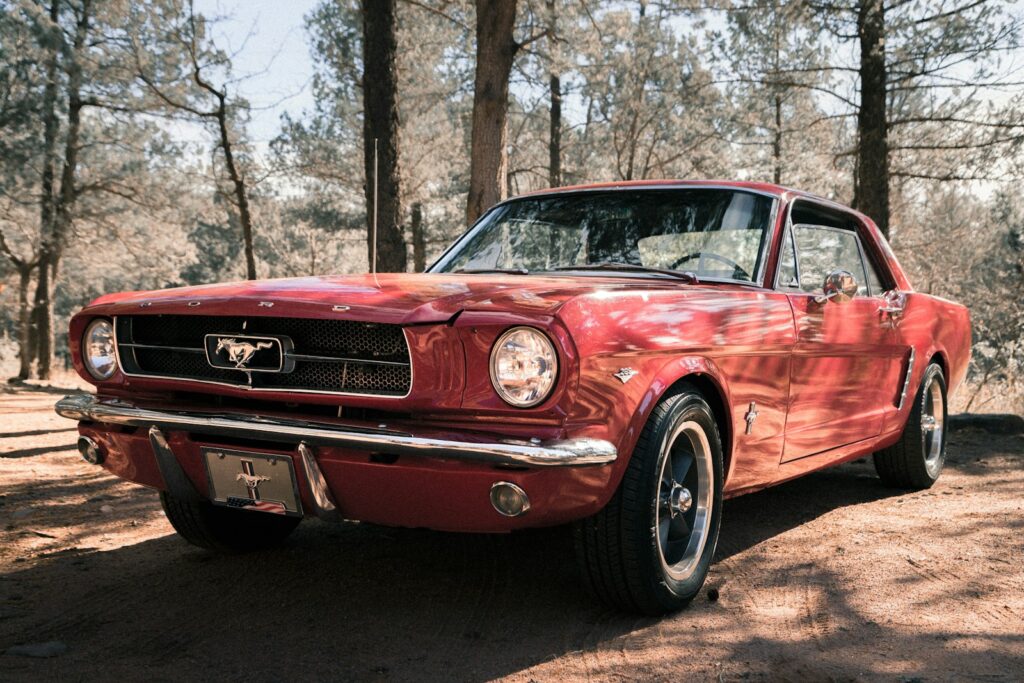
The Mustang Promise That Everyone Heard
For years, the oldest—let’s call them Alex—had a kind of sacred relationship with the car. When they were little, their dad would sit them on the fender and teach them the names of tools like other parents taught colors. As Alex got older, they were the one handing him sockets, holding the flashlight, learning how to listen for the difference between a happy engine and a grumpy one.
The dad wasn’t subtle about what he wanted to happen. He’d say things like, “This thing is yours when I’m gone,” usually while wiping grease off his hands and looking at Alex like it was settled business. He told his buddies. He told a couple of uncles. He even told his new wife, in that casual way people announce decisions they assume won’t ever actually be tested.
Then life did what it does. The dad got sick fast—one of those situations where it goes from “monitoring” to “hospice” in a blink—and the house became a rotation of casseroles, whispered phone calls, and adults trying not to cry in the hallway. In all that noise, nobody sat down and handled paperwork with the urgency they should’ve.
A Blended Family With Sharp Edges
The remarriage itself wasn’t the issue, at least not at first. Alex had been an adult by the time their dad married again, old enough to keep polite distance and not pretend the new family was automatically theirs. The stepbrother—let’s call him Ryan—was closer to Alex’s age than anyone liked to acknowledge, and he’d always had that slightly competitive energy, like every family gathering was a scoreboard.
Ryan didn’t grow up with the Mustang the way Alex did. He didn’t do the garage weekends, didn’t have the childhood pictures sitting on the hood, didn’t have that long chain of tiny moments that made the promise feel real. But he knew the car was valuable, and he knew that people in the family talked about it like it was an heirloom.
What made it messier was that Ryan lived closer during the dad’s final months and was around more. He was the one running errands, picking up prescriptions, and “handling things” at the house while Alex was driving in from out of town and sleeping on couches. That proximity turned into a weird kind of authority, like being physically present gave him first dibs on decisions nobody had officially made.
The Funeral Home Parking Lot Move
The day of the funeral was supposed to be about getting through the service without falling apart. Alex arrived early and saw the Mustang out front, cleaned up in a way that felt intentional. The tires had been dressed, the interior wiped down, and the car looked less like a garage project and more like a showpiece someone wanted to display.
Inside, there was the usual slow-motion chaos of grief: people hugging too tightly, relatives not sure whether to bring up memories or avoid them, someone’s phone going off at the worst possible moment. Alex tried to stay close to their dad’s casket without turning into a statue. Ryan hovered on the other side of the room with his mom, both of them talking to people with that weirdly composed funeral politeness.
It wasn’t until after the service, when everyone was funneling outside, that Alex noticed Ryan patting his pocket and glancing toward the window. Not a casual glance either—more like someone checking on an exit plan. Alex didn’t think much of it until they saw Ryan and his mom move with purpose toward the Mustang instead of toward the line of cars headed to the cemetery.
Alex followed, still in that numb funeral haze where your brain takes a second to process obvious threats. They watched Ryan unlock the driver’s side door like he’d done it a thousand times. Then he slid into the seat and pulled the door shut, not looking at Alex, not looking at anyone.
Alex stepped up and knocked on the window, trying to keep their face neutral because there were mourners everywhere. Ryan cracked the window just enough to talk and said—flat and quick—that he was “taking it back to the house” because it “shouldn’t be left here.” His mom stood behind him like security, arms folded, chin lifted, already prepared to act like Alex was the one causing a scene.
“He Would’ve Wanted Me To Have It”
In the parking lot, in funeral clothes, with people milling around holding prayer cards, Alex did the only thing they could think of: they told Ryan the car had been promised to them for years. They didn’t yell, but the words came out sharper than they meant. Ryan’s expression didn’t change, which somehow made it worse.
He hit back with the line that always shows up in inheritance fights: “He would’ve wanted me to have it too.” Not “I’m sorry,” not “we’ll talk,” not “let’s sort this out later.” Just that slippery claim that can’t be proved or disproved because the one person who could clarify was lying in a casket inside.
Alex asked where the keys even came from, because their dad used to keep them on a hook in the garage, and Alex had assumed they’d be handled with the rest of the estate. Ryan said his mom gave them to him, like that was the end of it. That’s when Alex realized this wasn’t a spontaneous, emotional move—this had been planned, coordinated, and timed for maximum awkwardness.
Someone from the family—an uncle, maybe—wandered over and tried to de-escalate with the classic “not today, you two.” Alex wanted to scream that it was exactly “today,” that this was the moment Ryan was trying to lock it in by physically removing the car before anybody could object. But funerals have their own social gravity; they make even the righteous feel embarrassed for taking up space.
Ryan started the engine. The Mustang rumbled to life, loud enough to cut through the gentle murmur of condolences, and heads turned. Alex stood there with their hand still near the window, feeling like they were watching a theft in formal wear while everyone pretended it was just “family stuff.”
The Paperwork Wall And The Cold Realities
After the burial, when everyone went to eat and tell stories and try to chew sandwiches with swollen throats, Alex kept circling back to one ugly question: was the promise worth anything without a will? They’d always assumed their dad had handled it, because he was meticulous about the car. But meticulous about a machine doesn’t automatically mean meticulous about estate planning.
When Alex finally asked, they got vague answers. The stepmom said everything was “being handled” and that Alex shouldn’t “worry about material things right now.” The phrasing landed like an insult—Alex wasn’t fixated on “things,” they were reacting to a promise being steamrolled in public by someone who couldn’t even wait until the funeral was over.
Alex tried to talk to Ryan later, privately, and got nothing but cold practicality. Ryan said the title situation was “complicated,” that he was “keeping it safe,” and that they could “discuss it once things settle.” It wasn’t hard to hear what he meant: once it’s in his possession long enough, it becomes his by inertia, by exhaustion, by everyone’s desire to avoid an ugly fight.
The worst part was how quickly the story started to get rewritten inside the family. A couple of relatives told Alex to be “understanding” because Ryan had “been there more.” Others hinted that Alex was “entitled” for assuming the car would be theirs just because their dad said so. Nobody wanted to admit the obvious—that showing up early, grabbing keys, and driving away during a funeral wasn’t grief, it was strategy.
In the days after, Alex found themselves staring at old pictures of that Mustang like they were looking at a missing person. The car wasn’t just a vehicle; it was proof of a bond with their dad that existed before the remarriage and all the new family math. And now, somewhere in a garage they didn’t have access to, that engine sat cooling under a cover while the adults who should’ve protected a simple promise were busy acting like the only thing that mattered was who managed to grab the keys first.