

By the time his car hit the four-month mark sitting behind the chain-link fence, Evan didn’t even want it fixed anymore. He just wanted it back. It had started as a normal “drop it off Monday, pick it up Thursday” kind of repair, the kind people plan around with a few rides from coworkers and one mildly annoying grocery run on foot.
The shop was one of those independent places wedged between a muffler place and a shuttered tanning salon, with a hand-painted sign and a row of vehicles in various states of surrender. The mechanic, Gary, had a way of sounding both confident and busy at the same time. When Evan first called, Gary talked like he’d seen this exact problem a thousand times: “Yeah, yeah, I know what that is. Bring it in.”
Then the car vanished into the shop’s orbit, and time started behaving weird. Every week had the same pattern: Evan calls, it rings, he leaves a message, and nothing comes back. And just when Evan’s anger cooled into resignation, Gary reappeared with a new bill and a new tone—like Evan had been the one causing trouble the whole time.
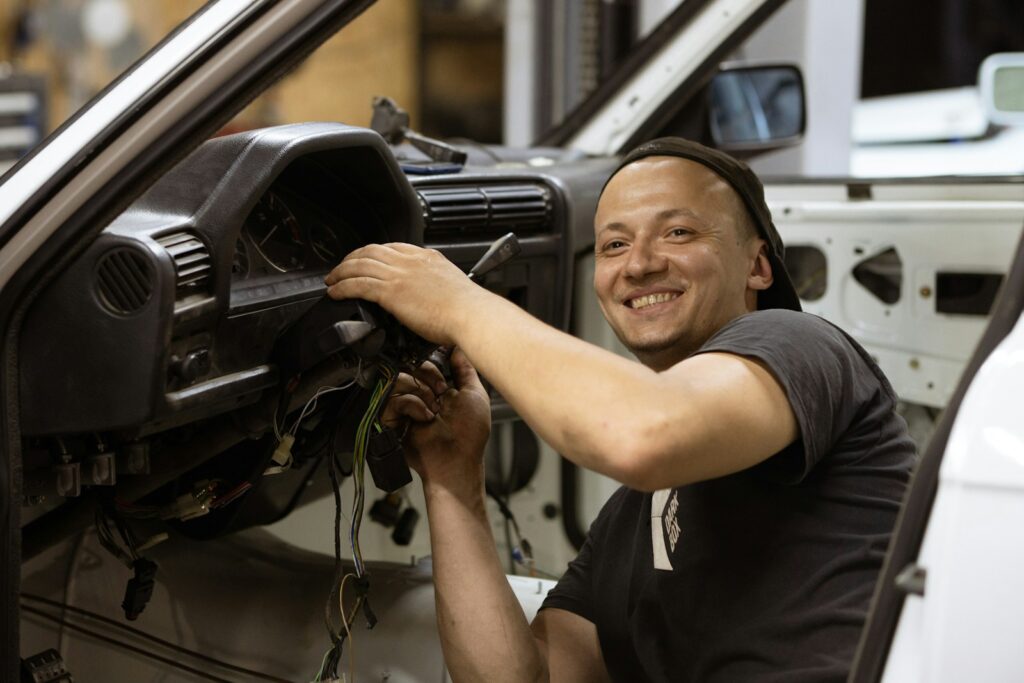
The drop-off that turned into a black hole
Evan’s issue was straightforward on paper: intermittent stalling and a check engine light that loved showing up at the worst times—stoplights, drive-thrus, anywhere people could watch him restart the car like it was a ritual. Gary said he’d run diagnostics and “get eyes on it” that afternoon. He told Evan not to worry, he’d call in a day or two with the exact plan.
Two days turned into a week. When Evan finally got someone on the phone, it wasn’t Gary, it was a kid at the counter who sounded like he was learning the alphabet while talking. The kid said Gary was “under a car” and would call back, which became a phrase Evan would hear so often it started to feel like a prank.
After another few days of silence, Evan drove over with a friend to check in face-to-face. The car was there, shoved along the side lot, dust already collecting on the windshield like it belonged. Gary came out wiping his hands on a rag and acted surprised to see Evan, like he’d forgotten a whole vehicle existed.
Gary said the diagnostic was “being weird” and he needed more time. Then he said he might need to wait on a part. Then he said he was slammed because two techs quit and he was “doing his best.” Evan left trying to be reasonable, because everyone’s had that moment where you cut a little slack to someone who looks genuinely overwhelmed.
The weekly loop: “I’ll call you tomorrow”
Reasonable lasted about three more missed calls. Evan started keeping track in his phone like he was documenting a custody dispute: date, time, voicemail left, what he said. His messages were polite at first—“Hey, just checking in, any update?”—then progressively more direct—“Please call me today, I need to make a decision.”
Every once in a while, Gary would pick up, and Evan would get that little rush of relief, like finally grabbing a ledge after sliding down a hill. But the calls were never real updates. They were verbal smoke bombs: “Yeah, I’m waiting on the guy,” “I’m chasing down a wiring issue,” “I’m gonna get on it tomorrow.”
Tomorrow became the shop’s favorite fictional day. Evan would call the next afternoon and get nothing. Or the kid would answer again and say, “He stepped out.” Evan started timing it—he’d call at 9 a.m., 11 a.m., 2 p.m.—as if there was a secret window where Gary was legally required to respond.
Meanwhile, Evan’s life had to keep moving. He was borrowing cars, paying for rides, turning down weekend plans because he couldn’t get across town easily. The car itself wasn’t fancy, but it was his, and the longer it sat, the more it felt like someone had quietly repossessed a piece of his routine.
The shifting story and the mysterious “parts”
At around the six-week mark, Gary switched from vague reassurance to defensive explanations. He started talking like Evan was being unfair for even asking. “You want me to do it right, right?” he’d say, dragging the word “right” like it was a trap.
When Evan asked for specifics—what code is it throwing, what part is needed, what’s the estimate—Gary gave answers that didn’t land. He’d mention sensors and modules, then circle back to “electrical gremlins” and “intermittent problems,” the kind of phrases that sound technical but don’t actually pin anything down. The estimate never arrived in writing, just a floating number that changed depending on the day.
Twice, Gary claimed he’d ordered something. Once, he said it came in wrong. Another time, he said the supplier “messed up.” Evan asked for the part number or invoice and got a quick, irritated laugh like that was an insult. “You think I’m lying about parts?” Gary said, offended in a way that felt practiced.
By month three, Evan stopped believing the car had been touched at all. Every time he stopped by the lot, it looked exactly the same, parked in the same orientation, with the same half-dead tire. Evan started noticing details nobody wants to notice: bird droppings that weren’t cleaned, a spider web in the side mirror, leaves tucked under the wiper.
The moment Evan tried to pull it out
Eventually Evan gave Gary the most reasonable ultimatum a person can give without sounding like they’re in a movie. He said he’d pay whatever diagnostic time had been spent, but if the car wasn’t actively being repaired, he wanted to tow it to another shop. He asked for a bill and a release, just something clean and simple.
Gary didn’t like that. His voice sharpened, and suddenly he had energy. He said Evan couldn’t just “take it” because the shop had invested time, and there were policies, and it didn’t work like that. Evan asked what the policy was and where it was posted, and Gary dodged, saying he didn’t have time to argue on the phone.
The next day, Evan showed up with a friend and a tow company on standby. He thought Gary would either hand him the keys or at least produce paperwork. Instead, Gary came out like he’d been waiting for an ambush, and before Evan could even explain, Gary started listing charges: diagnostic, “shop time,” and then the one that made Evan’s jaw actually drop—storage.
Not a one-time storage fee, either. Gary said it was weekly. He said it had been accruing for months. Evan did the math in his head and realized Gary had basically turned the shop’s neglect into a subscription service.
The storage fee bomb and the dead-eyed negotiation
Gary’s argument was shamelessly circular: the car had been taking up space, so it cost money to store, and if Evan didn’t want storage fees, he should’ve picked it up sooner. Evan stared at him like he was trying to solve a riddle that wasn’t supposed to exist. Pick it up sooner—when Gary wouldn’t answer calls, wouldn’t provide a bill, and wouldn’t even confirm whether the car was driveable.
Evan asked when Gary had informed him about storage fees. Gary said it was “standard” and pointed vaguely toward the office door like the policy might be written in invisible ink. When Evan walked inside to look, there was no big sign, no clear poster, nothing obvious at the counter besides an old calendar and a stack of oily invoices.
The tow driver stood there pretending not to listen, but you could tell he’d heard this genre of argument before. Evan stayed quieter than you’d expect, which somehow made Gary angrier. Gary started talking faster, stacking his points on top of each other, while Evan kept returning to the same questions: What work was actually done? Where’s the documentation? Why wasn’t Evan called, ever, if fees were piling up?
Gary offered a “deal” that didn’t feel like a deal. He said if Evan paid half the storage and the diagnostic fee, he’d release the car. Evan asked for an itemized invoice and Gary rolled his eyes, like itemization was a personal attack. That was the moment Evan realized the argument wasn’t about money anymore—it was about whether Gary could force Evan to pay for being ignored.
Evan did what people do when they hit that wall where logic stops working: he started collecting proof. Photos of the car sitting untouched, screenshots of call logs, copies of the few texts Gary had sent. He called around to learn what local rules were about mechanics’ liens and storage fees, trying to figure out whether Gary was bluffing or whether he could actually hold the car hostage with paperwork.
And Gary, for his part, stayed maddeningly casual about it all, like he hadn’t just torched months of trust. He kept insisting Evan was being unreasonable, that the shop was busy, that stuff happens. But he didn’t produce the one thing that would’ve calmed the entire situation down: clear evidence that he’d done anything to justify four months of captivity and a weekly tab.
By the time Evan left the lot that day, the tow truck still empty behind him, he wasn’t just annoyed—he was unsettled. It’s one thing to get overcharged; it’s another to realize someone’s been quietly rewriting the rules while your property sits behind their fence. The car was still there, the fees were still allegedly “running,” and the worst part was the feeling that Gary was counting on Evan getting tired—because exhaustion, not repairs, was the only thing happening on schedule.