

It started the way a lot of family fights start: someone noticing a small number that didn’t make sense and refusing to let it go. His mom had been taking her old sedan to the same mechanic for years—the guy everyone at church called “Brother Mark,” like his job title was secondary to his testimony. She didn’t just trust him, she trusted him in that extra-sticky way church people do, where a handshake after service feels like a contract.
Her son only got involved because she mentioned, offhand, that the car “needed brakes again.” Again, like she was talking about a recurring dental cavity. He asked how long it had been, she shrugged and said maybe a year, and then she added the part that made his stomach drop: “But Mark says these cars just eat brake pads.”
He didn’t come in ready to accuse anyone of anything. He came in with the mild annoyance of an adult child trying to keep a parent from getting taken advantage of, except the “advantage” had a friendly face and a church polo shirt. And the more he asked, the more he realized this wasn’t one weird invoice—it was a whole pattern, sealed shut by everyone’s insistence that Mark was “such a good Christian man.”
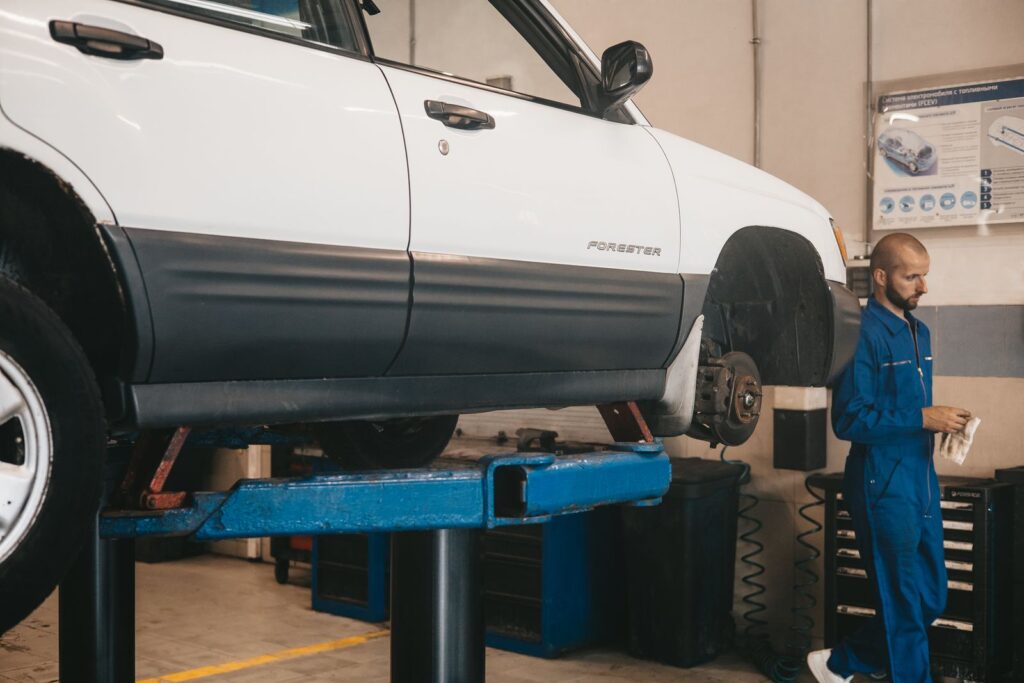
The Trusted Mechanic With The Keys To Everyone’s Cars
Mark wasn’t just a mechanic who happened to attend the same church. He was the mechanic—the one people recommended automatically when someone’s check engine light came on in the parking lot after service. He’d be out there in his nice shoes, hood popped, peering in like he could diagnose a transmission by prayer and vibes.
He ran a small shop about ten minutes away, not fancy but clean, with a waiting area that had a coffee pot and a framed Bible verse about honesty. If you asked anyone about him, they didn’t mention his rates or his skill first. They mentioned that he led a men’s group, volunteered for mission trips, and “would give you the shirt off his back.”
The mom—widowed, older, careful with money in every other category—felt safe with him. When he told her she needed something, she didn’t argue. When he said, “I can fit you in early,” she felt chosen, like the church community was taking care of her.
The First Invoice That Didn’t Smell Right
When her son asked to see the most recent receipt, she had a little envelope stuffed in a kitchen drawer with all the other “important papers.” The number at the bottom was high, but what grabbed him was the list: brake pads, rotor resurfacing, brake fluid flush, “shop supplies,” and a line item for a diagnostic fee even though the visit was supposedly “because the brakes were squeaking.”
He did what most people do when they’re trying not to start a war: he checked his own memory and then checked the internet. He pulled up average costs in their area, called a friend who’d worked at a dealership, and found out that even on the high end, the prices didn’t match. Not by a little, either—by the kind of difference that makes you start doing math backwards, wondering what story you were told to accept the extra charges.
He asked his mom when she’d last had the brakes done. She frowned, trying to place it, then said Mark had done them “a few times.” That’s when he asked for the older receipts, and she brought out a bigger stack—years of paper, each one signed with the same friendly name at the bottom.
Over the next hour, the kitchen table turned into a crime scene. Two brake jobs in eighteen months. A battery replaced twice in two years. “New wipers” that didn’t match the kind currently on the car. And a tire rotation charge on a month when she’d already bought new tires somewhere else.
Trying To Ask Nicely, And Getting The Church Wall Of Defense
He didn’t march into Mark’s shop yelling. He called first, calm, rehearsed, trying to give Mark an off-ramp. “Hey, I’m looking over my mom’s receipts and I’m a little confused about a few charges. Can you explain why she needed brakes done again so soon?”
Mark’s voice went from friendly to wounded in about two seconds. He didn’t answer the question; he talked about safety, about how some people “drive hard,” about how he’d “never forgive himself” if something happened to her. Then he added, softly, like he was sharing something sacred: “I’ve always taken special care of your mom.”
When the son pressed for specifics—part numbers, warranty, anything concrete—Mark got sharper. He said the son was welcome to bring the car in and he’d “show him the wear,” but also hinted that the son didn’t understand cars. The call ended with Mark saying, “I’ll be praying about this,” in the same tone some people use when they mean, Watch yourself.
That might’ve stayed a private argument if the mom hadn’t mentioned it to a friend from church. She did it the way older people do when they’re stressed: lightly, like a joke, hoping someone will reassure her. Instead, by the next Sunday, it had turned into a whole atmosphere.
People were extra sweet to Mark and extra chilly to the son. Someone patted the mom’s arm and said, “Don’t let the enemy sow distrust.” Another person told her, in a bright sing-song voice, that she should be grateful Mark “doesn’t charge what the big shops do.” No one asked what the numbers were. They just reached for the same defense, like it came preloaded: “He’s such a good Christian man.”
Proof, Patterns, And The Awkward Visit To Another Shop
The son decided he needed something more solid than vibes and spreadsheets. He took his mom’s car to a different mechanic across town, the kind of place that didn’t have Bible verses in the lobby but did have an actual printed breakdown of labor hours and parts.
He didn’t tell them a long story. He just asked them to inspect the brakes, check the battery date code, and look over whatever they could verify. An hour later, the second mechanic walked out holding the air filter like it was evidence. It was filthy—years old filthy—and yet there was a receipt from Mark’s shop for a “new air filter” three months earlier.
The brakes were the bigger problem, not because they were bad, but because they weren’t new. The pads had uneven wear, the rotors looked older than the last alleged service date, and the “brake fluid flush” didn’t show any signs of being recent. The battery had a manufacturing sticker that put it older than the last “battery replacement” charge, too.
It wasn’t a smoking gun in the sense of a signed confession, but it was enough to paint a nasty picture: either Mark had installed used parts and billed for new, or he’d billed for work he didn’t actually do, or he was wildly incompetent and charging premium rates for the privilege. None of those options matched the church’s mental image of him.
When the son showed his mom the new shop’s notes, she didn’t get angry at first. She got quiet in that particular way people do when they realize they’ve been played and they’re not sure what part hurts more—the money or the trust. She kept saying, “But he’s always been so kind,” like kindness should’ve come with a receipt.
Confrontation, Image Management, And The Price Of Calling It Out
They met Mark after service one Sunday because that’s where he was easiest to catch and where he was least likely to blow up. The son approached him with copies of the receipts and the second mechanic’s inspection summary, trying again to keep it factual. Mark looked at the papers and didn’t even pretend to read them.
He went straight to the emotional script. He said it hurt that they’d “question his integrity,” that he’d “treated her like family,” that he’d “done things for her he never even charged for.” He didn’t address the air filter. He didn’t explain the date codes. He talked around the details like they were mosquitoes, not the main problem.
Then he did something that made the son’s ears ring: he said, loud enough for nearby people to hear, “If you don’t trust me, you should go somewhere else.” It sounded like a boundary, but it was also a warning—because he knew exactly what “somewhere else” meant in a church where social belonging is a currency.
And the church responded the way it often does when someone’s comfortable narrative gets threatened. A few people pulled the mom aside and told her she was being “influenced” by her son. One person reminded her that Mark “has a family to feed” like she’d been trying to take his paycheck, not stop the bleeding from her own wallet.
The pastor never publicly addressed it, but privately suggested “reconciliation.” Mark offered a partial refund—not itemized, not tied to specific charges, just a rounded number presented like a generous peace offering. It came with the expectation that everyone would stop talking about it and let the community glue itself back together.
The mom didn’t take her car back to him after that. She also didn’t leave the church, not officially, but she started sitting farther back and skipping the post-service parking lot conversations where Mark held court. Her son could tell she was replaying every friendly interaction like it was a scene from a movie that now had a different genre.
The ugliest part wasn’t that a mechanic overcharged an older woman—that’s depressingly common. It was watching how quickly people decided that “good Christian man” was stronger evidence than invoices, inspection notes, or a literal air filter held up like a prop. The family never got a clean resolution, just a new routine: different shop, quieter Sundays, and the lingering knowledge that the cost of telling the truth wasn’t only money—it was belonging.
More from Steel Horse Rides: