

When his grandfather died, Mason thought the only messy part would be the grief. He’d already done the hard, quiet work: the hospital runs, the grocery deliveries, the “I’ll be there in twenty minutes” calls when the old man got dizzy trying to carry something he shouldn’t have been carrying in the first place.
The truck was almost an afterthought at first. It was a sun-faded, well-loved pickup with a dented tailgate and a smell that was permanently equal parts sawdust and peppermint gum. Mason grew up riding in it, learning how to shift gears in an empty church parking lot while his grandfather calmly pretended he wasn’t bracing for impact.
So when the will was read and the lawyer slid a folder across the table, Mason wasn’t shocked to see his name next to the pickup. What he didn’t expect was the way a few relatives—people who hadn’t so much as texted his grandfather on holidays—suddenly sat up like someone had dangled a steak in front of them.
The truck wasn’t just a vehicle, it was “h
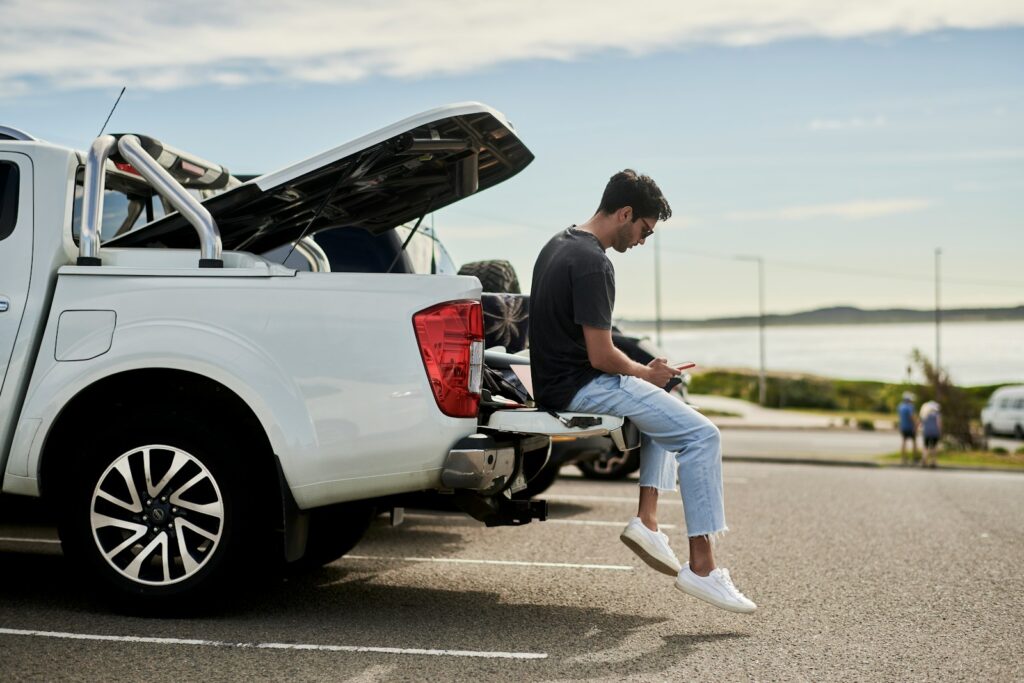
is thing”
The pickup had a reputation in the family. It was the truck that hauled everyone’s furniture for college moves and the truck that showed up at every cousin’s wedding to tow a trailer or pick up last-minute decorations. It was also the truck his grandfather refused to replace, even when the paint started giving up and the radio only worked if you slapped the dash twice.
Mason had been around the most at the end, partly because he lived nearby and partly because he actually liked spending time with his grandfather. They’d do low-key weekends: hardware store runs, slow breakfasts, sitting in the garage while his grandfather “organized” things that were already organized. It wasn’t glamorous, but it was consistent, and that consistency turned into a kind of unspoken agreement between them.
After the funeral, Mason drove the truck home because it felt wrong to leave it sitting in the driveway like an abandoned project. He wasn’t parading it around, just using it to run errands and keeping it clean the way his grandfather liked. He figured the family would be focused on bigger things—sorting the house, dealing with paperwork, processing the loss.
Instead, the truck became the first item anyone wanted to fight about.
The will reading turned into an immediate negotiation attempt
The lawyer’s office was small and smelled faintly like coffee that had been reheated too many times. Mason sat with a couple of aunts, an uncle, and two cousins he only saw at weddings and funerals. Everyone did the polite nodding and the tight smiles, the kind that say “we’re family” while silently counting who owes who what.
When the lawyer got to the line about the pickup, Mason’s uncle let out a short laugh and said, “Well, that can’t be right.” Not angry at first—more like amused that the universe had made a clerical error. One of the cousins immediately started talking over the lawyer, saying Grandpa had told him “years ago” that the truck would be his someday.
Mason didn’t even have time to respond before an aunt chimed in with her own version: apparently, Grandpa promised it to her son “because he helped him so much.” Mason glanced around, trying to figure out if he’d missed a whole alternate reality where these people were the ones doing the caretaking. The lawyer, very practiced, just repeated that the will was clear and asked if there were any questions about procedure.
The questions, it turned out, weren’t about procedure. They were about pressure.
They hadn’t visited in years—until there was something to claim
The week after the will reading, Mason started getting messages that didn’t bother with condolences. They were the kind of texts that open with “Hey” like it’s casual, then slide into demands within two lines. One cousin suggested they “work something out” because it would be “fair,” as if fairness meant rewarding whoever asked the loudest.
Another relative tried a softer angle, calling to reminisce about Grandpa’s “love for family” and how he would “want everyone to share.” Mason listened, mostly silent, because he kept expecting the call to turn into something human—an actual memory, a sad moment, anything. Instead, it always circled back to the same point: the truck should not be with him.
What stung wasn’t just the entitlement, it was the selective nostalgia. People who hadn’t shown up when Grandpa needed help changing a lightbulb were suddenly experts on what Grandpa “really wanted.” They remembered every story where the truck was a symbol, but somehow forgot the last few years where Mason was the one picking up prescriptions and sitting through long appointments.
And they weren’t subtle about rewriting that history. One aunt actually said, “You were just nearby, that’s why you helped,” like proximity was a cheat code instead of a choice.
The “he promised it to me” stories got wilder and more specific
Once Mason didn’t immediately cave, the claims started evolving. It went from vague “he said I’d get it” to detailed little scenes, complete with dates, locations, and convenient witnesses who were always someone Mason couldn’t easily reach. One cousin insisted Grandpa promised him the truck at a barbecue five summers ago, right after he “helped fix the fence.”
Mason remembered that barbecue. He also remembered that Grandpa paid a neighbor to fix the fence because the cousin didn’t show up until the food was already on the table. When Mason pointed that out, the cousin pivoted to how Grandpa “didn’t want you to have it because you’re too young to appreciate it.”
Then came the guilt tactics. Someone brought up how Grandpa “never liked conflict,” so Mason should just hand it over to keep the peace. Another relative asked if Mason “really needed it,” as if the question was about need and not about a legal document plus a relationship built on actual time spent together.
The weirdest part was how personal the accusations got, like the truck had turned them into completely different people. One aunt implied Mason manipulated an old man into changing the will, which landed with the dull thud of something both cruel and stupid. Mason wasn’t even sure how to defend himself against that without sounding like he was pleading for his own character.
They escalated from nagging to threats, and the family split into camps
The fight stopped being a behind-the-scenes thing when Mason’s uncle showed up at his house “to talk.” He didn’t call first, just rolled up in his SUV and stood in the driveway staring at the pickup like it was parked there to provoke him. Mason stayed outside, keeping a polite distance, already feeling his stomach tighten.
The uncle started with the same calm-but-condescending tone, telling Mason he’d “do the right thing” if he’d stop being stubborn. When Mason said the will was the will, his uncle’s face changed—like the conversation had switched from family to business. He suggested they could “contest things” if Mason wanted to “make it ugly,” then paused like he expected that sentence to work like a magic spell.
After that, it became a chain reaction. One cousin posted a vague social media rant about “greedy people” and “stealing from family,” careful not to name Mason but clear enough that the people who knew, knew. Another relative tried to recruit Mason’s mom, calling her to say she should “talk sense into her son,” which was a special kind of insulting since she’d been grieving her father.
Not everyone joined the pile-on. A couple of relatives quietly told Mason they thought the whole thing was ridiculous, that Grandpa wasn’t confused and didn’t need “interpreters” for his wishes. But those people were also the ones who didn’t want to be dragged into open warfare, so their support came in private messages and hushed phone calls, not in the group chat where it mattered.
In the meantime, Mason started taking precautions he never thought he’d need around his own family. He kept the truck locked in the garage when he could, took pictures of the title and the paperwork, and stopped leaving the keys where someone could grab them during a visit. It felt paranoid, except every time he relaxed, someone would send a new message that made it feel justified.
By the time the dust settled into a tense, ugly quiet, Mason still had the truck—but the cost was clear. Family gatherings weren’t “awkward” in the normal way; they were fractured, with people choosing sides through who they invited and who they didn’t. The pickup sat in Mason’s driveway like a kind of monument, not just to his grandfather but to the way grief can turn into a land grab when someone decides love should’ve come with a receipt.
And the worst part was that there wasn’t a clean ending to it, just a lingering sense of threat. The relatives who swore Grandpa promised it to them didn’t exactly apologize; they just stopped talking, as if silence could rewrite the will better than anger did. Mason drove the truck carefully, not because it was fragile, but because every mile felt like proof of something his family was still trying to argue out of existence.
More from Steel Horse Rides: