

He’d been dreaming about this car since he was a teenager: an older Japanese coupe with sharp lines, pop-up headlights, and just enough aftermarket support to keep a person obsessing for years. It wasn’t running yet, and that was kind of the point. He wanted the slow build, the satisfaction of bringing something back with his own hands instead of buying a finished toy off someone else’s driveway.
The car sat in his uncle’s detached garage because space was tight at his apartment and his uncle had offered—loudly, repeatedly—to “help a young man do it right.” The arrangement sounded simple: keep it under a roof, keep it safe, and in exchange he’d come by on weekends and turn wrenches with his uncle hovering around like a foreman. There were boundaries, spoken and unspoken, and the biggest one was that the car was his project, not a parts shelf.
Then he had to leave town for two weeks for work, one of those trips that’s long enough for a houseplant to die and short enough that you don’t bother packing half your closet. Before he left, he put the car on stands, labeled a couple bags of bolts, and took a few photos of the engine bay like a paranoid parent. He locked his tool chest, texted his uncle a quick “don’t touch anything, I’ll be back,” and figured that was that.
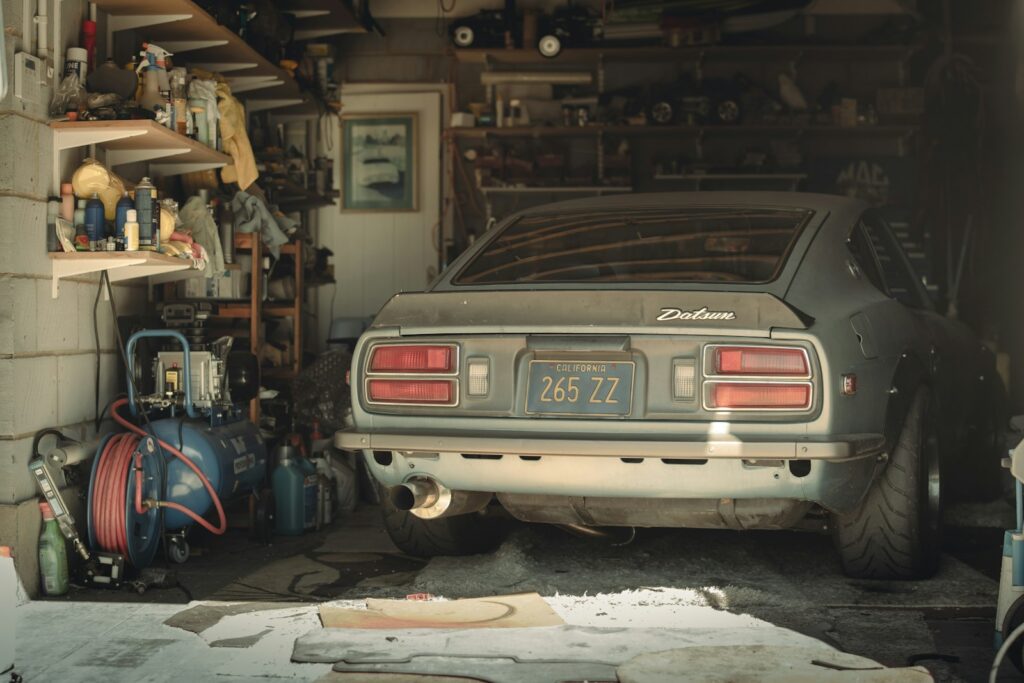
The Garage Arrangement That “Wasn’t a Big Deal”
The uncle had a certain style: generous when it made him feel important, dismissive when he wasn’t in charge. He’d been the kind of guy who could rebuild a small-block on a Saturday and then spend Sunday telling everyone about it, even if nobody asked. When his nephew got the car, the uncle immediately started suggesting shortcuts, swaps, and “better ideas,” usually involving the nephew spending money he didn’t have yet.
The nephew tried to keep it diplomatic. He’d nod, say “maybe later,” and keep hunting for the specific parts he wanted—stuff that was getting harder to find in decent condition. The rare pieces were the little victories: an original intake box without cracks, a factory-correct gauge cluster, a set of period wheels he’d scored after weeks of messages and a long drive with cash in an envelope.
Those parts didn’t all live in the car yet, but a few did. He’d recently installed a limited-run steering wheel hub that matched the spline perfectly, and he’d swapped in an uncommon OEM rear trim panel he’d finally found in the right color. They weren’t necessary for making it run, but they were part of the vision, and anyone who’s ever built a project knows the vision is what keeps you from listing it “as-is” during a bad week.
Coming Home to an Engine Bay That Looked… Different
When he got back, he went straight from the airport to the garage, still wearing travel clothes and running on stale coffee. The first hint wasn’t dramatic; it was the kind of quiet wrongness that makes your stomach drop before your brain catches up. The car looked slightly emptier, like a room where someone moved the furniture two inches and now you can’t stop staring.
He popped the hood and immediately noticed missing brackets and hardware he’d left organized on the strut tower. The steering wheel felt off too—different resistance, a tiny wobble that hadn’t been there. Then he saw it: the hub was gone, replaced with some generic adapter that didn’t sit right.
He walked around to the back and froze. The OEM rear trim panel—one of the rare pieces he’d bragged about for exactly ten seconds before carefully wrapping the old one and putting it in a box—had been swapped back. The screws weren’t even the same; whoever did it had used mismatched fasteners like they were hanging a picture frame.
At first he assumed the simplest explanation: his uncle had “tidied up” and set things aside. He started opening cabinets and peeking under benches, trying to keep his breathing normal. He found his old parts neatly stacked, like someone had reversed his progress with deliberate care.
The Uncle’s Explanation: “They’re Just Sitting There”
His uncle rolled in an hour later, carrying a plastic bag from an auto parts store like he was doing a favor. The nephew didn’t even try to ease into it; he asked where the parts went and why anything had been removed at all. His uncle’s face did that annoyed-tight smile, the one people make when they’ve already decided you’re being unreasonable.
The uncle didn’t deny it. He said he “borrowed” the good stuff because it was “wasted” on a car that didn’t run yet, and because his buddy needed a couple pieces to get his own car through inspection. He said it like it was practical, like moving a ladder from one shed to another.
The nephew asked where the parts were now, and the uncle waved a hand toward the road like that answered everything. “They’re being used,” he said, which is exactly what you say when you don’t want to say whose hands they’re in. When the nephew pressed harder, his uncle shifted to a different defense: the car wasn’t going anywhere, it was on stands, and the nephew “wasn’t even here.”
That’s when the line about waste came out in full. The uncle said those parts deserved to be on something that ran, something that could “actually get driven,” instead of “rotting in a garage.” He said it with the kind of certainty that makes you realize he wasn’t apologizing because in his head, he’d upgraded the situation.
What Was Taken, What Was “Traded,” and the Little Humiliations
As they dug in, the story got worse in a bunch of small ways that made it feel personal. The hub wasn’t the only thing missing; a rare set of brackets, a clean OEM airbox lid, and even a couple of original fasteners were gone. None of it was huge on its own, but it was the exact kind of stuff you spend months tracking down because the replacement options are either wrong or overpriced.
The uncle kept using slippery words. He didn’t “steal,” he “moved” them. He didn’t “take,” he “put them to use.” At one point he admitted he’d traded one piece for something his buddy had, like that made it a fair exchange, even though the nephew hadn’t agreed to any trade and didn’t want the substitute.
And the substitute parts were insultingly random. The steering wheel adapter looked like it came from a bargain bin, and the screws in the rear trim were different lengths, stripping the holes just enough to be a future headache. The nephew realized he was going to spend time undoing damage and hunting replacements for parts he already had, because his uncle couldn’t stand seeing something nice on something unfinished.
The most aggravating detail was how careful the uncle had been. He hadn’t ripped anything out in a rage; he’d methodically reverted it, saved the old pieces, and made it look, at a glance, like nothing had changed. That meant he knew it was wrong enough to hide behind “I thought you wouldn’t mind.”
The Blowup: “My Garage, My Rules” vs. “My Car”
The nephew told him to get the parts back immediately, and that’s when the temperature in the garage shifted. His uncle bristled and started talking about respect, about how he was the one providing space and how expensive garages were. The phrase “my garage, my rules” landed like a slap, because it turned the favor into leverage in real time.
There was a moment where the nephew went quiet, not because he had nothing to say, but because he was trying to avoid saying something permanent. He asked, again, for a list: what exactly was taken, who had it, what had been traded. The uncle acted offended by the audit, like the nephew was accusing him of something ugly rather than responding to something ugly that had already happened.
Then came the real betrayal: the uncle said he didn’t remember exactly where everything went, but it would “turn up.” He said the buddy was “a good guy” and would return it when he was done. The nephew pointed out that “when he’s done” could mean never, and the uncle shrugged like deadlines were for people without garages.
That’s when the nephew said he was moving the car out, immediately, even if it meant paying for storage or leaving it under a cover somewhere. His uncle laughed—actually laughed—and told him he couldn’t even move it because it didn’t run. It was a petty little victory lap, like the whole point was to remind him who had power.
Damage Control and a Family Problem, Not Just a Car Problem
Over the next day, the nephew started calling around, trying to track the parts through vague connections and half-remembered names. He found out the “buddy” was more of an acquaintance, someone his uncle liked because they swapped favors without asking too many questions. When the nephew asked directly for his parts back, the guy played dumb and said he thought the uncle owned them.
That turned it into a mess with receipts and screenshots. The nephew had messages from sellers, photos of the parts installed, and a couple of serial numbers, but the whole thing still felt slippery because it was happening in the gray zone of family “help.” And the more he pushed, the more his uncle framed it as the nephew being dramatic, ungrateful, and “obsessed with stupid little pieces.”
Relatives got involved in the way relatives always do: not by solving anything, but by trying to smooth it over. Someone suggested he let it go “for peace.” Someone else told him his uncle “meant well.” None of those people had to spend months hunting a discontinued part, or look at their project and feel like someone had walked through it with muddy boots.
In the end, the car still didn’t run, the garage didn’t feel safe, and the uncle still acted like the only real crime was being questioned. The nephew was left weighing options that all cost something—money, time, pride, or family ties—because now every wrench turn came with the knowledge that while he was gone, someone decided his dream was communal property. And the ugliest part wasn’t even the missing parts; it was that the uncle seemed convinced he’d been the reasonable one, which meant the next “favor” would come with the same grin and the same empty space where trust used to be.
More from Steel Horse Rides: