

The neighborhood was one of those newer developments where every driveway was the same shade of concrete and every front yard had the same two shrubs that looked like they were planted by a committee. People kept their garage doors down, waved politely, and complained about the pool hours like it was a personality trait. The HOA board loved order, loved rules, and mostly loved the feeling of being the ones who got to decide what “nice” meant.
So when a homeowner—let’s call him Matt—rolled his car halfway into his driveway one Saturday morning and did a simple oil change, it wasn’t the act itself that caused the explosion. It was the sight of it. The jack stand, the drain pan, the tiny dark ribbon of used oil, the ratchet set laid out like he was about to rebuild an engine instead of just swapping a filter.
Matt didn’t make a mess, didn’t blast music, didn’t block the sidewalk. He cleaned up, put the old oil in a sealed container, and was done before lunch. But by dinner, he had an email from the HOA titled something like “Driveway Maintenance Violations,” and the whole thing started sliding downhill fast.
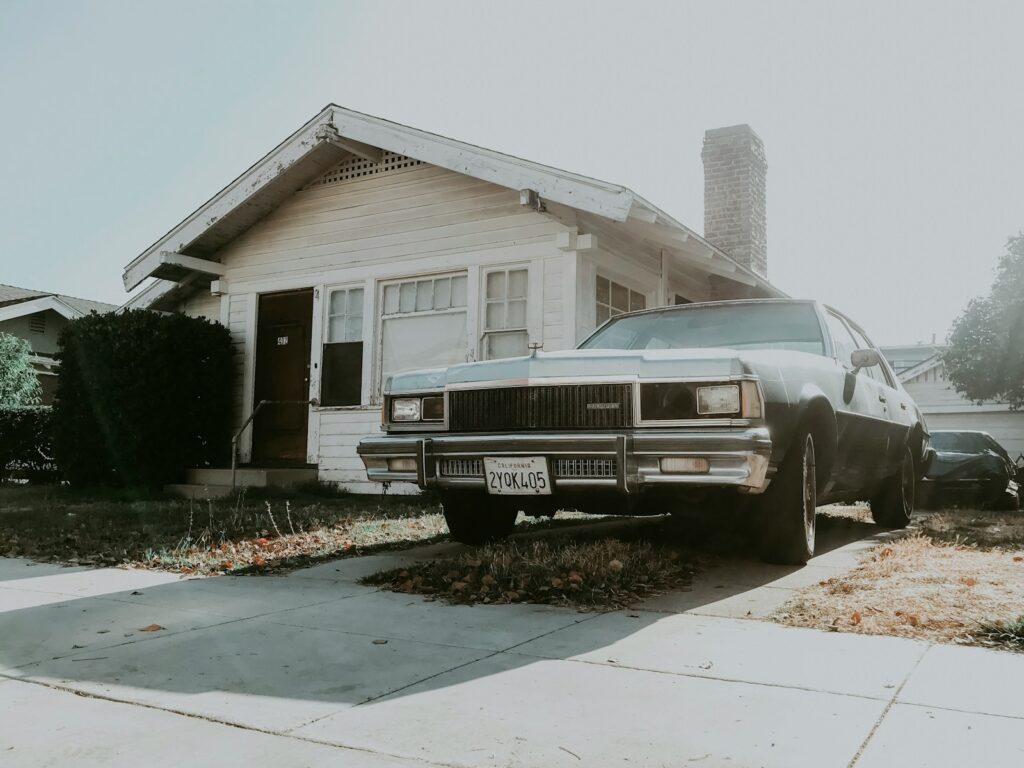
The one oil change that turned into a neighborhood emergency
The initial notice was written in that stiff HOA tone where every sentence sounds like it’s wearing a tie. “Automotive repairs are not permitted in view of neighboring homes,” it said, citing “community standards” and “property values” like those were measurable in ounces. It wasn’t even a fine yet—just a warning, with the usual threat of escalation if he didn’t “cease and desist.”
Matt replied, politely, that it wasn’t a repair so much as routine maintenance. He pointed out he didn’t spill anything and that plenty of people washed their cars in their driveways all the time, spraying soap and grime into the street. The reply back came from the board president, a guy named Len, and it had the hard edge of someone who’d been waiting to use his “I’m in charge” voice.
Len told him the board would be “addressing the issue comprehensively.” Which sounded dramatic for a $30 oil change, but Matt shrugged it off. Until the next week, when the HOA agenda came out and “Driveway Repairs and Vehicle Work” was its own bullet point, like a municipal crisis.
How the board “fixed” it: banning everything
The meeting was held in the clubhouse, under fluorescent lights that made everyone look slightly sick. A handful of homeowners showed up mostly for the free cookies and the chance to complain about parking, but the vibe shifted when Len brought up “recent incidents” that were “incompatible with our community image.” He didn’t say Matt’s name, but he didn’t have to; Len kept glancing over at him like a teacher calling on a kid without using his hand.
Len described the scene in Matt’s driveway like it was a scrapyard operation. “Open vehicle work,” he said, “fluids, tools, parts.” Matt raised his hand and said, calmly, that it was a single oil change, and he’d done it safely. Another board member chimed in with a story about a different neighborhood where someone supposedly “dismantled a transmission in the street,” which was the HOA version of urban legend.
Then came the vote. The board passed a rule banning “driveway repairs and maintenance,” and the language was broad enough to cover everything from changing oil to replacing a battery to topping off coolant. The only allowed work, per the new rule, was “emergency service required to make a vehicle operable for immediate removal.” Basically: if your car is actively dying, you can fix it just enough to flee.
Len announced it like he’d solved crime. Matt sat there thinking about how ridiculous it was that a community full of homeowners apparently couldn’t be trusted with a wrench. But what really stuck in his throat was the way Len kept saying “we all have to follow the same standards,” with that smug, satisfied smile that always means the standards apply to other people first.
The warnings start piling up, and the hypocrisy starts showing
After the rule passed, the HOA got oddly energized. Matt got a follow-up email summarizing the decision and reminding him that “future violations may result in monetary penalties.” The wording felt personal, like the whole thing had been crafted around his driveway as the origin story for the HOA’s next era of enforcement.
He tried to let it go. But within a couple weeks, he started noticing how selectively the rule seemed to exist. One neighbor had a tire leaning against their garage for three days straight while they rotated wheels. Another had their trunk open and tools out while they installed a new stereo, wires hanging like spaghetti.
Nothing happened to them. No warning letters, no “cease and desist,” no community-wide email about “standards.” It was as if the rule only activated when the board wanted it to, like a remote control.
The weirdest part was that Len himself had a tall wooden privacy fence on the side of his house that ran past the driveway toward the backyard. From the street, you couldn’t see much beyond it. But you could hear things sometimes—metal clinks, a compressor kicking on, the occasional thud of something heavy being dragged.
The fence, the dead cars, and the moment the story flips
Matt didn’t set out to become the neighborhood detective. He wasn’t lurking with binoculars or pacing the sidewalk like an extra in a true crime reenactment. He just noticed small, off details that didn’t add up, the way people do when they feel like they’re being singled out and they start scanning for reasons.
One afternoon, while walking his dog, he passed Len’s house and caught a glimpse through a gap where two fence boards didn’t quite meet. It was one of those accidental angles where the sun hits just right and your eyes land on something you weren’t supposed to see. Behind the fence, there were cars.
Not “someone’s visiting” cars. Not “a teenager parked crooked” cars. Dead cars—at least three of them—sitting in the side yard or backyard area like they’d been retired there. One looked like it hadn’t moved in months, with a flat tire sunk into the dirt. Another had a dull, oxidized hood like it had been baking in the sun, and the third was partially covered with a tarp that didn’t fully hide the shape of a missing bumper.
It wasn’t just the presence of the vehicles. It was the contradiction. Len had built a whole crackdown around the idea that visible vehicle maintenance was a threat to the neighborhood’s “image,” and here he was running what looked like a mini graveyard behind his fence, out of sight, like the rules mattered more as performance than principle.
Matt started paying attention, not obsessively, but enough to confirm he wasn’t imagining things. Delivery drivers occasionally left the gate cracked. On trash day, when the wind pushed the fence a little, you could see the dull edge of a fender. And once, unmistakably, he saw Len and a buddy back there with a jack and tools.
Confrontation, paperwork, and the HOA’s favorite weapon: procedure
Matt did what people do when they’re trying to keep their sanity in a system designed to wear it down: he documented. He took photos from public viewpoints where the cars were visible without trespassing. He checked the HOA’s own bylaws and architectural guidelines, the ones written in dense paragraphs that always seem to contain loopholes for the people who wrote them.
Sure enough, there were rules about “inoperable vehicles” and “storage of unregistered cars,” plus a clause about not using yards for vehicle storage. There was also language about fences not being used to “shield violations,” which felt so specific it was almost funny. Matt put together a neat little packet and submitted a complaint the exact way the HOA insisted everyone do: through the official channel, with dates, photos, and citations.
The response came back slower than usual. When it did arrive, it didn’t deny anything outright. It said the board would “investigate” and thanked him for helping keep the community compliant, which read like the HOA equivalent of a customer service script.
At the next meeting, the topic wasn’t on the agenda. Matt brought it up anyway during the homeowner comment period. Len’s face did something subtle—his smile tightened, like someone had pulled a drawstring.
Len said they didn’t discuss “individual properties” in open session. Matt pointed out that they’d basically built a whole new rule around his driveway in open session. Len’s voice stayed measured, but the mood shifted; it was clear Len wanted the subject buried, fenced off, made private.
After that, Matt started getting scrutinized for everything. A notice about his trash can being visible too long after pickup. Another about a weed that was basically the size of a paperclip. Small things, but frequent, like someone tapping you on the shoulder over and over until you snap.
Meanwhile, Len’s fence stayed up, and the cars stayed hidden. The HOA sent out a community email reminding everyone that “driveway repairs remain prohibited,” like they were doubling down on the rule as a distraction. The irony was thick enough to spread on toast.
Neighbors began quietly comparing notes the way people do when they suspect the referee is betting on the game. A couple homeowners mentioned they’d also been warned for harmless stuff while certain board members’ houses seemed to live in a different universe of enforcement. But nobody wanted to be the next target, which is exactly how HOA power tends to work—less about rules, more about fear of becoming the example.
By the time the next round of HOA elections rolled around, Matt wasn’t sure what would happen. Len was still acting like the crackdown was a proud legacy, and the dead cars were still behind the fence like a secret that everyone half-knew but no one could officially say out loud. The whole neighborhood felt stuck in that tense, petty limbo where nothing is resolved, everything is personal, and the guy preaching “standards” is still sitting on three silent, rusting exceptions in his backyard.
More from Steel Horse Rides: