

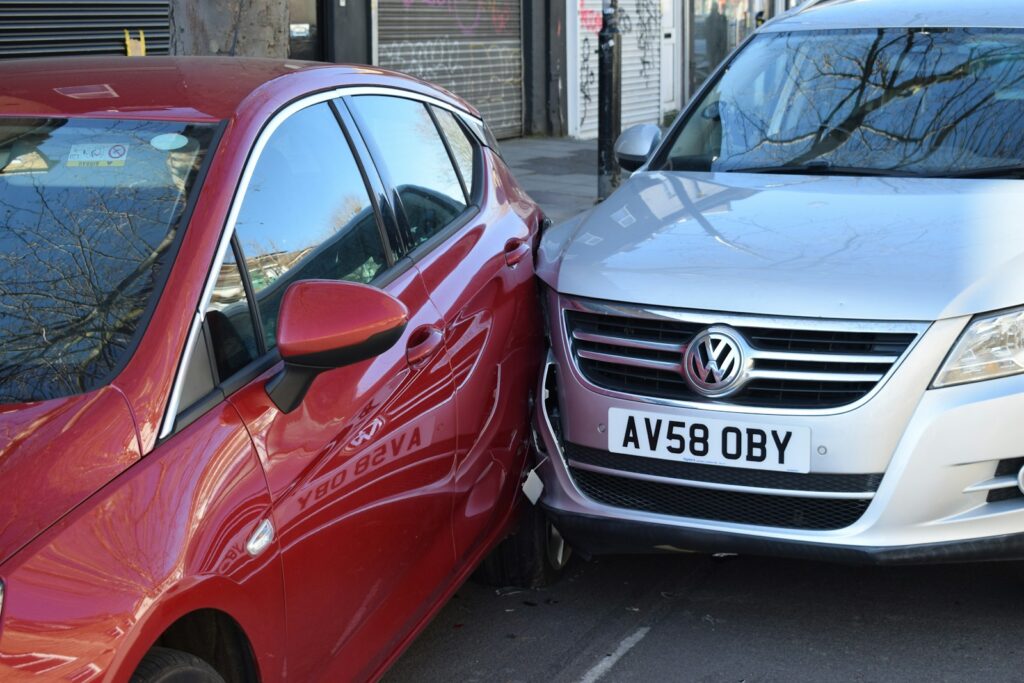
It started the way these things always start: a normal morning, a quick glance out the window, and that stomach-drop moment when you realize your car doesn’t look the way it did yesterday. The left rear bumper was scuffed down to the plastic, paint streaked with a color that definitely wasn’t his, and the tail light had a neat little spiderweb crack like someone had tapped it with the perfect amount of force.
He walked around it twice, hoping it was dirt. It wasn’t. The car had been parked in the usual spot on the street in front of his place, the same spot everyone on the block treated like a shared understanding, and whoever hit it hadn’t left a note, a number, or even the courtesy of moving the broken pieces out of the gutter.
When he knocked on a couple doors, the answers were all the same: nobody saw anything, nobody heard anything, sorry man. And then, almost as an afterthought, someone mentioned the neighbor across the way—the guy with the doorbell camera and the extra security camera aimed down his driveway “because people speed through here.” That neighbor, it turned out, had a perfect view of the street.
The friendly neighbor with the “great cameras”
The neighbor wasn’t some stranger. They’d done the usual small talk over trash cans and mail, waved at each other during snow shoveling season, the normal low-stakes neighborhood relationship. The camera thing was almost a running joke; the neighbor loved mentioning how clear his footage was, how he could read license plates, how it helped when someone’s package got “misdelivered.”
So the car owner figured this would be easy. He went over, pointed at the damage, and asked if the cameras caught anything overnight. The neighbor’s face did that half-freeze people get when their brain is moving faster than their expression can keep up, like he’d expected the question but still hated being asked.
“Yeah,” the neighbor said, careful and slow. “I’ve got it on camera.” Then he paused again, longer this time, and added, “But I can’t give you the footage.”
That was the first time the situation turned from annoying to surreal. The car owner thought he’d misheard him, like maybe the neighbor meant he didn’t know how to export it. But the neighbor was already shaking his head, looking past him toward his own driveway like he could physically avoid the conversation by staring at asphalt.
“It’s… complicated” turns into a name
At first the neighbor tried to keep it vague. He said stuff about not wanting to “get involved” and not wanting “drama.” He implied it was a misunderstanding and that it would be easier if the car owner just went through insurance and let it go. The car owner, still trying to stay polite, asked a simple question: if it’s on camera, who hit it?
That’s when the neighbor finally said it. It was his best friend. Not “a friend,” not “someone I know,” but his best friend—the kind of relationship where they apparently went fishing together and their kids played at each other’s houses. The neighbor said the friend had been over the night before, left late, and “must’ve clipped it” backing out.
The car owner stood there on the neighbor’s porch with his brain trying to reconcile two facts: there’s evidence, and the person holding it is refusing to share because of loyalty. He asked if the friend knew he’d hit the car. The neighbor shrugged in this maddeningly casual way and said he hadn’t told him yet because he “didn’t want to blow up his spot.”
It wasn’t even the refusal that stung the most—it was how matter-of-fact it was. Like the neighbor was explaining a minor inconvenience, not admitting he was actively helping someone dodge responsibility for property damage.
The polite request phase ends fast
The car owner tried to keep the conversation on rails. He said he didn’t want a fight, he just needed the footage for his insurance claim or a license plate so he could file a report properly. He even offered a compromise: blur the face, just give the plate, or at least confirm the make and model so the police would take it seriously.
The neighbor wouldn’t budge. He kept repeating variations of “I’m not comfortable with that,” like discomfort was the deciding factor. He said if the friend got in trouble, it would ruin their friendship, and then he said something that made the car owner’s jaw tighten: “It’s not that much damage, though, right?”
The car owner pointed at the bumper and the tail light and told him the estimate wasn’t going to be cute. Body shops don’t charge in “not that much” units. But the neighbor kept leaning on this idea that everybody should just calm down and move on, as if being calm magically repairs plastic and paint.
When the car owner asked if the neighbor would at least ask his friend to come talk and pay for it, the neighbor said he’d “see what he can do.” It wasn’t a yes. It sounded like someone promising to think about maybe considering taking a look at a calendar.
Insurance, police, and the weird power of a video file
That afternoon, the car owner called his insurance company, and the conversation went exactly how you’d expect. Without the other driver’s information, he could file it as a hit-and-run and pay his deductible, and his rates might be impacted depending on the policy. The insurance rep asked if there were witnesses or video, and the car owner had to say, “Yes, but the person who has it won’t give it to me.”
It sounded ridiculous out loud. The insurance rep told him to file a police report anyway and let the police request the footage. So he did. An officer came out, took photos, wrote it up, and asked about cameras in the area.
When the car owner mentioned the neighbor, the officer nodded like this wasn’t his first time hearing about neighborhood cameras becoming neighborhood leverage. The officer said they could go ask for the footage, but if the neighbor refused, it might require a more formal request depending on local rules. It wasn’t an immediate “we’ll force him” situation, more like: we’ll try, then we’ll see.
The car owner found himself in this bizarre waiting game where the key evidence wasn’t hidden or destroyed. It was sitting on a perfectly normal guy’s hard drive across the street, being guarded like it was state secrets because it might make someone’s buddy look bad.
The neighbor’s story starts changing
The next time the car owner approached the neighbor, things got colder. The neighbor didn’t invite him onto the porch this time; he stepped outside and closed the door behind him, arms folded. He said he’d talked to his friend, and his friend “didn’t think he hit anything.”
That line landed like an insult. “Didn’t think” wasn’t the same as “didn’t.” It sounded like the friend was already practicing denial, and the neighbor was letting him.
The car owner asked to see the footage, just for a second, right there on the neighbor’s phone, no copying. The neighbor refused again, but now he was adding a new layer: he didn’t want the car owner to “misinterpret” it. He said angles can be tricky, that cameras make distances look different, that maybe it was someone else entirely.
That was the moment it stopped being about friendship and started being about control. The neighbor knew exactly what was on that video—enough to say it was his best friend—but suddenly the footage was too ambiguous for anyone else to view. It was a convenient kind of uncertainty.
Awkward block politics and the slow burn fallout
Word got around the block because these things always do. People noticed the damaged car, noticed the police car that came by, noticed the neighbor getting stiff and quiet whenever anyone mentioned cameras. The car owner didn’t have to campaign; the situation was naturally messy enough that it spread through casual sidewalk conversations.
Some neighbors started doing the subtle thing where they stop and chat a little longer with the car owner, like they’re silently signaling whose side they’re on. Others avoided both houses entirely, suddenly very interested in checking their phones while walking dogs. The neighbor with the footage kept his blinds drawn more than usual, and his friend’s truck—assuming it was the friend—stopped showing up at his place.
The car owner was still dealing with the practical stuff: estimates, insurance paperwork, figuring out whether he could afford to eat the deductible or gamble on a police follow-up. But the emotional part kept poking at him in quieter moments. It wasn’t just the hit-and-run; it was learning that the neighbor who’d smiled and waved for months would rather let him pay for someone else’s mistake than risk a tough conversation with his best friend.
And the neighbor, in trying to “avoid drama,” had created the kind of slow, lingering neighborhood tension that doesn’t resolve in a day. The car owner could still see the camera from his window, angled neatly at the street like a silent promise of accountability—except now it looked less like security and more like a reminder of exactly who gets protected when things go wrong.
By the time the police said they’d “try again” to get the footage, the damage on the car had almost become background noise. The real bruise was social: the knowledge that the truth was sitting right there, recorded in crisp little pixels, and the only thing keeping it from mattering was one guy’s decision to choose his friend over the neighbor who lives across the street.
More from Steel Horse Rides: