

It started the way a lot of neighborhood drama starts: with a car sitting perfectly still and one person deciding it was somehow a personal attack. The car belonged to a guy who lived in a small apartment complex where street parking was technically public but emotionally claimed by whoever got there first. He’d parked on the curb in front of the building late the night before, in a spot that wasn’t reserved, wasn’t marked, and wasn’t blocking anything.
By mid-morning, his phone started lighting up with a text from a neighbor—one of those people who treated the curb like it came with a deed. The message was short and smug: something like, “Move your car or I’m having it towed.” The owner blinked at it, reread it twice, and then did what most reasonable people do when they’re suddenly threatened over a public street: he looked out the window to see if this was real.
It was real. Down on the sidewalk, the neighbor was standing there in gym shorts and a faded hoodie, talking with a tow truck driver like they were closing a deal. He kept pointing at the parked car with that aggressive, straight-armed point people use when they want the world to agree with them. The car owner grabbed his keys and headed outside, already feeling that mix of anger and disbelief that makes your palms hot.
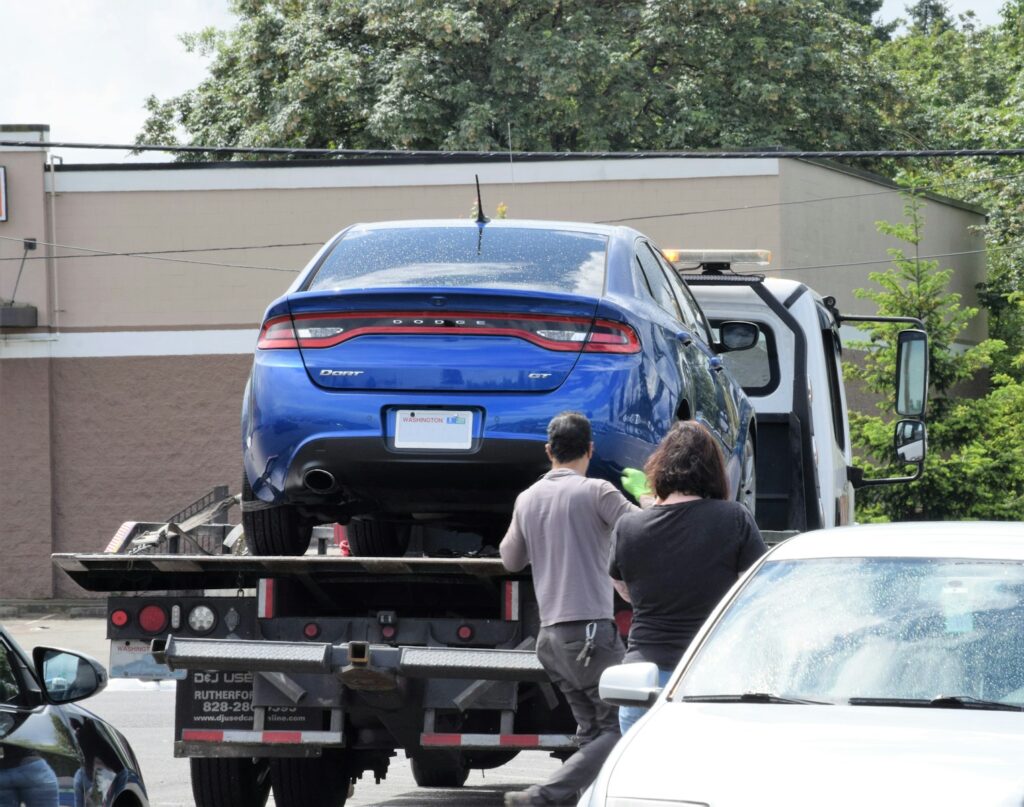
The “That’s My Spot” Routine
When the owner walked up, the neighbor didn’t even pretend to be embarrassed. He acted like he’d been caught doing responsible civic work, chin up, shoulders squared, like towing someone’s car off a public street was a normal Tuesday errand. He launched straight into it: the car had been “sitting there too long,” it was “in the way,” and he was “tired of people thinking they can just park wherever.”
The owner kept it simple: it’s a public street, there are no assigned spaces, and the car wasn’t violating any posted sign. The tow truck driver, to his credit, didn’t look eager to get dragged into a neighborhood ego war. He asked the neighbor if it was a private lot or if he had authorization from the city or property management, and the neighbor’s answer was basically vibes and entitlement.
That’s when the neighbor switched tactics. He started gesturing broadly at the car and saying it looked “abandoned,” which is a specific word people use when they want city services to do their dirty work. The owner pointed out he was standing right there, holding keys, and the car had been parked overnight—hardly a dust-covered relic. The neighbor’s face tightened like he’d expected the universe to back him up and it hadn’t.
Escalation: Tow Truck, Then a Call for Backup
The tow driver hovered in that uncomfortable middle ground, clearly aware he could be on the hook if he towed a car without proper authority. He asked for documentation, a manager, a dispatch order—anything. The neighbor didn’t have it, so he did the next best thing: he pulled out his phone and called the police, announcing it like a performance.
He kept his voice loud enough for everyone to hear, saying things like “trespassing” and “illegal parking” even though the curb was literally a public street. The owner just stood there, half furious and half impressed by the confidence. A couple of other residents drifted over, drawn by the tow truck’s idling engine and the neighbor’s volume.
While they waited, the neighbor tried to corner the conversation into a moral lecture. He talked about “respect” and “how things work around here,” like he was mayor of the block. The owner, not wanting to give him the satisfaction of a shouting match, just repeated: show me the rule or the sign, or leave my car alone.
The Police Arrive, and the Story Starts Turning
Two officers eventually pulled up and stepped out with that neutral, tired look people get when they’re walking into a dispute they already know is going to be stupid. The neighbor rushed over first, talking fast, pointing at the car, and describing it like it was a dangerous object that had appeared overnight. He used the phrase “my spot” again, which is always a fun thing to say about public property in front of cops.
The owner got his chance to explain and kept it calm: he lives here, he parked on the street, no signs prohibit it, and his neighbor is trying to tow his car without authority. One officer walked over to check the car for obvious violations. The other asked the neighbor basic questions—what ordinance, what rule, what sign—and the neighbor’s answers got vague quick.
The tow truck driver, sensing an exit ramp, chimed in that he hadn’t hooked anything and wasn’t going to without proper authorization. You could almost see the neighbor’s frustration building, like he’d expected the tow truck to be a magic wand that made other people disappear. Instead, the situation was turning into a very public audit of his complaint.
Then an Officer Looks Across the Street
As the officer circled the owner’s car, he did that thing cops do when they’re scanning the environment, not just the object of the complaint. Across the street, partially on the curb and angled like it had been parked in a hurry, sat the neighbor’s own car. It was close enough to a driveway cut that it made you squint and wonder if it was technically blocking it.
The officer walked over, not in a dramatic way, just with the calm curiosity of someone who’s seen this pattern a hundred times. The neighbor noticed and tried to redirect him—suddenly there were a lot of “that’s not what we’re here for” comments. The officer didn’t bite and leaned in toward the neighbor’s windshield and rear plate.
That’s when it landed. The tags were expired—noticeably expired, not “last week” expired. And the way the car was positioned made it look like it might be within the no-parking buffer for the driveway, the kind of thing people do when they assume nobody’s going to question it because it’s their own home turf.
The Energy Shifts in Real Time
The neighbor’s whole demeanor changed, fast. He went from puffed-up enforcer to defensive and twitchy, throwing out excuses before anyone even asked. He said he “just hadn’t gotten around to it,” that the DMV was “backed up,” that he “barely drives it,” as if any of that mattered to the bright little sticker that clearly didn’t match the current year.
The officer asked for his license and registration, and the neighbor tried to argue his way out of it like this was a debate club. He kept glancing at the tow truck driver, like hoping the guy would somehow return the favor and tow someone else instead. The tow truck driver stayed planted beside his rig, arms crossed, looking like he’d made peace with the fact that this was no longer his circus.
The owner didn’t say much at that point, because there’s a special satisfaction in silence when someone is unraveling under their own spotlight. A couple of neighbors who’d wandered over started whispering, the way people do when the script flips and the loudest person in the scene stops being in control. The neighbor’s face went red in patches, and he kept trying to pull the officers back toward the original car like it was a lifeline.
The officers were polite but firm. The owner’s car wasn’t being towed, because there was no basis for it. Meanwhile, the neighbor’s car was now the only one in the immediate area that was visibly out of compliance, and it was hard to miss how cleanly that lined up with his earlier speech about “rules” and “respect.”
By the time the officers finished their check, the neighbor was standing there with the posture of someone who’d just realized his own complaint had opened the wrong door. Whether it ended with a citation, a warning, or a demand to move the car right now, the humiliation was already baked in. The owner drove nowhere and moved nothing—his car stayed exactly where it was.
The tow truck rolled out without towing anything, which somehow felt like the most fitting anticlimax possible. The neighbor lingered for a minute after the police left, staring at the owner’s car like it had betrayed him personally, then looking back at his own vehicle like he was trying to will the expired tags into being current. The owner went back inside, but the weird part wasn’t the win—it was knowing the guy next door had shown exactly how far he’d go to “police” a street he didn’t own, and now he’d have to live with the fact that everyone saw how that worked out.
More from Steel Horse Rides: