
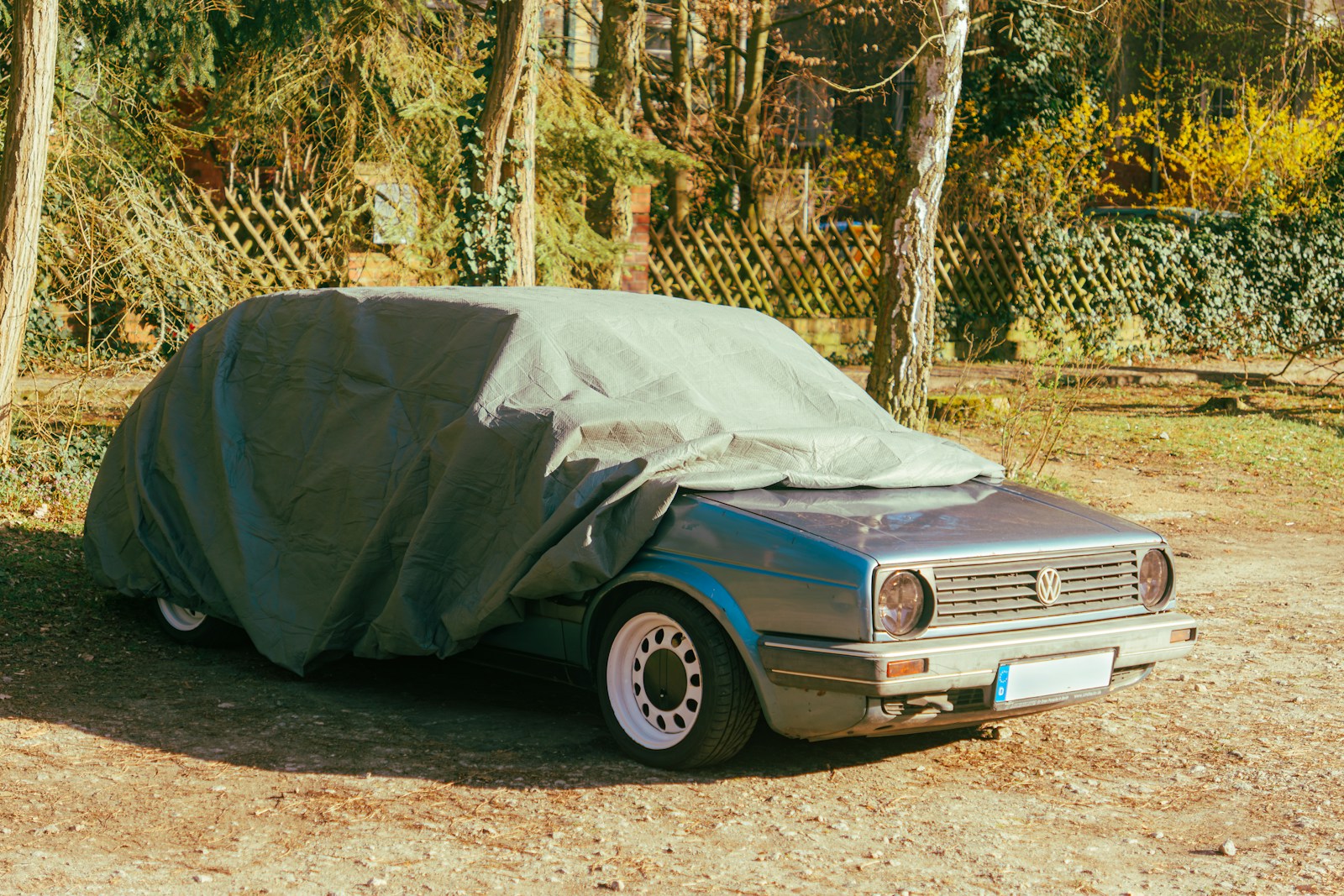

It started the way neighborhood drama usually does: with someone staring too long at someone else’s driveway and deciding they had an opinion that needed to be shared. On an otherwise normal Tuesday, the guy across the street—mid-40s, always in a logo polo, always polishing something—walked over and knocked like he was delivering a summons.
The homeowner, Mark, answered in socks and a faded concert tee, holding a mug that suggested he’d just sat down. Across the street stood Greg, the self-appointed keeper of curb appeal, eyes already sliding past Mark and locking onto the gray, fitted car cover sitting low and tight in the driveway like a smooth boulder. Greg didn’t ask how Mark was doing; he asked why Mark was “keeping a junker” under a tarp.
Mark didn’t even correct the “tarp” part at first. He just blinked, looked over his shoulder at the covered car, and said, carefully, “It’s a car cover.” Greg’s face said he heard “it’s a problem,” and that was the beginning of the whole mess.
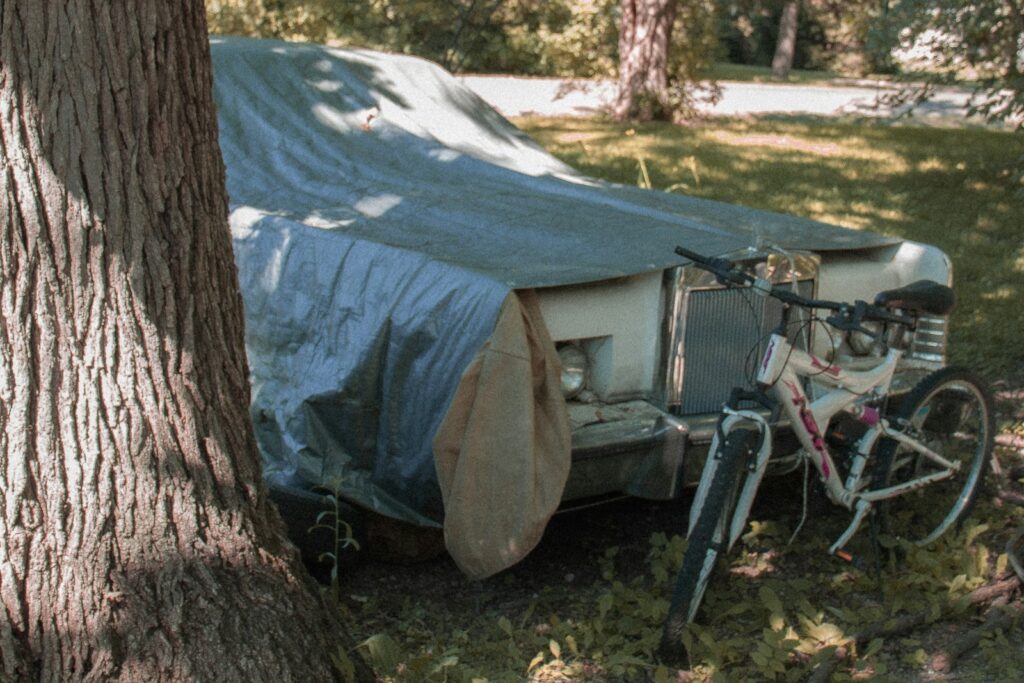
The Cover That Apparently Ruined Everything
Greg launched into the speech like he’d practiced it in the mirror. The cover, he said, made the neighborhood “look abandoned,” like there were foreclosures, like nobody cared, like they were “one step away from a row of boarded windows.” He gestured at Mark’s driveway the way people gesture at an eyesore they don’t want to touch.
Mark’s house was normal: trimmed lawn, no rusted appliances on the porch, no broken cars on blocks. The only “issue” was that the covered car stayed covered, because Mark didn’t drive it every day and didn’t want sun fade, pollen, and the occasional bird with terrible aim turning his paint into a long-term project. Greg kept using the phrase “property values” like it was both a weapon and a holy text.
Mark tried to keep it polite. He said he was protecting the car, that it was registered, insured, and it ran, and that he’d rather cover it than leave it exposed. Greg countered with a dramatic sigh and a line about how “people notice these things,” meaning: he noticed, and he’d decided that was everyone’s problem.
Mark Tries the Normal Person Route
For a day or two, Mark did what most people do when they realize they live near someone who thrives on being bothered. He ignored it. He kept the cover on, went to work, came home, and tried not to look at Greg’s driveway where Greg’s SUV sat—huge, glossy, and constantly being fussed over like it was a showpiece.
Then the notes started. Not official notices, not from any HOA (because there wasn’t one), just handwritten paper tucked under Mark’s wiper or slipped into the crack of his front door. One of them said, “Covers attract thieves,” as if the cover wasn’t specifically designed to keep curious eyes from lingering.
Another note was less creative and more honest: “Remove cover. It looks bad.” No greeting, no signature, just the sentence and a lot of pressure in the pen strokes like the writer had opinions about everything from lawn edging to how people should load their groceries.
Mark finally walked over, not even angry, just tired. He told Greg there was no rule about car covers and that he wasn’t doing anything unsafe or illegal. Greg said it wasn’t about rules; it was about “community standards,” and when Mark asked who set those standards, Greg laughed like the question was adorable.
The Thing Under the Cover
It’s worth pausing here for the detail that made the whole situation feel like a prank: Mark wasn’t hiding some dead sedan with four mismatched tires. Under that fitted cover was a low, clean, garage-kept sports car—one of those models that people recognize even when it’s just a silhouette. Mark had bought it a couple years earlier after a promotion and a breakup, the classic “I’m going to do something for myself” purchase.
He didn’t talk about it much because he didn’t want to be that guy, and because the street had enough posturing already. On the rare days he took it out, he did it early—quick drive, back home, cover back on—partly because he liked it that way and partly because he didn’t want random neighbor conversations about horsepower and payments. Greg, of course, assumed anything hidden was shameful, like the cover was a confession.
That assumption hardened into certainty when Greg started telling other neighbors that Mark had “a junk car” sitting in the driveway. It came back to Mark through a friendly neighbor who mentioned it casually, like, “Hey, is everything okay? Greg said you’ve got a broken-down car out front.” Mark had that moment where you realize you’re not just dealing with a nosy person—you’re dealing with a storyteller.
The Confrontation Turns Public
It escalated on a Saturday morning when Mark was outside rinsing off the cover. Greg saw his chance and walked over with that stiff posture people get when they’ve decided they’re the adult in the room. He didn’t even say hello; he said, “So you’re finally taking it off?” with the exact tone you’d use for someone who’d been leaving trash on the curb.
Mark said he was cleaning it. Greg, apparently delighted to have an audience because a couple neighbors were out doing yard work, raised his voice just enough to be overheard. He started in again about the “abandoned” look, how the cover “screams neglect,” how it made the street look like people didn’t have pride.
Mark stayed calm longer than most people would. He told Greg, plainly, that he didn’t owe him an explanation and that he was done with the notes. Greg took that as disrespect and did that thing where people pretend they’re being reasonable while they’re clearly pushing: “I’m just saying, if you cared about the neighborhood, you’d store it properly.”
That’s when Mark did what Greg had not planned for. He walked to the front of the car, grabbed the edge of the cover, and peeled it back in one clean motion like he was revealing a stage prop. The car underneath wasn’t dusty. It wasn’t rusted. It gleamed, even in the flat light, with the kind of finish that makes people stop mid-step without realizing it.
Greg’s face went through a few quick expressions—confusion, then recalculation, then something like embarrassment trying to hide behind indignation. Mark said, evenly, “This is why it’s covered.” He didn’t say what it cost, but he didn’t have to; the shape did the talking, and even the neighbors pretending not to stare were staring.
Greg Doubles Down Anyway
A normal person would’ve backed off right there. Greg didn’t. He pivoted, fast, and claimed it was “worse” now because a car like that was “flashy” and “invited attention,” like Mark had revealed a liability rather than an asset.
Mark asked him, “So which is it? Is it an abandoned junker, or is it too nice?” Greg said that wasn’t the point, and Mark said, “It seems like the point is you want control over what my driveway looks like.” That landed like a slap, mostly because it was true and it was said in front of witnesses.
Greg tried to recover by gesturing at his own SUV like it was a reference model for tasteful ownership. He made a comment—half joke, half dig—about how Mark could “just drive it like a normal person” instead of “keeping it under wraps.” Mark, without raising his voice, said, “Your SUV costs less than the cover’s deductible if something happens to this. I’m not leaving it open for pollen because you don’t like fabric.”
That’s the line that stuck, because it hit Greg where he lived: status. Greg had been acting like he was defending the neighborhood, but he’d been doing that thing where people treat their preferences like civic duty. Suddenly it was obvious this wasn’t about abandonment or safety; it was about Greg not liking something he couldn’t size up properly from the sidewalk.
After that, Greg didn’t apologize. He did what people like Greg do when they can’t win: he changed the topic and walked away mid-conversation, muttering about “everyone doing what they want these days.” A few hours later, Mark found another note in his mailbox—this time shorter, almost petty in its restraint—suggesting he “consider a garage.” Mark didn’t have one. Greg knew that.
The tension didn’t dissolve; it just hardened into a new shape. Greg stopped waving and started watching, the way someone watches when they’re looking for something to complain about that will stick better next time. Mark kept the cover on, not out of spite, but because he wasn’t about to let a neighbor’s insecurity dictate how he protected something he’d worked for.
And that’s where it sat afterward: a quiet street, a perfectly normal driveway, a neatly covered car that wasn’t hurting anyone, and a guy across the road who couldn’t stand the idea that something could be both private and valuable at the same time. The cover stayed smooth and gray in the sun, and Greg’s SUV stayed shiny, and neither one of them was really the point anymore—what lingered was the feeling that Greg wasn’t done, he was just regrouping.
More from Steel Horse Rides: