


It started with something painfully unglamorous: tires. Her car had been slipping a little in the rain for weeks, and when she finally looked closely, the tread was basically a rumor. One tire had a slow leak that turned every morning commute into a little ritual of denial and air pumps.
So she did what most married people do when a shared expense pops up—she brought it up at the kitchen counter, phone in hand, already braced for the annoying-but-manageable conversation. She’d priced a decent set, not even the fancy ones, and she wanted to schedule it before the weather got worse. Her husband barely looked up and hit her with an immediate, flat “We can’t afford that right now.”
Which, fine, would’ve been frustrating but survivable… except he said it like it was the end of the discussion. No “maybe next paycheck,” no “let’s see what we can move around,” no “how bad are they?” Just a shut door. She swallowed the irritation, told herself finances were tight for a reason, and kept driving on tires she didn’t trust.
The Money Talk That Wasn’t Really a Talk
Over the next week or two, she tried again—more carefully this time. She mentioned the tires were a safety issue, that the car was the one she used for work and errands, that she didn’t want to end up stranded or, worse, sliding into someone at a stoplight. He kept repeating the same line: it wasn’t in the budget.
But the weird part was he wouldn’t show her the budget. When she asked what was so tight, he got slippery and irritated, like she was auditing him instead of asking a basic question about their shared life. He’d say things like, “You know how expensive everything is,” and “We’ve got a lot going on,” without naming a single number.
She started doing that quiet mental math people do when they’re trying not to be accusatory. They weren’t living lavishly, but they weren’t desperate either—steady jobs, bills paid, the occasional takeout. The tire money wasn’t fun, but it also wasn’t a second mortgage.
Still, she tried to be the calm one. She said she could put it on a card and pay it down, or they could skip a weekend expense, or she could even buy two tires now and two later. He acted like every suggestion was an attempt to start a fight, and the conversation kept ending with him annoyed and her feeling ridiculous for asking to keep her car safe.
The Truck Appears Like a Magic Trick
Then came the Saturday that snapped everything into focus. He told her he was going out “to run a couple errands,” which in their house meant hardware store, maybe groceries, nothing that required a full outfit change. He was gone longer than expected, and when she heard a different engine rumble into the driveway, she assumed it was a neighbor or a delivery.
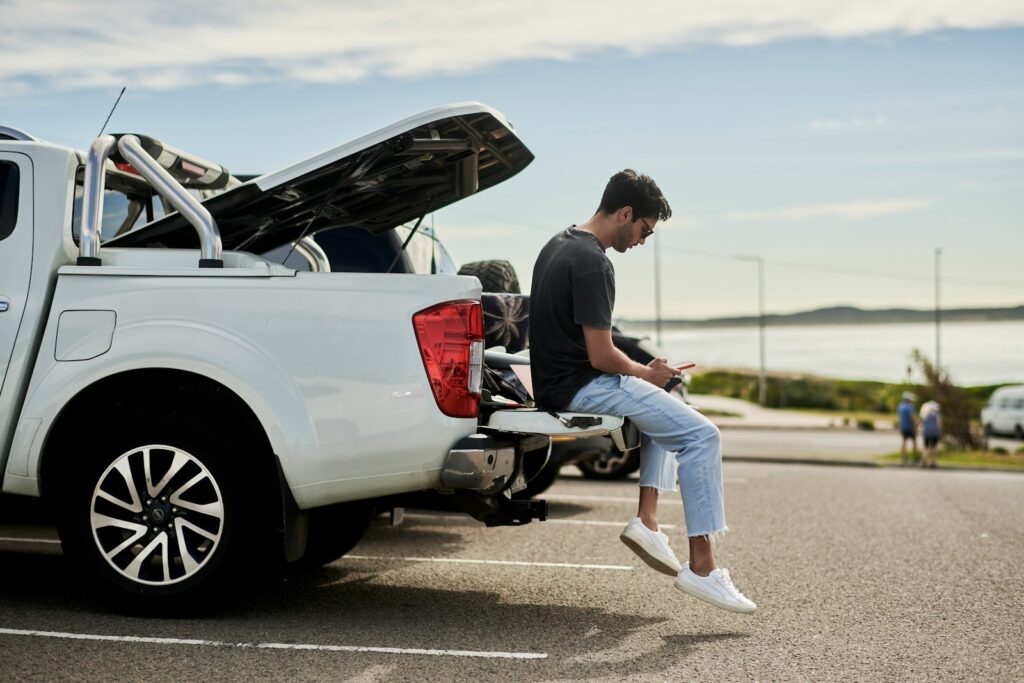
She looked out the window and saw a truck she didn’t recognize—newer, shiny, tall enough to make their driveway look smaller. He climbed out like he’d just won something. There was that bright, pleased look on his face that people get when they’ve been imagining a purchase for a long time.
He didn’t even lead with an explanation. He led with an announcement, like this was a surprise party and she was supposed to clap. “So… I did a thing,” he said, gesturing toward the truck with both hands.
Her first response wasn’t even anger, not yet—it was confusion. She asked if it was a friend’s, if he was borrowing it, if it was some kind of short-term work thing. He laughed like she was being silly and said, “No, it’s mine. I got a really good deal.”
“We Can’t Afford Tires” Meets “I Signed Paperwork”
Once it clicked that this wasn’t temporary, she asked the question any sane person would ask: “How?” Not how a truck works—how, financially, the same household that couldn’t afford tires had just acquired a whole truck.
He started explaining in that fast, confident way people do when they’ve already decided they’re right. He said the monthly payment was manageable, that the dealership gave him a great trade-in offer, that it was “an investment,” that his old vehicle was “on its last legs.” He tossed around words like “value” and “timing” like that changed the basic math.
She asked what he put down. He said he didn’t want to get into the details right then. She asked if this meant they could finally replace her tires, because if the budget could handle a truck payment, surely it could handle rubber that keeps their family from hydroplaning. That’s when his expression changed—less excited, more defensive.
He told her, flatly, that she was “ruining the moment.” He said she was making a big deal out of something positive. And when she repeated the tire conversation back to him—his exact words, the way he shut it down—he acted like she was dragging up old, irrelevant stuff.
She wasn’t yelling, but her voice did that sharper thing it does when someone feels cornered by the obvious. She said it felt like her safety had been treated as optional while his wants were treated as urgent. He crossed his arms and said, “This isn’t about your car. Stop making my purchase about you.”
The Fight Turns Into a Personality Trial
That line didn’t just sting; it rewrote the argument into something uglier. Because now it wasn’t about tires versus a truck. It was about how quickly he could decide her needs were “about her” and his wants were “for the household,” “for the future,” “for practical reasons,” no matter how shaky the logic was.
She tried to keep it tethered to reality. She reminded him she wasn’t asking for a luxury upgrade—just tires that wouldn’t blow out. She pointed out that he didn’t consult her, didn’t show her any numbers, and somehow managed to find money the moment it benefited him. He fired back that she was controlling and negative and that he “knew she’d react like this,” which, of course, didn’t help his case.
Then he shifted tactics and went for the guilt angle. He said he worked hard and deserved something nice. He said he did it for the family because they could use a truck “for projects” and “in case of emergencies.” She stared at him like he’d lost the plot, because the emergency was already sitting in the driveway on balding tires.
At some point, he said she was “jealous.” That one landed with a weird thud, because it was such a misread of what she was actually feeling. She wasn’t jealous of the truck; she was furious at the way he’d made her feel small for asking for basic maintenance, only to turn around and blow past her with a purchase that absolutely affects them both.
Aftermath: A Truck in the Driveway, Silence in the House
The rest of the day got heavy and quiet in that particular way household fights do—doors closing too carefully, footsteps louder than necessary, conversations reduced to functional sentences. He kept finding reasons to go outside, to “check something,” to sit in the truck like it was a clubhouse. She found herself staring at her car keys like they were suddenly a reminder of how little say she had.
Later, she asked again—calmer—if they could just schedule the tires now. He said they’d “talk about it later,” but the phrase didn’t sound like a plan; it sounded like a delay. When she asked if he understood why she was upset, he repeated that she was making it about her and that she should’ve been happy for him.
She started pulling together details in her head that she hadn’t wanted to see before. How often money was “tight” when she needed something, but somehow flexible when he wanted a new tool, a gadget, a weekend expense. How frequently she was expected to be the reasonable one, the patient one, the one who swallowed disappointment to keep the peace.
The truck sat outside like a trophy she didn’t consent to. Every time she looked at it, she didn’t see practical utility; she saw the moment her husband drew a line between “our money” and “my money,” between “your needs” and “my wants.” And the worst part was how easily he’d told her she was being selfish, when all she’d asked for was the bare minimum to feel safe behind the wheel.
By the time night rolled around, the argument still hadn’t resolved into anything like an apology or a plan. He went to bed acting like the storm had blown over, while she lay awake doing the unglamorous math again—only now it wasn’t just the price of tires. It was the cost of realizing that when push came to shove, he could make a life-altering decision on a whim, then blame her for noticing.
More from Steel Horse Rides: