

He’d always been the kind of guy who treated his car like a small, rolling piece of his identity. Not “don’t breathe near it” precious, but maintained, clean, and paid for by him—down to the last oil change and insurance payment. It wasn’t a luxury ride, but it was his, and it was the one thing in his life that reliably did what it was supposed to do.
His girlfriend, on the other hand, had a long-running, low-grade feud with the car. Not because it was flashy or expensive, but because it was “just a thing,” and in her mind, he cared about it a little too much. He’d catch little comments here and there—how he wiped down the interior, how he got annoyed if someone slammed the door, how he wouldn’t let food sit open in the passenger seat. He chalked it up to different personalities and tried not to make it a bigger deal than it was.
Then one afternoon, she crashed it. And what should’ve been a straightforward conversation about repairs somehow turned into an argument about whether he was emotionally cheating on her with “metal.”
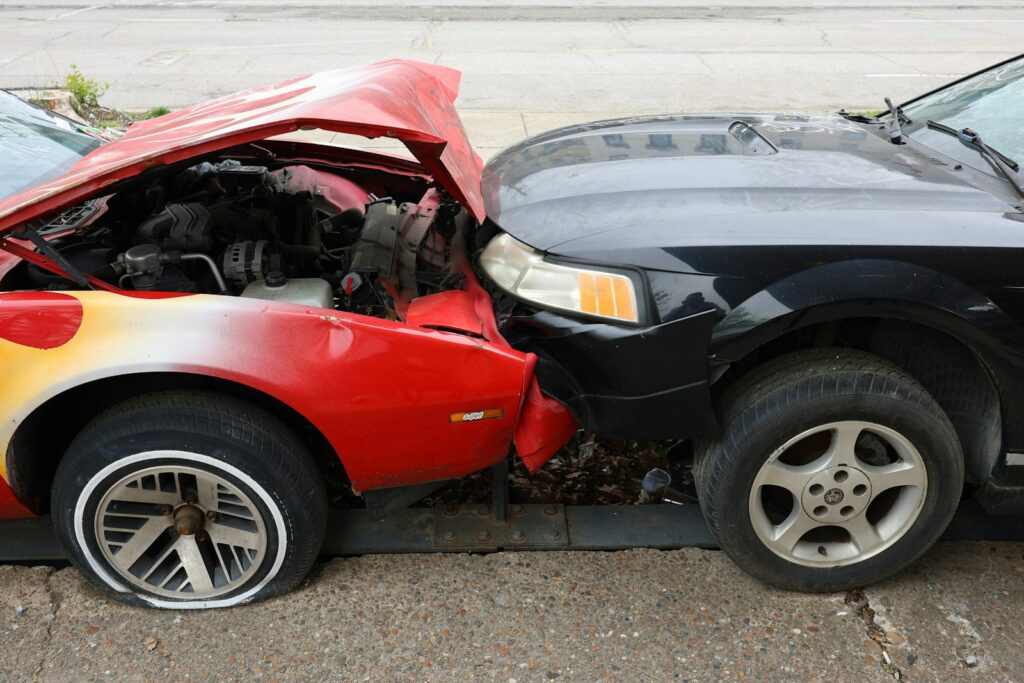
The “quick errand” that turned into a phone call
It started as one of those mundane moments that couples don’t think twice about. She asked to borrow his car to run a quick errand—nothing dramatic, just a store run and a stop to pick something up. Her own car was either unavailable or inconvenient, and they’d shared rides before, so he handed over the keys without much hesitation.
He wasn’t home when it happened, which is part of why the whole thing landed so hard. He was mid-day, doing his own thing, when his phone lit up with her name. She wasn’t the type to call instead of text unless something was off, so he answered already bracing for a problem.
Her voice was tight and shaky. She told him she’d been in an accident, then quickly followed it with, “I’m okay,” like she needed him to hear that first before anything else. He asked where she was, if anyone else was involved, if police were there—basic logistics, adrenaline talking.
Only after the safety checklist did she get to the car. It wasn’t totaled, but it was hurt: the kind of damage you can see from across the parking lot. Front end smashed, bumper mangled, headlight cracked—enough that it looked like the car had taken a punch.
Apologies… with a catch
When he got there, she was standing off to the side with her arms crossed, face flushed, oscillating between embarrassed and defensive. She launched into the explanation before he even had a chance to look properly: someone stopped short, she didn’t have enough distance, the sun was in her eyes, it happened so fast. The story had that familiar rhythm of a person trying to outrun blame.
He did what a lot of people would do in the moment. He checked her again, asked if she was hurt, and told her he was glad she was okay. He also looked at his car, because of course he did, and his stomach dropped at the sight of the crumpled front end.
That’s when her apology came out, but it didn’t land clean. It was sandwiched between justifications and “I didn’t mean to” and “it’s not that bad.” She kept insisting it could be “buffed out,” which is the kind of thing people say when they don’t want to admit the number is going to have a comma in it.
He stayed calm anyway—at least at first. He told her they’d figure it out, asked if she’d exchanged info, and started thinking through towing, insurance, and how long he’d be without a car. She watched him do that mental math and seemed to interpret it as him caring more about the vehicle than the fact that she was shaken.
The repair estimate and the mood shift
The next few days were a slog of adult errands. He coordinated with insurance, called a body shop, sent photos, and tried to get a timeline. The estimate came back higher than she seemed prepared for, even with insurance involved—deductible, parts, labor, and the possibility that once they opened it up, they’d find more damage.
He brought it up to her the way you’d bring up any shared problem created by one person’s mistake. Not screaming, not accusing, just direct: what was her plan for helping cover the repairs? Even if insurance handled a chunk, he didn’t want to be the only person financially hit for an accident he wasn’t in.
Her reaction wasn’t “Yeah, of course, I’ll help.” It was a long stare, then a sigh that sounded like she was being asked to donate a kidney. She said she didn’t have that kind of money, and then—almost immediately—shifted into talking about how he was being unfair by making it about money.
He tried to keep it practical. He wasn’t demanding she pay every cent tomorrow; he was asking for some acknowledgment that this wasn’t solely his burden. The way he saw it, if you break something that belongs to someone you care about, you at least offer to make it right in whatever way you can.
“You’re choosing metal over me”
That’s when she said it: he was choosing “metal” over her. The phrasing was so weird and sharp that it almost sounded rehearsed, like she’d been holding onto that line for years. She told him she couldn’t believe he was more worried about a car than about her feelings.
He didn’t even know how to answer at first, because it wasn’t the conversation he thought they were having. He reminded her that he’d checked on her, that he’d been there at the scene, that he’d told her he was glad she was okay. But now they were days past the accident, and the situation had real consequences—time, money, logistics—and ignoring that wouldn’t make it disappear.
She escalated in a way that felt like a pivot. Suddenly she was talking about how he “always” acts like this, how he’s obsessive, how he treats his car better than he treats her, how he never gets this worked up about relationship problems. She brought up old grievances that had nothing to do with the crash, like how he’d once asked her not to kick her shoes off against the door and leave scuff marks.
It was like the accident had cracked open a separate argument she’d been carrying around. The car wasn’t just a car anymore; it was a symbol, and he was being told that wanting accountability meant he didn’t love her properly. The more he tried to bring it back to repairs and responsibility, the more she framed it as him attacking her character.
The negotiation that wasn’t really a negotiation
He tried to make it easier for her to say yes. Could she cover the deductible? Could she contribute a set amount monthly? Could she pick up extra groceries for a while, take over a bill, do something tangible to offset the cost? He wasn’t trying to bankrupt her; he just didn’t want to eat the entire loss alone.
She responded like each option was an insult. Paying the deductible sounded “punitive.” Monthly contributions sounded like he was “invoicing” his girlfriend. Taking over bills sounded “controlling.” She kept circling back to the idea that if he really cared about her, he wouldn’t be making her feel guilty.
There was an awkward moment where he pointed out something that probably shouldn’t have needed pointing out: guilt isn’t the same as responsibility. Feeling bad about crashing someone’s car is normal; trying to dodge the consequences by making the other person feel cruel is not. That line landed poorly, and you could almost hear the temperature in the room drop.
She accused him of “keeping score,” which stung, because he didn’t think of it as scorekeeping. He thought of it as the basics of adulthood: you cause damage, you help fix it. But she was talking like the relationship should act as a shield against any kind of repayment, as if love meant he should quietly absorb the damage and never mention it again.
Aftermath: the car got fixed, the relationship didn’t
The repairs moved forward because they had to, not because the conversation got resolved. He needed transportation, and waiting for her to come around wasn’t an option. The car went into the shop, he dealt with the rentals and the waiting and the constant “we’re still expecting the part,” all while the cost sat in his mind like a stone.
In the meantime, she acted like he’d changed. She got colder, then overly sweet, then cold again—like she was trying different emotional tactics to see what would reset things to “normal.” If he brought up money, she’d say he was stressing her out. If he didn’t bring it up, she’d act offended that he was “still mad,” as if the only acceptable timeline for consequences was the one where she didn’t have to deal with them.
What really gnawed at him wasn’t just the bill. It was the way she’d framed the entire thing as him being shallow for wanting his property respected, like accountability was some kind of betrayal. In her version of the story, his disappointment was the problem, not the crash, not the financial hit, not the refusal to make amends.
By the time the car was back—new bumper, new light, paint matched so well it almost looked untouched—he didn’t feel relief so much as a weird kind of dread. The vehicle was repaired, but the dynamic wasn’t. And the last thing hanging in the air between them wasn’t the cost of parts or the deductible; it was the unsettling realization that when she made a mess, her instinct wasn’t to help clean it up—it was to accuse him of loving the mess less than he loved her.
More from Steel Horse Rides: