
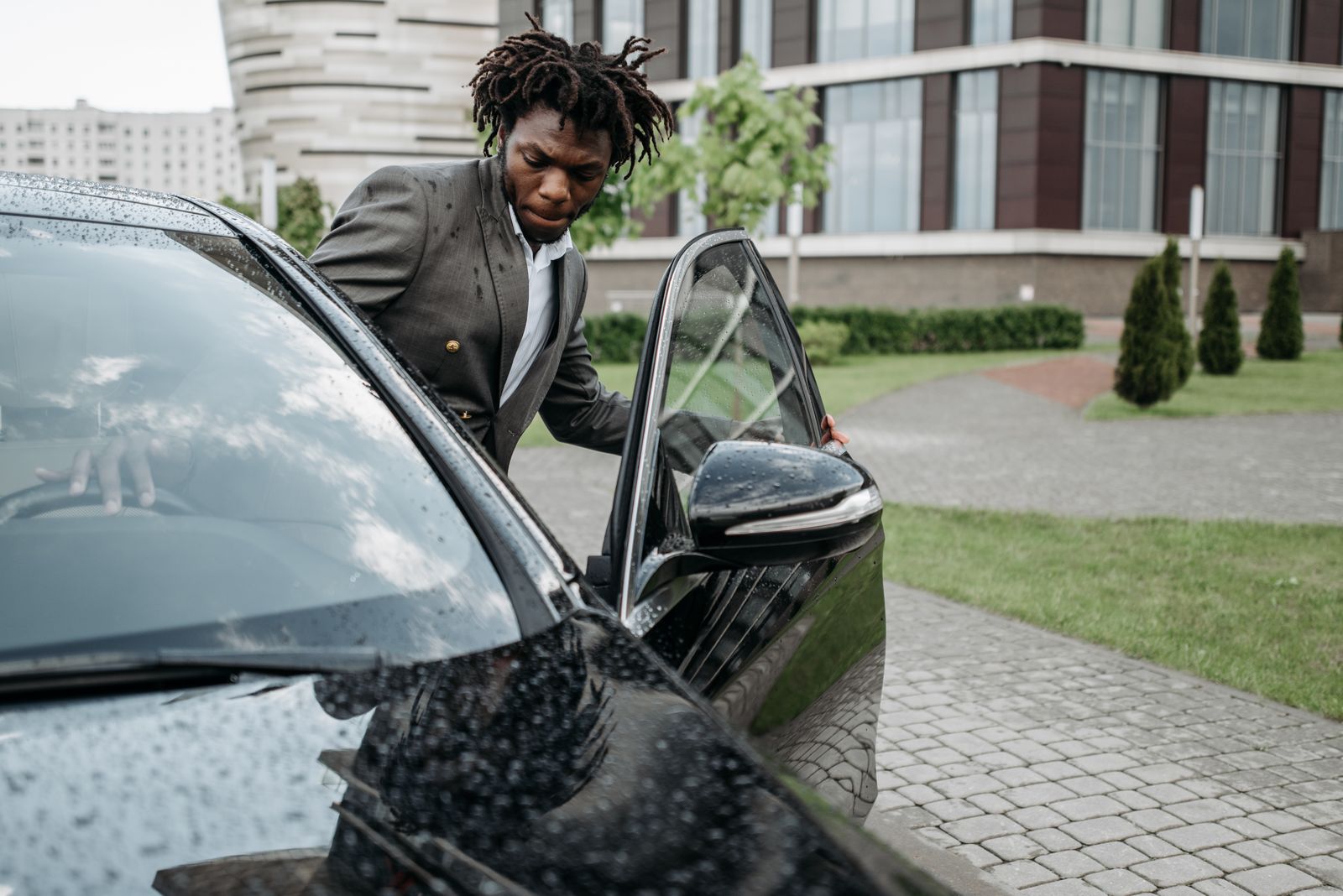

He noticed it before he even got the key in the door. The passenger side of his car had that ugly, bright-white scrape that doesn’t belong on dark paint—two long lines that ran from the back door toward the front like somebody took their time. It wasn’t a shopping cart kiss or a random brush with a bike handle. It was deliberate, the kind of damage that makes your stomach drop because you can feel the intent behind it.
He stood there in the apartment parking lot, staring, doing that quick mental inventory people do when they don’t want to believe what they’re looking at. He’d parked under a light. He’d been gone maybe three hours. And the last person he’d argued with—really argued with—was his ex, who’d shown up earlier that week to “grab a few things” and somehow turned it into a full-blown fight in the hallway.
He didn’t point a finger publicly at first. He just took photos, texted his insurance, and vented to a couple friends about how miserable it feels to get your stuff vandalized. The problem was, his ex had already been out there telling her own version of the story, and she wasn’t subtle about it.

The breakup that wouldn’t stay broken up
They’d been together long enough to have routines and shared friends, but not long enough to have the kind of clean separation where everyone picks a side and moves on. The split was messy in the boring, human way—arguments about “respect,” about who was “trying,” about how one person always felt like the other was keeping score. They didn’t have kids or a mortgage, but they had enough overlap that they couldn’t avoid each other without changing their whole social life.
After the breakup, he kept running into her at mutual friends’ places, at the same bar trivia night, in the same group chat where nobody wanted to be the one to kick someone out. She oscillated between acting like they were still basically together and acting like he’d personally ruined her life. He tried to be polite and dull, thinking if he didn’t give her anything to react to, she’d burn out.
Then came the “stuff pickup” visits. She’d show up with a tote bag and a list, but also with that particular tone that makes your shoulders tighten before she even says anything. The last time, she’d stood in his doorway and asked—again—if he was “seeing someone already,” as if that was the real reason he ended things. He told her he wasn’t doing this conversation in the hallway, and she left in a huff loud enough that a neighbor cracked their door.
Fresh scratches and a too-fast counterstory
The keyed car happened a few days after that. He didn’t even connect it out loud at first; he just knew the timing made his skin crawl. He filed a police report because insurance asked for one, and he sent the pictures to a couple close friends with a “guess what my week looks like now” kind of caption.
That’s when the weirdness started. One friend replied with, “Wait… you’re saying someone actually keyed it? Because she told Lauren you made it up.” Another friend said they’d heard the same thing in a different group: apparently he was “spiraling,” “being dramatic,” and “trying to paint her as the crazy ex.” In her version, he’d either done it to himself or it was old damage he was suddenly blaming on her for attention.
He hadn’t even accused her publicly. He hadn’t posted about it. But she was already defending herself, loudly, to people he didn’t even talk to that much. The speed of it made him feel like he was watching someone stage a fire drill for a fire they’d started.
The slow bleed of credibility
Once the rumor was out there, it didn’t matter that he kept his mouth shut. People started acting different around him in subtle ways—longer pauses, less eye contact, the “so… what happened?” tone that sounds curious but carries an accusation. A mutual friend invited him to a get-together and then casually mentioned his ex would be there “so please don’t make it a thing.” It landed like a slap, because he hadn’t made anything a thing.
He tried the reasonable route first. He told a couple friends, privately, that he hadn’t accused anyone and he didn’t want drama, he just wanted his car fixed. The response was mixed in the way that makes you feel lonelier than a direct insult. Some believed him immediately, some did the “I’m sure it’s all a misunderstanding” dance, and a few gave him that look like they’d already decided he was exaggerating.
The most frustrating part was how she played it. She didn’t go full screaming villain; she went soft and wounded. She’d say she was “scared” of being blamed, that he was “weaponizing” the breakup, that he “needed people to feel sorry for him.” The more calm she acted, the more he looked like the guy causing trouble just by insisting something bad had happened.
And meanwhile, every time he walked past his car, the scratches were there. Not just expensive, but humiliating—like someone had signed their anger on his property. He caught himself scanning the parking lot more than once, half-expecting to see her car, half-hating himself for even thinking that.
The doorbell camera nobody remembered
The thing that changed it wasn’t his detective work. It was one of those boring modern-life details that only matters when it suddenly matters a lot: a neighbor’s doorbell camera. He didn’t even know the neighbor had one, because the camera was angled toward their own front steps, not the lot, and the building wasn’t exactly a high-security place.
A week after the keying, he was carrying groceries in when the neighbor—an older guy who mostly kept to himself—stopped him and asked if that was his car with the “big scratch.” He said yes, and before he could launch into the whole miserable story, the neighbor told him he might have something on video. He’d gotten a motion alert in the middle of the day, checked it later, and saw a woman near the cars.
They watched it on the neighbor’s phone first, right there by the mailboxes. The video wasn’t cinematic, but it didn’t need to be. It showed her walking up like she belonged there, not sneaking, not hooded, just casually crossing the lot in daylight with her hair up and sunglasses on.
She paused by his car, looked around the way people do when they’re pretending they’re not looking around, and then leaned in with her arm close to her body. The motion was small and controlled—exactly the kind of movement you make when you’re trying to do something without making a scene. Then she stepped back, glanced again, and walked off, calm as if she’d just checked a tire.
The neighbor’s camera didn’t capture a close-up of the key in her hand, but it captured her. It captured the timing. It captured the body language. And it captured the fact that she did it like it was an errand, not a moment of blind rage.
What happens when the story flips
He didn’t blast it everywhere immediately, which is probably the only reason it didn’t turn into a full social-media war. He sent the video to the police report contact and to his insurance. Then he sent it to two mutual friends who had been the most skeptical, the ones who’d asked him if he was “sure” and “maybe it was somebody else.”
The responses came back fast, and they weren’t triumphant. They were embarrassed. One friend said, “Oh my god, that’s her,” like they couldn’t quite accept they’d been fed a story and swallowed it. Another asked if he was okay, which was a nice sentiment, but also felt like a weird pivot after days of quietly treating him like a liar.
When the ex found out there was footage, she didn’t apologize. She didn’t even go for a clean denial. She went for technicalities—claiming she was there to “talk,” that she “tapped” the car in frustration, that the scratches must’ve already been there and he was “editing the narrative.” It was a new version of the same move: if she could make the facts feel fuzzy, she could keep the social dynamic on her side.
But the video did what videos do. It took the conversation out of the realm of vibes and into the realm of, “Why were you at his car?” People didn’t have to love him to understand what they were seeing. A few mutuals stopped inviting her to things without saying it was because of the car, which somehow made it even more pointed.
He got estimates for the repair and realized it wasn’t just a cosmetic problem; it was four figures of damage and a headache he didn’t ask for. He kept going back and forth on whether to push for charges or keep it strictly insurance and distance. Every option came with a cost: money, time, more contact with her, more drama with people he still had to see.
The last anyone heard, the police had the footage and he was deciding what to do next, while she was still telling anyone who’d listen that he was “obsessed” with ruining her. The weirdest part wasn’t that she keyed the car—it was how confidently she tried to rewrite reality afterward, like the scratches weren’t the main injury. What stuck with him was realizing the real damage wasn’t even on the paint; it was watching how quickly “attention-seeking” can become a label people slap on you just because it’s more comfortable than admitting someone they know did something cruel in broad daylight.
More from Steel Horse Rides: