

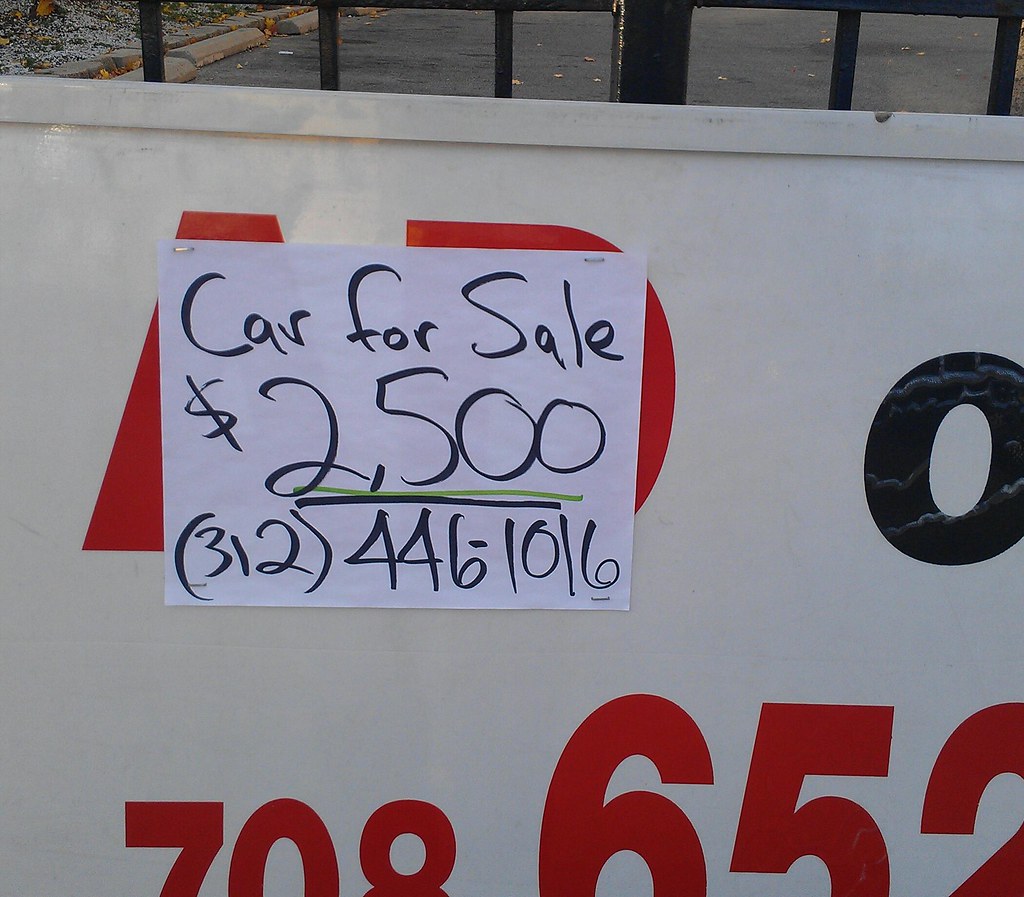
He’d barely finished wiping down the dashboard when the first message came in: “Still available?” The car was parked nose-out in his driveway like a well-behaved dog, freshly washed, interior vacuumed, maintenance receipts stacked in a neat folder on the passenger seat. He’d priced it fairly—full market value, maybe even a touch under for the mileage—and he’d written the kind of listing that screams “adult owned this,” right down to the tire brand and the date the brakes were done.
He wasn’t desperate to sell, which is always the best place to be when you’re dealing with strangers and money. He just wanted it gone before renewing insurance for another year, and he wanted to avoid the exact circus that comes with selling a car privately. Of course, the circus showed up anyway, right on time.
The guy who messaged—let’s call him Kyle—didn’t ask any normal questions. No “any accidents,” no “does the AC blow cold,” no “can I see the title.” He went straight to, “What’s your lowest?” before he’d even seen the vehicle, which always sets the tone in a way that’s hard to walk back.
The Listing Was Clean, the Buyer Was Not
The seller answered politely: he’d just posted it, the price was already competitive, and he wasn’t taking low offers yet. Kyle responded within minutes like he’d been waiting with his thumbs hovering over the keyboard. “Bro, it’s an older model. You’re dreaming. I can do half of that, cash today.”
Half. Not “a little under,” not “I can do $500 less if you want it gone.” Half the asking price, delivered with the kind of confidence that only exists in people who have never been told no in a meaningful way.
The seller didn’t even get snarky at first. He reiterated the price and told Kyle he’d be happy to talk if he wanted to come see it and make a reasonable offer. That’s when Kyle shifted tactics and started doing that thing some buyers do where they insult the item as a negotiating strategy, like the seller’s supposed to feel embarrassed into taking less.
“Paint looks faded in the pics,” Kyle wrote, even though the listing photos were taken in full daylight and the paint looked fine. “Bet it’s got problems. Probably a rebuild title. I’ve seen these cars, they’re junk after 100k.” He hadn’t asked the mileage, which was clearly listed, and he hadn’t read that the title was clean, which was also clearly listed.
The Lowball Offer Turned Into a Weird Power Play
The seller finally stopped trying to be patient about it. He told Kyle, plainly, that he wasn’t interested in an offer like that and that the car wasn’t “junk.” He also said, in the calmest possible way, that insulting the car didn’t make him want to sell it to Kyle more—if anything, it made him less interested in dealing with him at all.
Kyle took that as an invitation to escalate. “Relax, man, it’s business,” he said, immediately followed by, “You’re not gonna get your price. No one’s paying that. I’m doing you a favor.” Somehow, Kyle managed to position himself as both the victim of the seller’s “attitude” and the hero offering a rescue deal.
The seller did what most sane people do when a stranger starts acting like a manager who’s disappointed in you: he stopped engaging. He said thanks, declined, and moved on to other messages. Kyle kept coming, though, firing off little follow-ups like he was trying to win an argument rather than buy a car.
“So what, you don’t want to sell it?” Kyle wrote. Then: “You’ll be back.” Then, a few minutes later, the classic: “My offer stands. Cash. Today.” It was less negotiation and more a weird attempt to assert dominance over the seller’s driveway.
Someone Else Showed Up With Actual Money
While Kyle was busy shadowboxing in the inbox, another buyer messaged like a normal human. She asked a couple of basic questions, confirmed the mileage, and said she could come by that evening with her dad to look at it. No weird energy, no trash talk, just straightforward.
They arrived exactly when they said they would. The dad did the standard slow walk around the car, checked panel gaps, asked for the service history, and took it for a short drive without trying to redline it like he was auditioning for a street race. The buyer herself sat in the driver’s seat, adjusted the mirrors, and smiled in a way that made it obvious she’d already pictured the car in her own parking spot.
They didn’t play games. After the drive, the dad pointed out one small cosmetic issue the seller had already mentioned in the listing—like it was part of the ritual—and then the buyer said she’d pay the asking price if he could include the set of all-weather mats he’d mentioned. The seller said yes, because that’s what you say when someone offers you exactly what you asked for and acts pleasant about it.
Money changed hands, paperwork got signed, and the seller watched the taillights disappear down the street. The whole transaction felt boring in the best way, like adult life working the way it’s supposed to. He walked back inside, relieved, ready to enjoy the rare high of having successfully sold something without it turning into a saga.
Kyle Found Out and Came Unhinged
The seller marked the listing as sold and, out of habit, sent a quick “sold, thanks” reply to a couple people he’d been messaging. He didn’t message Kyle directly, because why invite more conversation. But Kyle either saw the status change or had been refreshing the page like it was a sneaker drop.
Within minutes, Kyle was back in the inbox. “You sold it?” he wrote. Then another: “To who?” And then, like the seller owed him a performance review, “For what price?” It was the kind of interrogation you’d expect from someone who thought his initial lowball created some invisible claim on the car.
The seller, still riding the relief of a clean sale, replied with a simple: “Yes, sold. Take care.” That should’ve been the end. Instead, Kyle detonated.
“You’re lying,” Kyle wrote. “No one paid that.” Then, “You just lost a real buyer.” Then the insults got personal, like Kyle couldn’t stand that the seller had the audacity to refuse being haggled into submission. He called the seller stupid. He called him greedy. He told him the buyer probably got scammed and the seller would “hear about it.”
The seller didn’t respond, but Kyle wasn’t done. He started calling. Not once—multiple times, back-to-back, the way people do when they think sheer persistence will force the world to rearrange itself. When the seller didn’t pick up, Kyle left a voicemail that was mostly heavy breathing and a muttered, “Whatever, man,” like he’d been wronged in some deep, spiritual way.
The Awkward Part: He Actually Showed Up
Here’s where it got especially uncomfortable. Kyle either had the address from earlier messages—because sellers often give it out to schedule viewings—or he’d recognized the neighborhood from the photos. Later that night, the seller heard a car slow down in front of his house and idle for a beat longer than normal.
He looked out the window and saw a guy in a hoodie sitting in a beat-up sedan, phone glowing against his face. The car rolled forward a few feet, stopped again, then drove off. Nothing dramatic happened in the driveway, but it was enough to make the seller’s stomach do that tight little flip that says, Okay, this is now a safety thing.
The seller took screenshots of the messages, saved the voicemail, and blocked the number. He also made sure the buyer had already transferred the title and completed the paperwork, because the last thing he needed was some chaos where Kyle tried to claim the sale was illegitimate. It wasn’t—everything was signed, dated, and done—but paranoia feels a lot more reasonable when a stranger starts orbiting your house.
In the following days, Kyle made a couple attempts from different numbers, which is the kind of petty commitment that’s almost impressive if it wasn’t so unsettling. The messages were shorter, more bitter. “Should’ve took my cash.” “Hope it breaks down.” The seller didn’t respond to any of it, because there’s no version of that conversation that ends with Kyle suddenly achieving clarity.
The funny part, if you can call it that, is how Kyle’s whole strategy depended on the seller panicking. He needed the seller to believe the car was worthless, that no one else would pay full price, that time was running out, that Kyle was the only option. When the seller sold it easily to someone polite who paid exactly what was asked, Kyle didn’t just lose the car—he lost the little fantasy where he got to be the guy who “wins” the transaction.
The seller ended up with the money he wanted and a story he didn’t. Even after the car was long gone, there was still that lingering, itchy feeling of being watched, of having let a stranger get just close enough to be annoying. Kyle didn’t get his half-price deal or his victory lap, but he did manage to leave behind one last ugly thing: the reminder that sometimes the worst part of selling something isn’t the negotiation—it’s the person who can’t handle not being in control.