

He’d been trying to sell the car for weeks, the way people do when they’re tired of feeding money into something that’s already half out the door. Cleaned it up, took the photos in the “good” light, wrote an honest description, and answered the same three questions from strangers who always asked if he’d take half the price “cash today.” When a guy finally messaged sounding decisive—no weird negotiating, no long back-and-forth—he felt the tension leave his shoulders a little.
The buyer showed up that evening in a spotless SUV, nice watch, confident handshake. He walked around the car like he already owned it, pointing at the tires, peeking inside, giving quick little nods like he was inspecting a rental return. He didn’t bring a mechanic or a buddy, just his phone and an envelope that looked thick enough to be real money. The seller figured this was going to be one of those smooth transactions people talk about and never actually get.
They did the test drive, short and uneventful, and the buyer came back grinning like a kid who’d just won something. “I’ll take it,” he said, and he didn’t even try to shave the price down. That was the first moment the seller thought, Huh. Okay. The second moment came later, when the buyer claimed the paperwork was fake—after his wife, apparently, found out about the purchase.
The cash deal that felt a little too easy
They met in a grocery store parking lot because it was well-lit, public, and had cameras, which is basically the universal language of “let’s not get robbed.” The seller had the title, a bill of sale template printed out, and the release-of-liability form from the DMV website. He’d done this before and didn’t want any “I never bought it” games later.
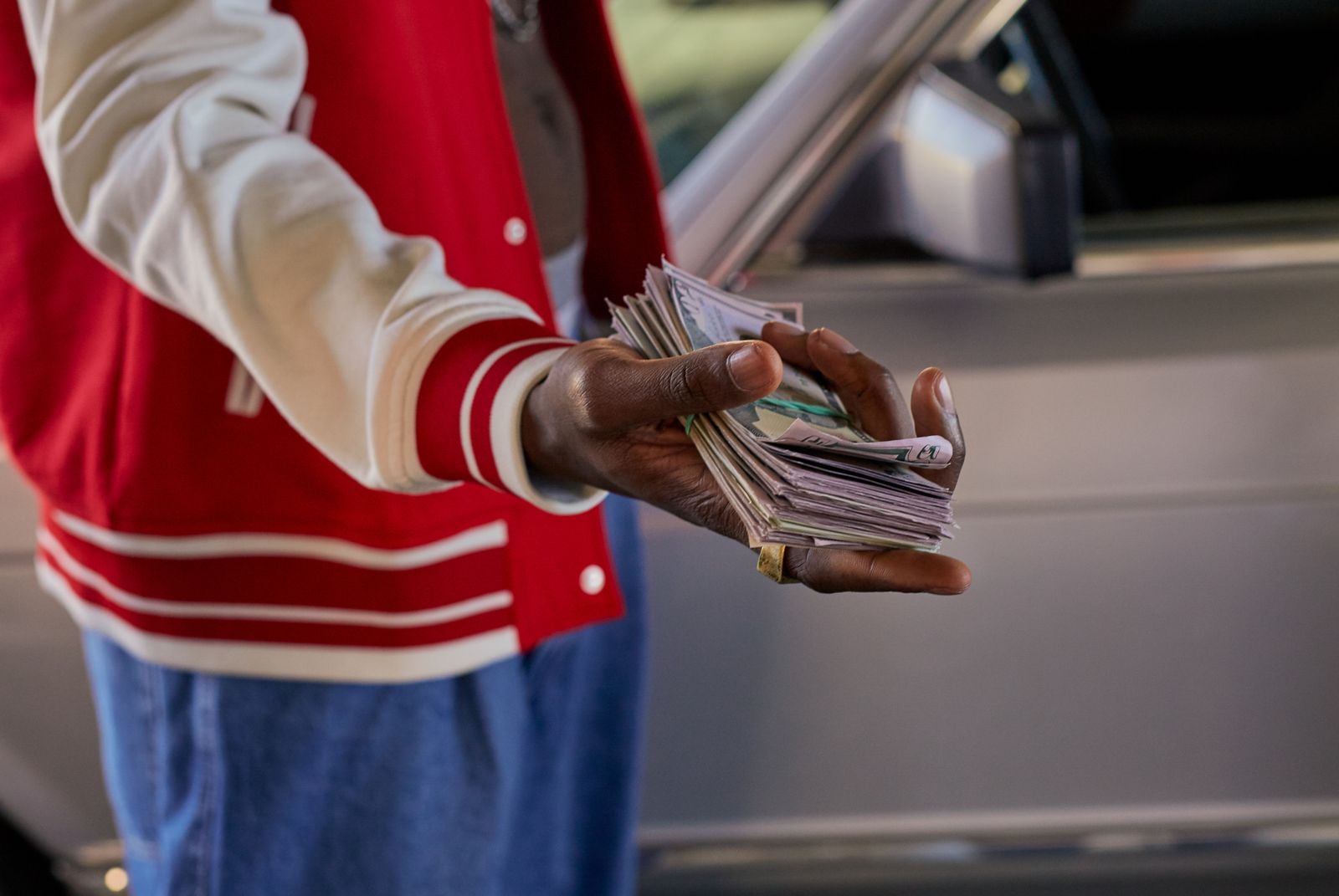
The buyer counted out the cash on the center console like he’d done it a thousand times. The seller watched, tried to look casual, and still did that little mental math panic where every bill looks the same for a second. It came out right, and the buyer didn’t flinch when the seller took a photo of the signed bill of sale and snapped a picture of the buyer’s driver’s license next to it. “Smart,” the buyer said, sounding almost amused.
They filled everything out carefully: full legal names, addresses, the VIN copied twice, odometer reading, date and time. The seller signed where he was supposed to, the buyer signed where he was supposed to, and the seller handed over the title after checking the buyer’s license again. Keys changed hands, the buyer slid into the driver’s seat like it fit him, and he drove off with a cheery wave.
The first “issue” shows up in a text message
The next morning, the seller got a text that started friendly and then took a sharp left. The buyer said he’d tried to register the car and the clerk told him something was “off” with the paperwork. Not “hey, you missed a box,” but “the paperwork might be fake,” which is a wild accusation to drop on someone you met once in a parking lot.
The seller asked what exactly the clerk had said and what document they were talking about. Title? Bill of sale? Odometer statement? The buyer’s reply was slippery, like he didn’t want to pin it down. He kept repeating that the DMV person “thought it wasn’t real” and that they might “have to get law enforcement involved,” as if casually tossing that in would make the seller panic and offer a refund.
But the seller had copies of everything. He’d taken photos of the signed forms, and he had the confirmation email from filing the release of liability online. He told the buyer to send a photo of whatever the DMV flagged so they could compare it, because if there was a real mismatch—wrong VIN digit, smudged signature—he’d rather fix it than argue. The buyer didn’t send anything, just said he’d “try again later.”
The wife enters the chat without actually texting
By that afternoon, the buyer’s tone changed from vague concern to pointed blame. Now he wasn’t saying the DMV “might” have an issue—he was saying the seller “gave him fake paperwork.” He wanted to “undo the deal,” and he wanted it quickly, like this was a return at a big-box store and not a private sale.
The seller asked, again, what exactly was fake about it. That’s when the buyer finally coughed up the real detail, almost by accident: his wife was furious. He said she “didn’t approve” of the purchase, that she “didn’t know he was going to spend that much,” and that she was “making it a big problem at home.” The seller could practically hear the argument through the screen.
And suddenly the DMV story made sense. It sounded less like an actual registration problem and more like a convenient cover story to justify backing out. If the paperwork was “fake,” then the buyer wasn’t irresponsible, he was a victim. If the seller had “scammed” him, then the buyer didn’t have to admit he bought a car on impulse and hoped his wife wouldn’t notice until it was too late.
When “bring the car back” turns into “you’re a criminal”
The buyer proposed a simple solution: he’d bring the car back, the seller would hand the cash back, and they’d both pretend it never happened. He didn’t offer to cover any fees, the time spent, or the fact that the seller had already filed the release of liability. It wasn’t framed as a request, either—more like a demand dressed up as problem-solving.
The seller, trying to keep it calm, said he wasn’t doing an off-the-books reversal in a parking lot. If the buyer wanted to unwind the deal, they could meet at the DMV and do whatever official process existed for that, because the seller wasn’t about to end up with a car that now had a cloud of accusations hanging over it. He also pointed out that the buyer had inspected it, test-driven it, and signed everything; the seller hadn’t hidden anything or rushed him.
That’s when the buyer escalated. He started throwing around phrases like “fraud” and “forgery,” and he hinted again at police involvement. The seller could see the play: scare him into returning the money before anyone could ask basic follow-up questions, like why the buyer couldn’t produce a single photo of the “fake” documents or even the name of the DMV clerk who supposedly said it.
Instead of taking the bait, the seller got methodical. He told the buyer he had timestamped photos of the signed title and bill of sale, the buyer’s license, and the cash count. He said any further communication should be in writing, and if the buyer wanted to involve police, that was his choice, but the seller would show the documentation and let them sort it out. The buyer went quiet for a few hours after that, like a person who’d just realized intimidation works best when the other party is scared.
The uncomfortable standoff: a car he sold, a fight he didn’t start
When the buyer came back, he tried a softer angle. He said he “just wanted to make it right,” that he was “under a lot of pressure,” and that his wife was “threatening to do something drastic” if he didn’t fix it. The seller didn’t know what “drastic” meant, but he knew it wasn’t his job to absorb someone else’s marital crisis.
The seller offered one more practical option: meet at the DMV together, in daylight, and have an employee look at the documents in front of both of them. If something was actually wrong, they’d correct it properly. If the buyer was simply trying to reverse the purchase, then at least the DMV visit would force him to say that out loud instead of hiding behind the “fake paperwork” accusation.
The buyer didn’t like that plan. He kept pushing for a quick refund, kept saying the paperwork “wouldn’t work,” and kept trying to make the seller feel like the easiest way out was to just hand the money back and take the car. But the seller had a sinking feeling: if he did that, the buyer would drive away with both the cash and a story about how he “returned” a scam vehicle, and the seller would be left holding a problem car that might not even be in the same condition anymore.
So the seller stopped negotiating. He told the buyer the sale was final, that the release of liability was filed, and that any claims about fraud should go through the proper channels. The buyer responded with a last round of bluster—more threats, more “you’ll regret this,” more insistence that the seller was the one being unreasonable—before going quiet again.
What made it stick in the seller’s mind wasn’t just the attempted reversal; it was how quickly the story shape-shifted to fit whatever the buyer needed in that moment. First it was a mysterious DMV issue, then it was criminal paperwork, then it was a desperate husband trying to survive a war at home. The seller was left with all the same proof he started with, but now he also had that low-grade anxiety that the buyer might actually follow through on the threats just to save face—and that the real problem wasn’t the title at all, but the fact that somebody bought a car with cash and tried to make his wife’s anger disappear by turning the seller into the villain.