

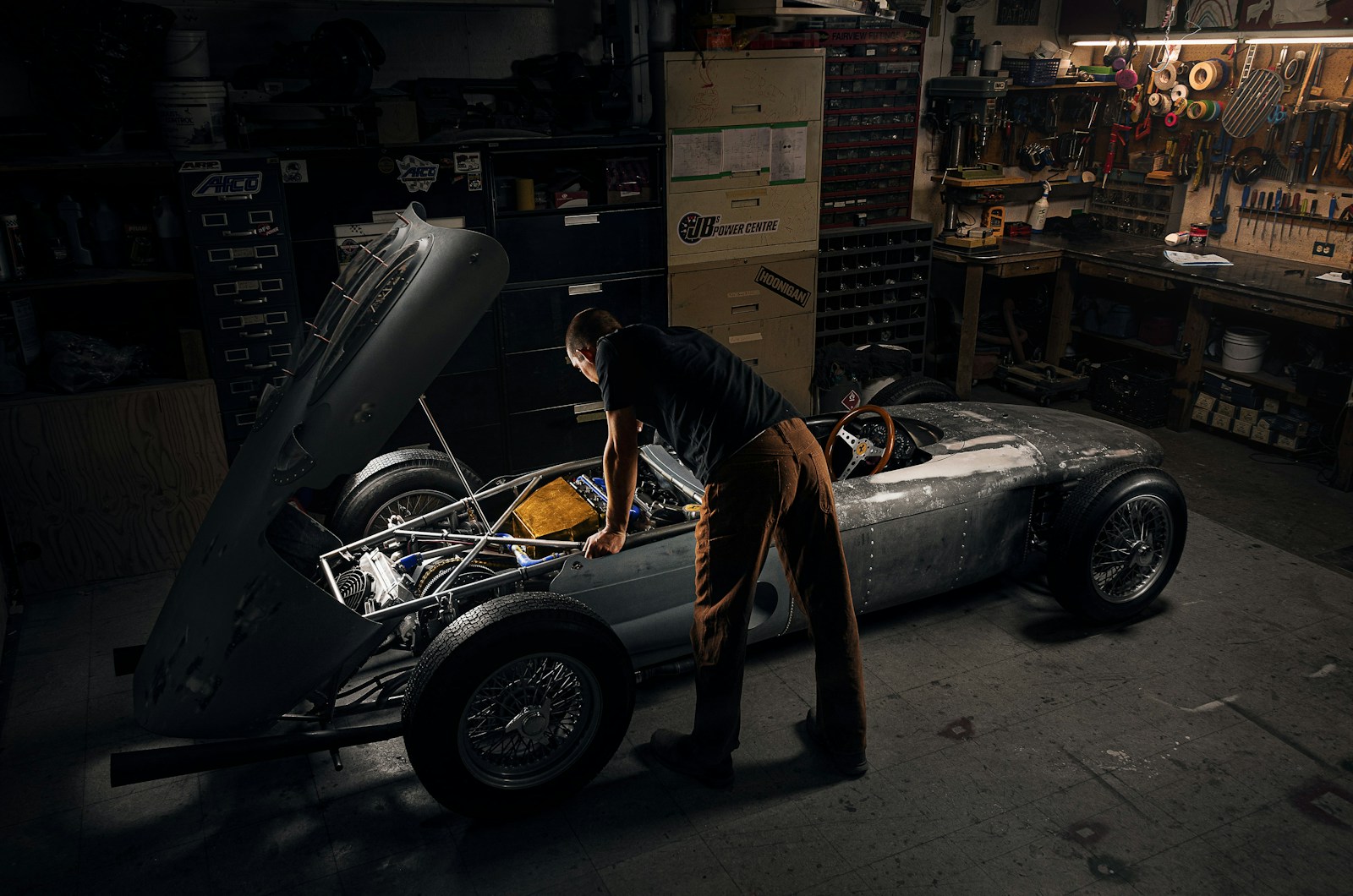
He’d been hunting for a “real” classic for months, the kind of guy who talks about carburetors like they’re personality traits. When he finally found one—a sun-faded, slightly lopsided late-60s coupe being sold by a woman named Marla—he showed up with a trailer, a buddy, and that bright, caffeinated confidence people get when they’ve already decided they’re getting a deal.
Marla wasn’t a dealer. She was the person in the neighborhood who could tell you the year of any car by its taillights and who kept a binder of receipts like it was a scrapbook. The coupe had been her weekend project until work got busy and the garage space started feeling like a guilt tax. She priced it accordingly: not cheap, but honest for what it was—an old car that ran, stopped, and still needed old-car things.
From the moment he stepped out of his truck, though, he treated the car like it was a lottery ticket she didn’t understand. He walked around it slow, squinting at panel gaps and tapping a magnet along the lower fenders, making little “hmm” sounds like he was on a TV show. Then, the second it fired up with that rough, throaty idle, he grinned and said, “See? Solid. People always overthink these.”
The warnings he kept stepping over
Marla didn’t do the “trust me, it’s fine” routine. She gave him a printed list—literally a sheet of paper—titled “Things It Needs Soon,” and she read it out loud while he half-listened and kept circling the car. Valve cover seep, brake booster starting to get soft, coolant hoses old, and a note about the transmission that said it shifted fine but had “occasional flare when cold” and should be serviced.
He nodded at the list like it was a menu he wasn’t going to order from. “Yeah, yeah, but that’s normal for classics,” he said, waving a hand, already opening the driver’s door. Marla told him straight: if he wanted a turn-key car, this wasn’t it, and she wasn’t pretending it was.
They took it for a short drive. The steering wandered like a shopping cart, the brakes were a little spongy, and the temperature crept up when they sat at a long light. Marla kept saying, calmly, “That’s why I’m telling you it needs the cooling system refreshed,” and he kept answering, “I’ll do it later,” like “later” was an actual plan and not just a fog bank you drive into.
When they got back, he tried to bargain aggressively, pointing at the list she’d given him as if it were new information she’d hidden in the glove box. Marla didn’t budge much, but she did take off a little, mostly because she didn’t want to spend another weekend showing the car to guys who showed up with opinions and no cash. Before money changed hands, she made him sign a bill of sale with “AS-IS, NO WARRANTY” in bold, and she took a photo of it on her phone.
“As-is” turned into “you lied” in record time
The first sign of trouble wasn’t mechanical. It was the text he sent that night, after he got it home: a photo of the car in his driveway with the caption, “She cleans up nice. Told ya it was solid.” It had that smug undertone of someone congratulating himself for buying something other people “don’t get.”
Three days later, the tone changed. Another text came through, this time a close-up of a small puddle on his garage floor. “It’s leaking. Did you know about this?” he wrote, followed by, “I thought you said it was fine.”
Marla responded the way she’d been responding since the start: specific, calm, and annoyingly prepared. She asked where the leak was coming from, told him the valve cover seep was on the list, and reminded him that old gaskets do old-gasket things. He replied with a paragraph about how “a leak like that doesn’t just happen” and how she must’ve “washed it up” to hide it.
That’s when the situation stopped being about a car and started being about ego. It wasn’t enough for him to be frustrated; he wanted the frustration to have a villain. He wanted Marla to be the reason he now had to learn the difference between “project” and “perfect.”
The maintenance he ignored became the crisis he demanded she fix
Over the next week, he kept finding things that were either on the list or were so predictable they might as well have been. The brake pedal got worse, and he drove it anyway. The temperature climbed in traffic, and he kept doing “quick runs” because he “didn’t want it sitting.” The transmission flared once on a cold start, and instead of getting it serviced, he decided it was a sign of something “major.”
He showed up in her inbox like she was tech support. “What coolant do I use?” “Where do I buy hoses?” “What do you mean ‘burp the system’?” Each question came packaged with the same undertone: if she answered wrong, it would be proof she’d set him up.
Then came the phone call, and it wasn’t a question. He launched straight into it: the car had “lost power,” made a “horrible noise,” and now it “won’t shift right.” He said it like a verdict, like the car had revealed a crime scene and Marla’s fingerprints were everywhere.
Marla asked, again, what happened right before it started acting up. He admitted—almost as an afterthought—that he’d taken it on the highway “to clear it out” and had “punched it a little” because it “needed to stretch its legs.” When she asked if he’d changed the fluids yet, he got quiet for a second and then snapped, “I shouldn’t have to do all that. You sold it to me like it was good.”
The accusation that hit harder than the breakdown
What really set him off wasn’t the repair bill. It was the idea that he’d been warned and ignored it, because that would mean this was on him. So he went for something more personal: he accused her of “hiding problems,” of being “dishonest,” of “covering stuff up so it would make it through a test drive.”
He even claimed she’d chosen the route on purpose, like she’d mapped out a drive that avoided stop-and-go traffic to keep it from overheating. Marla reminded him that he’d been the one driving and that she’d pointed out the temp climbing at the light. He answered, “Yeah, because you knew it would do that,” like her warning was evidence of guilt instead of the opposite.
He asked for money back. Not a little—enough to cover “whatever this is,” plus towing, plus “my time,” with the righteous certainty of someone who thinks being disappointed entitles them to a refund. When Marla told him no, he said, “So you’re really gonna do me like that?” as if he’d just discovered her true character instead of her boundaries.
After that, the messages got messier. He wrote long, emotional texts about how he “trusted her,” how he “brought cash,” how she “seemed like a nice person,” and how this was “messed up.” He sent screenshots of estimated repair costs from a shop that hadn’t even opened the car yet, just tossed numbers at him based on a description and his panicked tone.
Receipts, screenshots, and the awkward reality of a private sale
Marla didn’t match his volume. She pulled out the folder she’d kept for years, took photos of the maintenance records, and sent him the page where she’d written the warning list. Then she sent the photo of the bill of sale with “AS-IS” clearly visible, and a screenshot of his earlier text saying the car was “solid.”
He responded the way people do when they realize the paper trail isn’t on their side: he changed the argument. Suddenly it wasn’t about what she promised; it was about what she “should’ve told him,” as if she hadn’t handed him a literal list. Then it was about how she “must’ve known it was about to fail,” like old parts need a psychic to predict their expiration date.
He threatened small-claims court in the vague, dramatic way people do when they want you to panic. He also hinted that he’d “tell people” and made a point of mentioning that they had mutual acquaintances in the local car scene. Marla didn’t bite; she told him, once, that she’d cooperate if a court contacted her, and that she wouldn’t be sending money for a car he inspected, test drove, negotiated down, and bought as-is.
That’s when he tried one last angle: guilt. He said she’d “ruined the experience” for him, that his partner was “mad,” that he’d been “so excited,” and that she was “just gonna let this happen.” Marla’s response was short and practical: she wasn’t responsible for his expectations, and she’d been clear from the beginning that it needed maintenance.
In the end, the car sat at his place, half-diagnosed and fully resented, while Marla stopped answering anything that wasn’t a direct, legal question. The unresolved tension wasn’t whether the coupe could be fixed—it probably could, with time and money—but whether he’d ever admit he bought a project and then treated it like a promise. And that’s what made the whole thing stingier than a blown hose: he didn’t just want the car repaired, he wanted someone to blame for the reality he’d been warned about the entire time.