

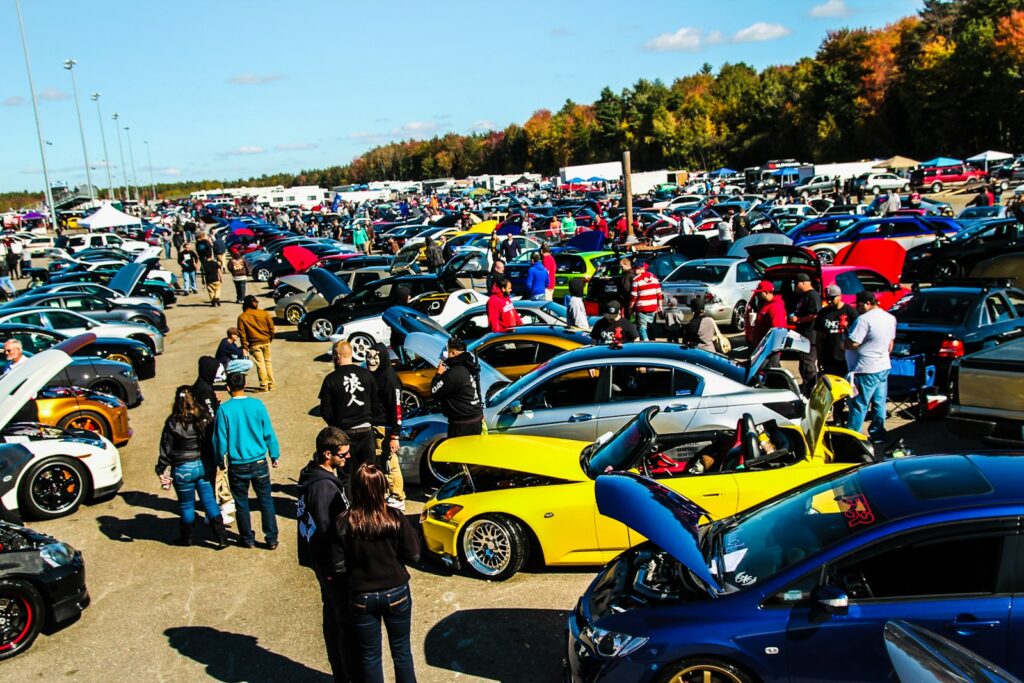
The car show was one of those Saturday things that starts out wholesome and ends with someone’s dad-energy turning into a full-on scene. Rows of polished hoods sat open like peacocks, lawn chairs were parked behind bumpers, and the air smelled like sunscreen and exhaust that hadn’t happened yet. The owner of the car at the center of this mess had spent the entire week making his ride look like it belonged under museum lights, not in a dusty fairground lot.
It wasn’t a trailer queen exactly—he actually drove it—but it was the kind of build where you could tell every bolt had been argued with. Fresh paint that looked wet even in direct sun. Chrome you could check your teeth in. An engine bay so clean it felt almost rude to breathe near it. He’d set up the usual little placard with the build specs, then stepped back with that quiet pride people get when they’ve poured way too much time into something irrational.
And for the first hour or so, everything went how it’s supposed to. People leaned in, pointed, asked questions, took photos from a respectful distance. Then this stranger wandered over with the confidence of someone who thinks they belong in every conversation, and he started touching the car like it was part of the admission price.
The Show Vibe, and the Unspoken Rules
Car shows have a code that isn’t written down because everyone assumes it’s obvious: look with your eyes, not your hands. You can stand close, sure, but you don’t put fingerprints on paint, you don’t lean on fenders, and you definitely don’t run your palm down a quarter panel like you’re inspecting a melon. The owner had been doing the polite-host thing all morning, answering the same questions without getting irritated, letting kids sit in the driver’s seat when parents asked nicely.
So when he noticed a guy he didn’t know hovering near his passenger side, he didn’t immediately go into defense mode. At first, it looked like the dude was just admiring the curves, maybe reading the placard. Then the hand came out—slow and casual—and landed on the car’s roof like it needed steadying. Not a tap. A full palm, like the guy was claiming it.
The owner clocked it fast, because people who detail their cars to that level develop a sixth sense for impending smudges. He walked over with what he thought was a calm, normal request: “Hey man, please don’t touch it.” Simple. Direct. The kind of boundary that shouldn’t require negotiation.
The First Touch Turns Into a Debate
The stranger didn’t apologize, and that’s when the vibe shifted. Instead of the usual “Oh, my bad,” he gave the owner a look that said, you’re the weird one here. He even kept his hand where it was for a beat, like he couldn’t believe he was being corrected. Then he pulled it back slowly and shrugged.
“I’m just appreciating the craftsmanship,” he said, as if the owner had interrupted a sacred ritual. He said it in that performative, slightly smug tone people use when they want to sound reasonable while they do something annoying. The owner blinked at him, because it’s hard to respond to someone acting like touching a stranger’s property is a compliment you should be grateful for.
He tried again, still civil. “I get it. Just don’t touch. The paint’s fresh and it’s been detailed.” That should’ve been the end. But the stranger’s face tightened, and he immediately reframed it like he’d been accused of vandalism instead of asked for basic respect.
“Wow. Okay,” the guy said, loud enough for nearby people to glance over. “So we can’t even look at it now?” The owner didn’t take the bait, but you could tell he was annoyed—less because of the handprint risk and more because the stranger was turning a boundary into a drama monologue.
He Keeps Hovering, Like He’s Waiting to Win
The owner stepped back to avoid escalating, figuring the guy would wander off to bother someone else. But the stranger didn’t leave; he stayed planted near the car, circling like a shark that wanted the last word. He leaned in close, eyes scanning the paint, and every few seconds his hand twitched like it wanted to reach out again.
Other people noticed. That’s the thing about show lots: there’s always an audience, even when nobody’s officially watching. A couple nearby owners went quiet, listening while pretending not to. Someone across the row stopped mid-sentence and stared, the way you do when you smell a fight coming.
The stranger started narrating, half to himself and half to anyone within earshot. “These guys act like they’re the only ones who care,” he said, shaking his head. He made a show of clasping his hands behind his back, like he deserved a medal for self-control. The owner could’ve walked away, but it’s hard to leave your car when the person who already touched it is still orbiting.
Then, like an addict testing boundaries, the stranger reached out again. This time it was the rear quarter panel, a light brush of fingertips along the edge—quick enough that he could pretend it didn’t count. The owner’s patience snapped from “polite” to “done.”
The Moment It Becomes a Scene
“Dude. Stop,” the owner said, louder now. Not screaming, but firm enough that it cut through the background chatter. The stranger immediately threw his hands up, palms out, like the owner had pulled a weapon. “I barely touched it,” he replied, in the exact tone people use when they’ve absolutely done the thing you said not to do.
The owner pointed at the paint. “Don’t touch other people’s cars. It’s not complicated.” That’s when the stranger went full offended philosopher again. “I’m not ‘other people,’” he said, and then tried to laugh like the whole thing was ridiculous. He added, “You bring it to a show, people are going to interact with it. That’s what it’s for.”
That line hit a nerve, because it implied the owner had waived his right to boundaries by showing up. The owner’s face tightened, and he glanced down the side of the car like he was already imagining the microfiber cloth coming back out. “It’s for looking,” he said, “not for you to put your hands all over it.”
By now, a small semicircle had formed. Not an actual crowd, but enough people to make it embarrassing. You could feel that collective discomfort where everyone wants it to end but nobody wants to step in and be the next target. The stranger noticed the attention and leaned into it, voice rising just a notch.
“Man, you’ve got issues,” he said, wagging a finger like he was diagnosing something. “If you’re that precious about it, keep it in a garage.” The owner didn’t insult him back—he just repeated, slow and clear, “Do not touch my car,” like he was talking to someone’s unruly dog.
Organizers Get Involved, and the Guy Doubles Down
One of the event staff finally wandered over, drawn by the tone and the onlookers. He did that calm-facilitator thing where he stands between the two people without making it obvious. “Everything alright here?” he asked, already knowing it wasn’t.
The stranger jumped in first, of course. He told the staffer he was being “harassed” for “appreciating” the vehicle, like he’d been persecuted for having taste. He kept using that word—appreciating—as if it magically converted touching into respect. The owner, visibly trying not to lose his temper, explained in one sentence: the guy touched the car, was asked to stop, touched it again.
The staffer nodded, then looked at the stranger and said what every normal person already understood. “Sir, no touching the vehicles unless the owner invites you.” It was the gentlest possible correction. The stranger’s face went tight, and for a second it looked like he might actually argue with the staffer too.
He didn’t exactly refuse, but he performed compliance with maximum resentment. He backed away with a sarcastic little bow and said, “Fine. I’ll keep my hands to myself.” Then, because he couldn’t help himself, he added, “Unbelievable,” loud enough to make sure everyone heard it. He walked off, but not before tossing one last look over his shoulder like he wanted the owner to feel guilty for protecting his own property.
The owner stood there for a moment, jaw clenched, watching the guy melt into the rows of cars. A few people nearby gave the owner that sympathetic nod—silent, quick, like they didn’t want to get dragged into it. One older guy muttered something along the lines of “Some people don’t get it,” and then immediately went back to admiring a set of rims as if nothing had happened.
But the owner couldn’t just flip back into show mode. He took out a small spray bottle and a microfiber cloth from his kit and wiped the panel where the stranger’s fingertips had dragged. It wasn’t even about whether there was visible damage; it was about reclaiming the surface, undoing the entitlement that had landed on it.
What stuck with him wasn’t the touching—it was how the stranger acted like the boundary itself was the insult. He’d turned a simple “please don’t” into a debate about art, appreciation, and who gets to interact with what in public. And even after staff shut it down, the owner kept scanning the crowd for the guy’s face, not because he wanted a rematch, but because once someone’s shown you they don’t respect your stuff, it’s hard to relax around it.
The car show kept going, engines revved for the crowd, trophies got lined up on a folding table, and the owner kept smiling when people asked questions. Still, every time someone leaned in a little too close, his shoulders tightened, just a fraction. The stranger was gone, but the feeling he left behind wasn’t—this lingering, itchy uncertainty that the next “appreciation” might come with fingerprints again, and that somehow he’d be expected to thank the person for it.
More from Decluttering Mom: