

He didn’t quit car meets because he got bored of talking horsepower or because he “grew out of it.” He quit because people kept treating his car like it was part of the venue—like the second he parked and popped the hood, his stuff stopped being his.
It started off normal enough. He’d spent years building this clean, tastefully modded coupe—nothing gaudy, nothing “look at me” loud, just the kind of build that makes other car people squint and nod because they can tell it’s been done right. The meets were supposed to be the fun part: show up, talk shop, swap parts recommendations, maybe grab food and watch someone do something dumb in a parking lot.
But slowly, meet by meet, it turned into this weird little tug-of-war between his idea of basic respect and everyone else’s idea that “it’s a car meet, bro.” And the moment he finally set a hard boundary, the same people who’d been pawing at his door handles acted like he’d committed some kind of social crime.
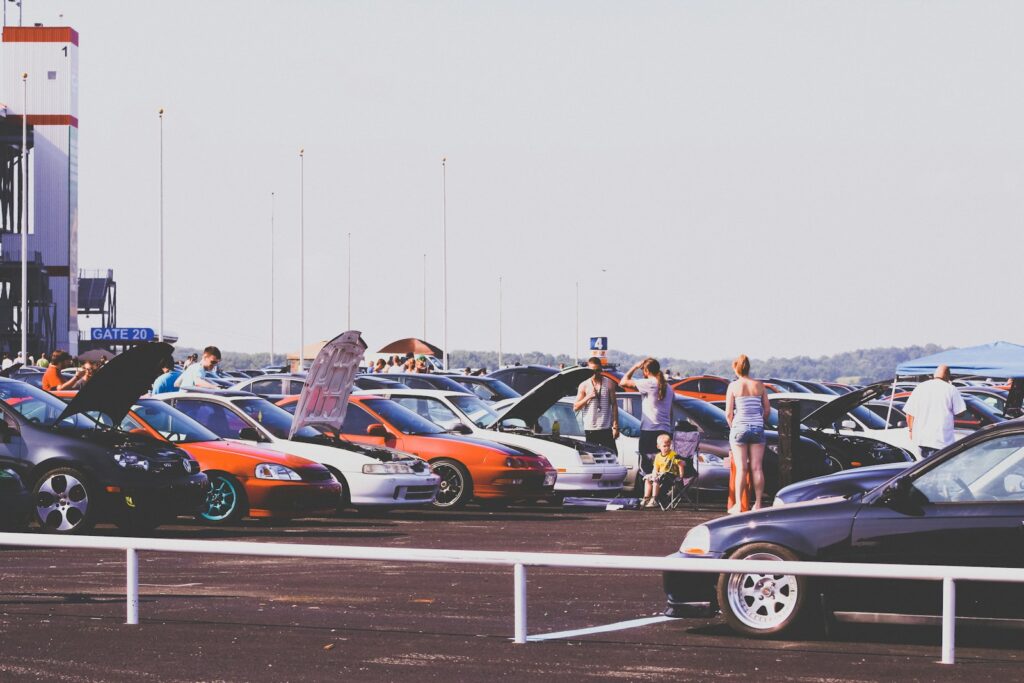
The first time it felt off
The early meets were mostly fine. People asked questions, took photos from a respectful distance, and the worst thing that happened was someone leaning a little too close to read a badge. He was used to the normal curiosity that comes with having a nice car, and he didn’t mind giving a quick rundown of the work he’d done.
Then one night, he came back from the food truck line and caught a guy half inside the driver’s side window, torso bent in like he owned the thing. The guy wasn’t stealing—he was “just looking”—but he had his hands on the steering wheel and was poking at the shifter like he was testing it. When the owner said, “Hey, man, please don’t touch,” the guy laughed like it was a joke and said, “Relax, I’m careful.”
That line—Relax, I’m careful—became a recurring theme. It’s what people said when they were already doing something they knew they shouldn’t be doing. And it always came with this little smirk, like asking for permission would’ve ruined the fun.
From “admiring” to handling
After that, it wasn’t one-off weirdness anymore; it was a pattern. Someone would grab the door handle “to see how solid it feels.” Someone else would tap the lip on the front splitter, the way people tap glass at an aquarium even though there’s a sign telling them not to. A guy he didn’t know leaned his elbow on the roof while he posed for a picture, compressing the wrap just enough that the owner had to stare at the spot afterward and wonder if it was going to lift.
He tried to handle it like a normal adult. He’d keep his tone light—“Hey, could you not?”—and people would act apologetic for two seconds, then drift off and do it to someone else’s car. The problem was, his car drew attention, and attention at those meets came with a strange sense of entitlement, like the presence of a camera made everything communal.
Eventually he started standing closer, hovering a little more, staying near the car instead of wandering. That didn’t help so much as it changed the vibe. People would still reach out, only now they’d do it with this sideways glance, like they were daring him to be the bad guy.
The incident that made it personal
The turning point was small in terms of damage, but huge in terms of how it felt. It was one of those busy meets where cars are packed in like a jigsaw puzzle and everybody’s squeezing between bumpers with plastic cups in hand. He was chatting with someone about wheel fitment when he heard a quick, sharp sound—like fingernails against painted metal.
A teenager had dragged a backpack zipper along the rear quarter panel while trying to squeeze past. The kid didn’t even stop; he just kept walking like it didn’t happen. When the owner called out—“Hey, you just scratched my car”—the kid turned around, looked at the panel, and shrugged like the scratch was a weather event.
One of the kid’s friends jumped in with, “Dude, it’s a parking lot. If you’re that worried, why bring it out?” That’s when it clicked for the owner that some people weren’t just careless—they thought caring about your car was the problem. He didn’t yell, but he did something that instantly made him the villain: he asked the kid for his info and said he wanted it fixed.
The kid balked. The friends started hovering. Someone muttered, “It’s not even that bad,” like that was the magic phrase that made other people’s property stop mattering. The owner didn’t get the kid’s info in the end—lots of noise, lots of people suddenly needing to “head out”—but he drove home staring at that mark in the mirror and realizing the meets had stopped being fun.
Setting boundaries, then getting punished for it
After that night, he changed his approach. No more open access, no more “feel free to look” body language, no more leaving the car unlocked because “it’s a community.” He started locking it the second he parked, keeping the windows up, and staying near it when the crowd got thick.
It didn’t take long for people to notice. The first time someone tried the handle and it didn’t open, they gave him this offended look—like how dare you—and immediately said, “Bro, are you serious?” Another person asked why his hood wasn’t popped, as if he owed them an engine bay exhibit. When he said he didn’t want people leaning in and touching stuff, the response wasn’t, “Fair.” It was, “Man, don’t bring it if you’re gonna act like that.”
He tried to explain it plainly: he’d already had people touch controls, scratch paint, lean on the car, and act like boundaries were personal insults. He wasn’t trying to be above anyone; he just didn’t want strangers treating his build like a museum where you’re allowed to grab the artifacts. That explanation somehow made things worse, because now people could frame him as dramatic.
And then the label showed up: stuck-up. Not said to his face at first, but passed around in that casual, poisonous way. He’d overhear it when he walked up—“That’s the guy who thinks he’s too good.” He’d get that tone from people he’d previously been friendly with, the one that says they’ve already decided what you are.
The last meet and the final straw
He still tried a few more times, mostly because he didn’t want to be run out of a hobby he genuinely liked. He’d park farther out, avoid the densest area, and keep the interactions brief. For a minute it seemed like it might settle into a workable rhythm: chat with the people who were respectful, ignore the rest.
Then came the last meet. Someone he barely knew walked up, tugged on the locked door handle, and said loudly, “What, you don’t trust us?” like it was a performance for the crowd. The owner didn’t bite; he just said, “I don’t want people inside my car,” in a calm, even voice.
That’s when the guy escalated it, grinning and gesturing toward the owner’s car like it was proof of some character flaw. “See? Stuck-up,” he announced, as if he’d been waiting for the moment. A couple people laughed. Someone else threw in, “It’s just a car,” which is always said by people who would absolutely lose their minds if you scratched their stuff.
The owner stood there for a second, taking in the whole scene: grown adults defending the right to touch a stranger’s vehicle, like that was the real community value. He didn’t argue. He didn’t try to win them over. He just got in his car, drove out, and realized he’d been spending his weekends negotiating basic respect with people who saw boundaries as attitude.
He still likes cars. He still works on his own, still goes for drives, still meets up with a small circle of people he trusts. But that parking lot culture—the one where your pride and joy becomes a prop for someone else’s night—left a bad taste that hasn’t really gone away, especially because the part he can’t shake is how quickly “don’t touch my stuff” turned him into the problem.
More from Steel Horse Rides: