

It started the way a lot of school-day chaos starts: a parent doing the same exhausting routine on autopilot, pulling into a parking lot they’ve used a hundred times, thinking about lunch money and permission slips and whether the kid remembered their hoodie. The parent in this story—let’s call her Maya—had a mid-size sedan she kept in decent shape, not pristine, but cared for. She wasn’t the type to park with two wheels on a curb or ignore new scratches and call it “character.”
The high school lot was always a mess at pickup, but Maya didn’t even get that far. She eased into a row near the student lot entrance, turned slightly to avoid a pothole she’d learned to dodge, and heard it: that ugly, hollow crack-scrape sound you feel in your teeth more than you hear. The car jolted like it had kissed a concrete tooth she didn’t see coming.
She parked, got out, and saw a chunk of broken curb or concrete barrier sitting at a bad angle—half buried, half exposed—right where tires naturally cut in. Her front bumper had a deep gouge and a corner that looked like it had been pulled out and down. Maya did that thing people do when they’re trying to stay calm: she stared at it for a few seconds too long, then took photos from every angle like she was documenting a crime scene.
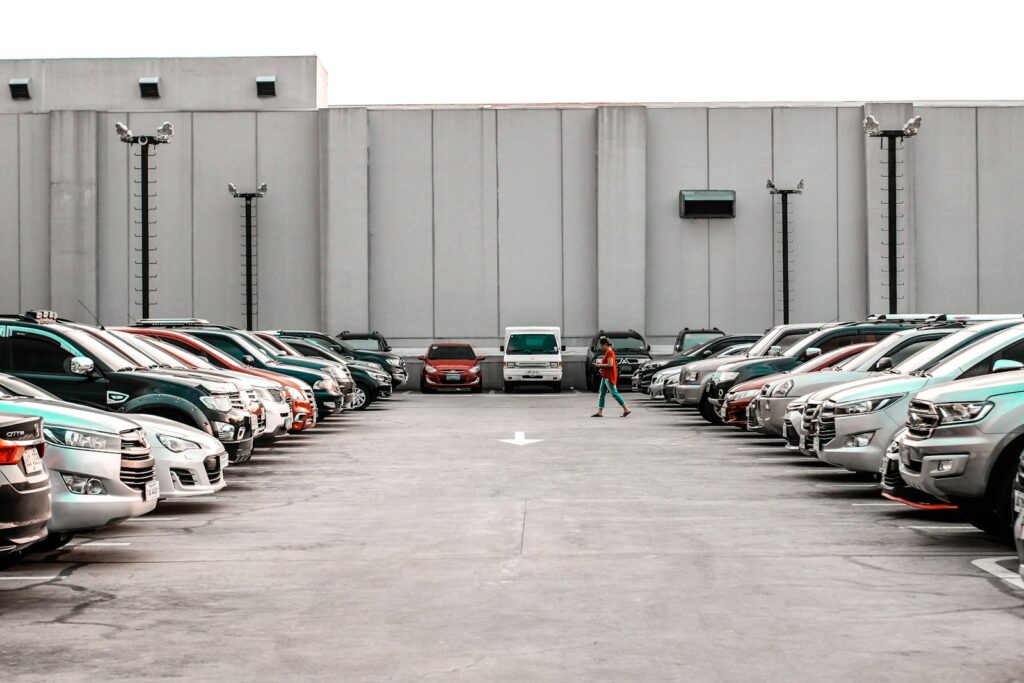
The Parking Lot “Fix” That Wasn’t a Fix
Once she calmed down enough to move, Maya walked the edge of the lot and realized the “barrier” wasn’t supposed to be jagged like that. It looked like a concrete parking stop that had been hit repeatedly until it fractured, leaving a sharp, tire-height ridge. There were black streaks on it—rubber marks—and small bits of plastic that didn’t look like they came from her car.
She asked another parent standing nearby if that chunk was new. The parent gave her a tired half-laugh and said it had been “like that for weeks,” maybe longer, and that people had complained. It wasn’t even hidden; it was right where cars naturally swung through when the lot was busy and everyone was trying to squeeze around each other.
Maya tried to do the responsible thing first. She went into the main office with her kid’s name and her ID ready, expecting to fill out some kind of incident report or at least get a maintenance person to come look. The office staff didn’t seem surprised, which is its own kind of frustrating, like your bad day is a known feature of the building.
Office Politeness, Then the Weird Pivot
The secretary listened and nodded while Maya showed the photos. She said she’d “let administration know,” and handed Maya a sticky note with an email address for the assistant principal in charge of facilities. It had that vibe of a place that’s trained to keep everything calm at the counter no matter what’s happening in front of them.
Maya sent the email from her phone in the parking lot, attaching pictures of the barrier, the damage, and a wide shot showing how close it was to the main path of traffic. She kept it polite: date, time, location, what happened, and a simple question about how to file a claim. She even mentioned that the broken concrete looked hazardous and asked if they could mark it before someone else hit it.
The reply didn’t come right away. When it did, it wasn’t from the facilities person—it was from someone higher up, with a longer signature block and that careful tone that sounds like it’s been workshopped. They thanked her for reaching out, said they were “sorry to hear about the incident,” and then dropped the line that would light the fuse: student drivers are not the school’s responsibility.
Maya read it twice because it didn’t even seem to match her message. She hadn’t said a student hit her car. She hadn’t accused anyone of reckless driving. She said the parking lot itself damaged her car because a broken concrete stop was left in a driving lane like a booby trap.
The School’s Logic: If Cars Exist, It’s Not On Us
She replied, clarifying—again—no student hit her. It wasn’t a “driver incident.” It was a property maintenance issue. She asked, more directly this time, who handles liability claims for damage caused by campus property, and whether the school had cameras pointed at that row.
The answer came back with the same energy, just slightly more defensive. The school said the parking lot is used at “the driver’s own risk,” and they do not accept responsibility for “incidents involving student drivers” or “vehicle-related damage.” It was like they had a template and the template didn’t have a box for “your broken concrete snagged my bumper.”
What made Maya’s stomach drop wasn’t just the refusal. It was the way the email seemed to fold everything into one big bucket labeled not our problem. She’d been trying to report a hazard and get repairs; the school was treating it like she was attempting to blame a teenager and extract money.
So she did the thing people do when they stop believing the other side is acting in good faith: she got specific and started building a paper trail. She asked for the district’s risk management contact, requested the maintenance logs for that area, and pointed out that multiple cars appeared to have scraped it based on the marks and debris. She also asked why the hazard hadn’t been coned off if it had been known for weeks.
The Awkward Face-to-Face Meeting
A few days later, the school offered Maya a meeting—short notice, in the middle of a weekday—like the kind of scheduling that quietly punishes anyone who has a job that isn’t flexible. She made it work anyway, because the estimate she’d gotten from a body shop wasn’t small. The bumper needed repair and paint, and there was a broken clip under the front end that would rattle if left alone.
In the meeting, the vice principal and a facilities coordinator sat across from her with printed copies of her emails. Maya had her own folder: photos, the repair estimate, a timestamped screenshot of the email chain, and a map screenshot where she’d circled the exact spot. She didn’t raise her voice, but she didn’t do the meek-parent thing either.
The vice principal kept drifting back to student behavior—how crowded the lot gets, how inexperienced student drivers can be, how they “do their best” to monitor things. Maya kept steering it back: nobody hit her. The lot itself did the damage. The facilities coordinator finally admitted, in a way that sounded accidental, that the concrete stop had been “on the list” to replace and that they’d had issues with that row getting clipped.
That was the moment Maya’s expression changed. Not triumphant, not smug—more like, so you knew. She asked if they’d put that admission in writing, and the room got noticeably colder.
Then Came the Real Threat: “We Can Restrict Parking Access”
When Maya asked for the district’s insurance contact again, the vice principal said they’d “look into it” and then warned that escalating could lead to “restricted parking privileges.” Not in a dramatic, villain way—more like a casual reminder of who controls the gate. It landed as a weird pressure tactic: if you push too hard, we can make your daily life harder.
Maya left the meeting with nothing concrete except more confirmation that the barrier had been known about. A day later, she noticed orange cones around the broken stop. The next week, the whole thing was replaced, smooth and new, like the hazard had never existed. No one ever emailed her to say, “Yes, that was dangerous,” or “Here’s how to submit your claim.” It was just… quietly fixed.
That quiet fix made her angrier than if they’d done nothing. Because it felt like proof they could have addressed it before her car took the hit, but they waited until someone showed up with photos and paperwork. She called the district office herself and eventually got a risk management email, where she submitted the claim with the estimate and all her documentation.
The district responded with a sterile form letter and a request for more information: proof of insurance, photos of the full vehicle, and a statement describing the incident. It wasn’t a denial, but it wasn’t a yes either. It was the kind of slow-moving process that seems designed to wear you down until the repair bill feels easier to just pay.
Meanwhile, the school’s stance stayed the same in every conversation Maya had afterward: student drivers aren’t their responsibility, the lot is used at your own risk, and they “can’t be liable” for everything. Even when she pointed out that her story didn’t involve a student driver at all, it was like the phrase had become a shield they held up automatically, no matter what she said.
By the time the cones were gone and the new parking stop blended into the asphalt, Maya was still driving a car with a gouged bumper and a dangling corner that looked like it had lost a fight. She’d done everything the responsible way—reported it, documented it, met with staff, filed the claim—and she still couldn’t shake the feeling that the school’s real strategy wasn’t to solve problems. It was to outlast the person complaining until they got tired, paid for it themselves, and went back to quietly circling the lot like everyone else.
More from Steel Horse Rides: