

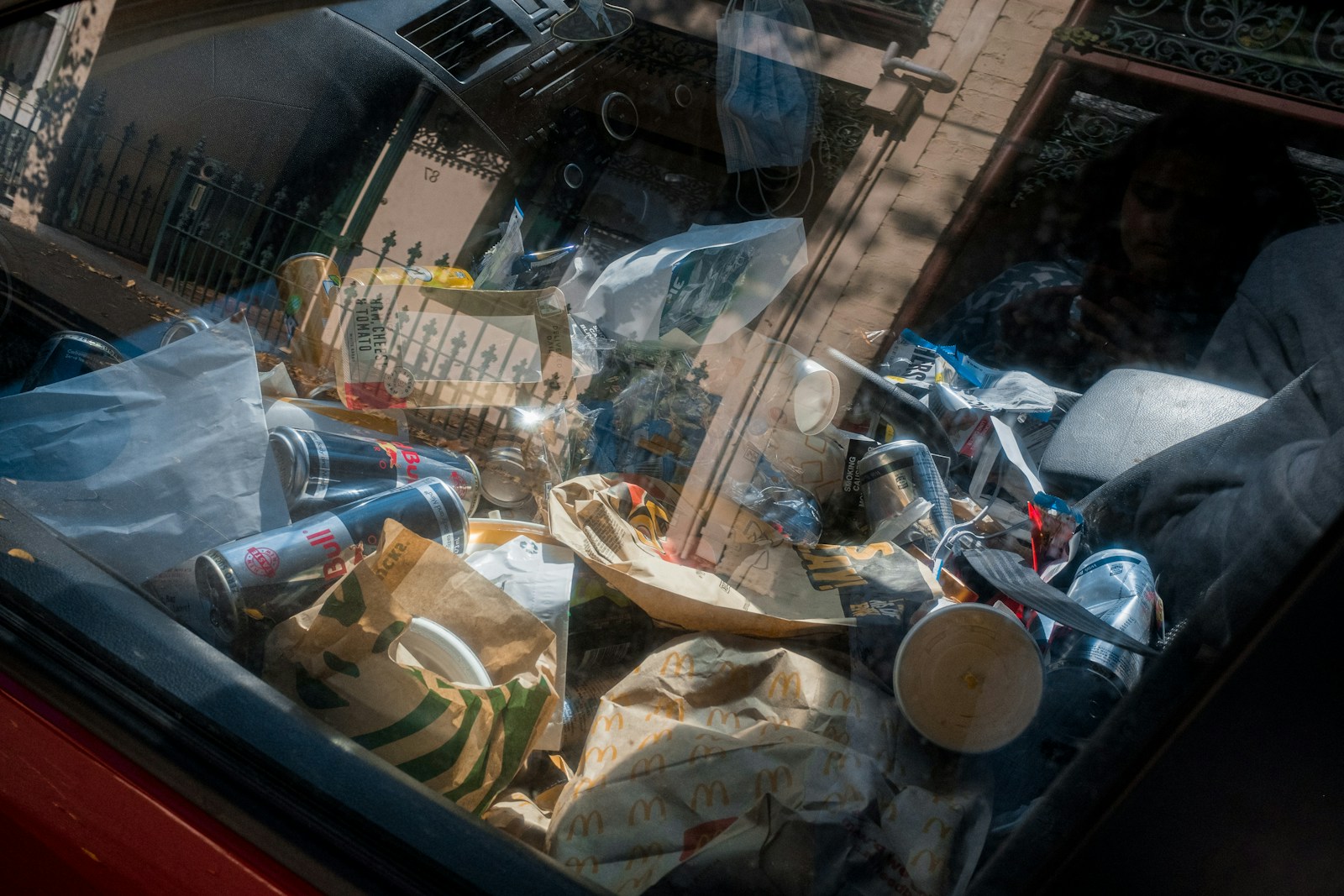
By the second hour of the drive down, he already knew he’d made a mistake. Not the vacation part—he’d actually been looking forward to a cheap family beach week—but the part where he’d offered to take his car and “just be the driver” so everyone could ride together.
It was his pride-and-joy commuter sedan, nothing fancy, but it was clean in that quietly obsessive way: no clutter in the doors, no sticky cupholders, no mystery smells. He kept a little trash bin in the back, wipes in the console, and a strict “no eating messy stuff” rule that he usually enforced without being a jerk about it. This time, though, he’d been outnumbered.
His parents, his younger sister, and his sister’s two kids piled in like it was a shuttle bus. They brought grocery bags, beach toys, a cooler, and a chaotic confidence that the car would simply… handle it. He told himself it was fine, it was only a few days, and he could deal with a little sand.
The “It’s Vacation” Rule Change
The first crack in the plan came at the gas station before they even hit the highway. His mom came back with a pastry box and coffees, balancing them on her forearm while fumbling with the door handle, and his sister was already unwrapping something sticky for the kids in the back. He did his best to keep it light—“Hey, can we keep food over the napkins?”—and got that familiar smile that meant: relax.
“It’s vacation,” his sister said, like those two words were a permission slip to ignore gravity and common sense. His dad chimed in with an offhand, “You worry too much,” while reaching back to hand a kid a juice pouch. The pouch got squeezed; a little apple-something mist hit the back of the headrest, and nobody even turned around to look.
He tried not to be That Guy about it, especially in the first ten minutes. But it set the tone: any boundary he mentioned got translated into “killjoy,” and any mess that appeared got treated like it would magically disappear later.
How the Car Slowly Turned Into a Dumpster
By day two of the trip, the car wasn’t just “used.” It was lived in. Sand collected in the floor mats like someone had poured a bag of it directly onto the carpet, and every door pocket held a rotating cast of half-empty bottles, straw wrappers, and crumpled receipts.
The kids treated the back seat like a snack bar and craft table. He’d open the rear door and see raisins scattered in the seat creases, a melted gummy fused to the rubber mat, and a smear of sunscreen on the door panel that looked like someone had wiped their hand on it mid-lotion. Every time he asked whose it was, he got shrugs and that dead-eyed “I don’t know” that kids learn when adults stop pushing.
His sister kept saying she’d “get to it,” but her version of cleaning was picking up one obvious cup and declaring victory. His mom would do that thing where she’d gather trash into a bag—then leave the bag in the back seat because “we’ll toss it later.” Later never came.
The final straw happened after a beach day that ran long and ended with everyone hungry and sun-drunk. They picked up takeout on the way back: fried food, sauces, and those flimsy foam containers that leak the second you tilt them. He asked if they could eat inside the rental house instead of the car, and his dad waved it off like he was being precious about nothing.
Somewhere between the parking lot and the house, a container tipped. Grease slid out, dark and shiny, and soaked into the back seat fabric. Nobody moved fast; there was a full beat where they all just stared at it like it was an interesting science experiment, and then his sister laughed and said, “Oops.”
The Ride Home Ultimatum
On the last morning, he woke up early, loaded the trunk, and went out to the driveway to start the car. In the daylight, the inside looked worse than it had at night: fingerprints on the windows, sticky patches on the armrests, and a smell that was equal parts fast food and damp towels. The back seat looked like it had hosted a small, unregulated festival.
He stood there for a minute with the driver’s door open, trying to decide whether to swallow it and deal with it when he got home. Then he imagined a five-hour drive with that smell baking in the sun and the kids continuing to treat the car like a compost bin. That’s when he walked back inside and said, calmly, that before anyone left, they were going to clean the car.
Not “maybe later.” Not “if there’s time.” Clean it now—trash out, seats wiped, sand shaken out as much as possible, and the spilled grease dealt with in some way that wasn’t just hoping it would evaporate. He wasn’t asking for detailing-level perfection; he was asking for basic respect.
The room went quiet in that specific way families get quiet when someone breaks the unspoken rule of letting things slide. His mom blinked at him like he’d just announced the trip was canceled. His dad frowned and asked why he was “making a big thing” right before they left.
“You Didn’t Say Anything” and Other Greatest Hits
His sister got defensive immediately, which was almost impressive in its speed. She said the kids were tired, they were already behind schedule, and he was choosing a weird moment to “explode.” When he pointed out the grease stain and the literal pile of wrappers under the seat, she switched tactics and claimed she hadn’t noticed it was that bad.
Then came the classic rewrite of history: “You didn’t say anything.” He reminded them he’d asked multiple times, in the car, at the house, at the gas station—small requests that got brushed off. His mom leaned into the gentler version of the same argument, telling him he should’ve been clearer, as if “please don’t spill food in my car” was a vague concept.
His dad tried the authority angle. He said they were all family, that the car was being used for everyone, and that it wasn’t fair to hold them hostage over “a little mess.” That word—hostage—hit him like a slap, because he was the one providing the ride, the one paying for the gas, and the one who’d be left with a greasy back seat for the next year.
He didn’t raise his voice, but he stopped negotiating. He told them he wasn’t driving anyone home until the car was cleaned to a reasonable level. If they didn’t want to do it, they could rent a car, call a ride, or figure out another plan—because he wasn’t spending hours trapped in a rolling trash can that he owned.
The Awkward Cleaning Session Nobody Wanted
That’s when the stalling started. His mom suggested they “just get going” and clean it at a stop later, which was basically a promise to forget. His sister tried to send the kids out to the car with a single grocery bag like that would solve the sand and the grease, then got annoyed when he said an adult needed to actually wipe surfaces and address the stain.
Eventually, everyone shuffled outside with the energy of people forced to do community service. They worked in tense silence, punctuated by pointed sighs and the occasional passive-aggressive comment about how “some people” can’t relax. The kids were tasked with collecting obvious trash, which turned into them arguing over who had to touch the sticky stuff.
His dad did a halfhearted shake of the floor mat and declared it good enough, even though sand poured out like an hourglass. His mom wiped down the dashboard with a napkin so thin it disintegrated, then acted like the napkin falling apart was proof the car was “impossible” to keep clean. His sister attacked the grease spot with club soda—because someone had heard that worked once—then looked genuinely offended when it didn’t magically lift out of cloth upholstery.
By the time they were done, the car was better, but it wasn’t fixed. The stain was still there, just lighter, and the smell had upgraded from “dumpster” to “fast food that lost a fight.” More importantly, the mood had curdled into something heavy and resentful, like everyone was daring him to acknowledge that he’d embarrassed them.
They drove home in a brittle kind of peace. His parents were quiet in the front, his sister kept her eyes on her phone, and the kids were suddenly instructed to “be careful” in a tone that implied he’d invented cleanliness to torment them. And he sat there gripping the steering wheel, watching his family treat basic accountability like a personal insult, knowing the real mess wasn’t the sand in the carpet—it was the way they’d acted shocked that he expected them to clean up what they’d trashed.