

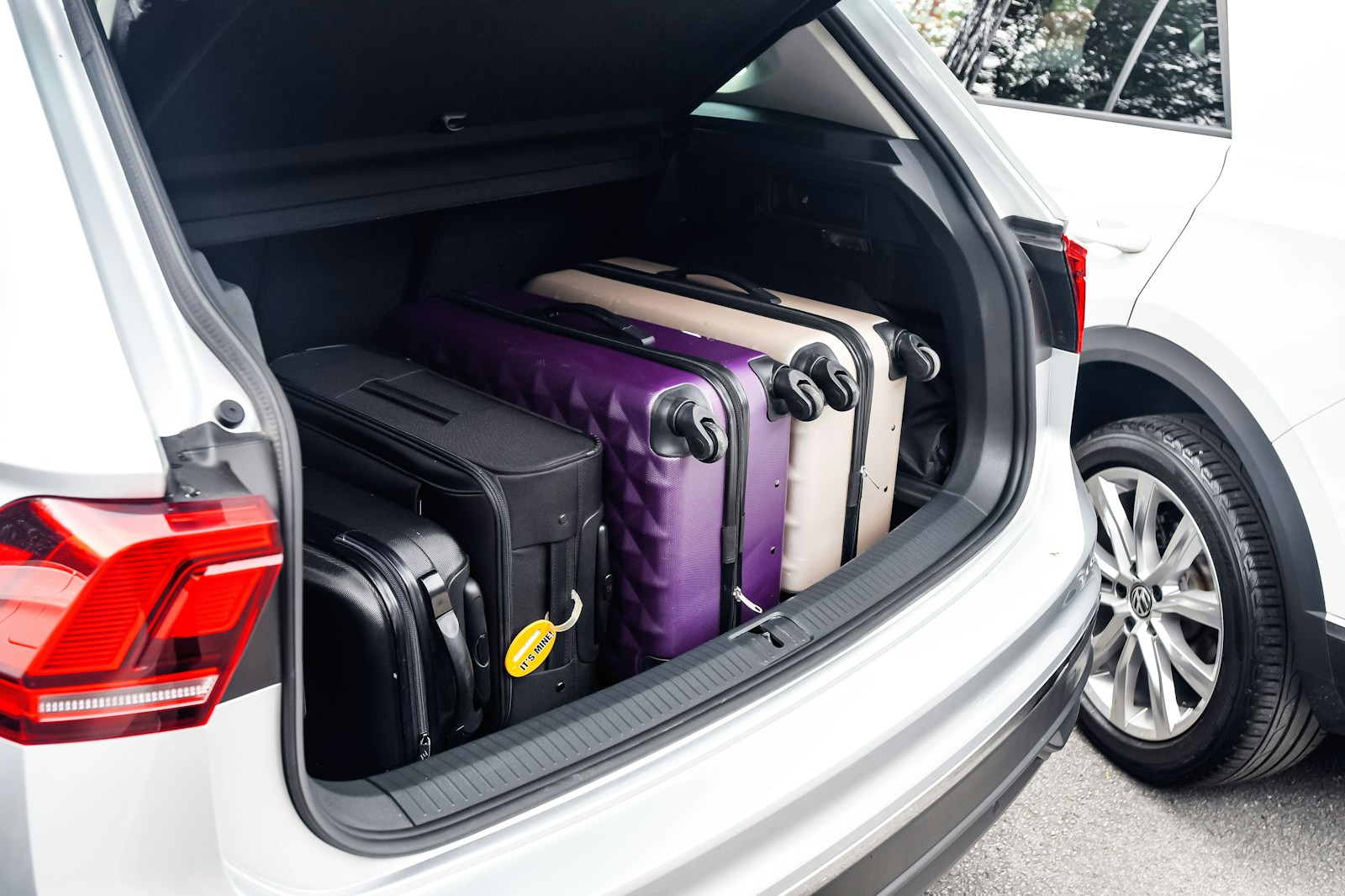
He thought the trip was going to be the easy kind of stressful: a long weekend, a couple of highway hours, and the usual passive-aggressive choreography of sharing a car with his in-laws. He’d even tried to stack the odds in everyone’s favor—freshly serviced small SUV, a full tank, and a plan to leave early enough to miss traffic.
The first hint that none of that would matter came in the driveway, before anyone had even sat down. His in-laws stepped out of their house dragging suitcases like they were fleeing the country, not going to a lake rental for four days. The trunk popped open, and the luggage started multiplying.
His wife gave him that look—half apology, half “please don’t make this a thing.” He swallowed whatever comment was forming and got to work, because that’s what you do when you’re trying to keep the peace. The problem was, peace weighs a lot when it’s wrapped in hard-shell plastic and stuffed with “just in case” outfits.
The driveway Tetris that turned into a warning sign
He started with the normal assumptions: two medium suitcases, maybe a duffel, a cooler. But his mother-in-law had one of those oversized rollers that looks like it could hold a folding chair, and his father-in-law had a hard case that clunked like it contained bowling balls. Then came a garment bag, a tote bag filled with shoes, and a separate bag that was, apparently, “snacks for the road,” which meant jars and containers that could’ve survived a shipwreck.
He tried stacking things the way he always did—heavier stuff low, soft bags on top, keep the rear window clear. The hatch didn’t want to close, and when it finally latched, the SUV dipped a little in the back like it exhaled. Not dramatically, not cartoonishly, but enough that he felt it in his gut.
He made a careful, polite suggestion. Maybe they could leave one suitcase behind, or consolidate, or ship some stuff to the rental ahead of time next trip. His mother-in-law blinked at him like he’d suggested she abandon a child, and his father-in-law shrugged and said, “This is what we need.”
The first scrape: everyone pretended it didn’t happen
They rolled out, and for the first twenty minutes it was fine. The air conditioning was on, the navigation voice was calm, and his father-in-law was already narrating roadside history like a tour guide. Then they hit the first steep dip out of a gas station, the kind he’d taken a hundred times without thinking.
The sound was unmistakable: a long, gritty scrape under the car, like someone dragging a metal shelf across concrete. He felt it through the pedals and instinctively winced. His wife snapped her head toward him, and his mother-in-law went, “What was that?” with the kind of suspicion usually reserved for credit card fraud.
He said, evenly, that the car was probably sitting low because of the load. He promised to take bumps slowly and avoid steep entrances. His father-in-law, instead of connecting the luggage to the sound, made a thoughtful noise and said, “Huh. That’s not great engineering.”
“Why would you buy something so small?” becomes the chorus
By the next stop, the scraping had happened two more times—once leaving a parking lot, once on an uneven driveway where the SUV twisted a little. He started driving like he was transporting a wedding cake: angled approaches, crawl-speed turns, eyes constantly scanning for inclines. It didn’t help that every time he slowed down, his father-in-law would sigh loudly and say, “We’re not in a parade.”
At a rest area, his mother-in-law decided to do a luggage audit, which mostly consisted of opening the back and frowning like the car itself had made a mess. She pressed her lips together and announced, to nobody in particular, that her neighbor’s vehicle “would’ve handled this easily.” She didn’t say “unlike yours,” but she didn’t need to.
He finally said what he’d been thinking since the driveway: they had packed an insane amount for a short trip. Not yelling, not insulting—just stating the obvious. His mother-in-law’s face tightened, and she said, “We’re adults, we know how to pack,” which wasn’t an answer so much as a door slam.
The next line came from his father-in-law, casual and deadly: “Maybe you should’ve bought a real SUV.” The way he said “real” made it clear this wasn’t about capacity, it was about status. Suddenly the scraping noise wasn’t a mechanical issue, it was a personality flaw.
The rental house arrival: scraping, blaming, and the suitcase parade
They reached the rental late afternoon, tired and already irritated from pretending not to be. The driveway was narrow and sloped, with a little ridge where it met the road. He stopped at the bottom, got out, walked it, and decided the safest option was a slow diagonal approach.
Halfway up, the underside caught again—louder this time, with a brief vibration that made everyone go quiet. His mother-in-law immediately said, “Oh my god,” like the car had just insulted her. His wife stared straight ahead, jaw clenched, because she could feel the argument trying to climb into her lap.
Once parked, the in-laws didn’t rush to unpack so much as stage a demonstration. Suitcase after suitcase came out and lined up on the gravel like evidence. His mother-in-law pointed at the row—four wheeled suitcases, two duffels, a cooler, a tote, a bag of toiletries, and a box labeled “kitchen items”—and said, “This is normal for a trip,” daring anyone to disagree.
He glanced at his wife, hoping she’d at least acknowledge the absurdity. She gave a tiny shrug that said, not now. So he said it anyway, quietly: “That’s a lot for four days.” His father-in-law laughed, not because it was funny, but because it was dismissive, and said, “Not for people who like to be prepared.”
The pressure cooker moments: little digs and a big accusation
The rest of the first night had that brittle politeness where everyone is “fine” in the exact tone that means they aren’t. His mother-in-law insisted on putting her suitcase in the bedroom closet “so it can breathe,” which was a new one. His father-in-law offered to “teach” him how to drive on slopes tomorrow, like this was a skill issue and not physics.
By morning, the scraping had become a running commentary. Every time they loaded up to go anywhere—breakfast, the grocery store, the lake—his mother-in-law would ask, “Do you think the car can handle it?” with the sweetness of a dentist holding a drill. His wife started snapping at him for small things, like turning too wide or braking too early, because she was trying to manage their irritation by redirecting it.
The turning point wasn’t even the scraping. It was when his father-in-law, in front of the wife and the mother-in-law, casually suggested they might need to rent a bigger vehicle “next time,” and then looked right at him and added, “If you insist on buying tiny cars.”
That “insist” did it. He said, still controlled, that he bought a small SUV because it fit their budget, their parking situation, and their normal life—where they weren’t hauling half a closet and a pantry for a long weekend. He pointed out that their packing was the variable, not his car.
His mother-in-law’s response wasn’t to argue the math, but to go straight for the emotional guilt. She said, “So you’re blaming us for wanting to be comfortable,” like comfort required three pairs of boots and a backup coffee maker. His father-in-law shook his head and said, “A man who plans for family buys a vehicle that fits family,” which landed like a slap disguised as a proverb.
By the final day, the underside of the SUV had a new soundtrack—every dip, every uneven patch of pavement, a reminder that the problem hadn’t been solved, just endured. The in-laws didn’t offer to lighten the load on the return trip, and he didn’t ask again, because he’d realized asking only gave them a chance to act offended. His wife stayed quiet, caught between loyalty and exhaustion, and the silence felt heavier than the luggage. When they finally pulled back into the driveway at home, the car scraped one last time on the curb cut, and nobody said a word—because by then, the argument wasn’t about the scraping anymore, it was about what they thought he owed them, and how casually they were willing to call him inadequate when he didn’t provide it.