

It started the way a lot of shop horror stories start: a guy strolling into a service counter like he owned the place, already laughing at his own joke. He was mid-40s, work boots, loud voice, keys spinning on one finger like a lasso. The car was a late-model pickup that still looked pretty clean from ten feet away, the kind of vehicle people buy because they like the idea of being “practical” while also enjoying a monthly payment that could fund a small hobby farm.
He wasn’t there for an oil change. He made that clear immediately, like it was an insult. He was there because the truck had started “acting weird,” and he wanted someone to “hook up that scanner thing” and tell him what sensor was “being dramatic.”
The service advisor did the normal routine—mileage, symptoms, any warning lights—and the guy started performing. He said he didn’t “believe in” oil changes. He’d owned the truck for years and had “never changed it once,” like he’d discovered some cheat code the rest of society was too gullible to use.

The humblebrag that made the counter go quiet
At first it landed like half a joke, half a flex. He grinned, waiting for the admiration—maybe expecting the shop to applaud his rugged efficiency. Instead, the advisor’s face did that careful neutral thing people do when they’re trying not to react to something insane.
“So… to confirm,” the advisor said, slow and gentle, “you’re saying you’ve never changed the oil in this truck. Ever.” The guy leaned on the counter and doubled down, explaining how oil changes were “a scam” and how modern engines were “built different,” so it didn’t matter. He added that he “tops it off sometimes” and that the truck “runs fine,” which is the mechanical equivalent of saying you only drink water when you remember your mouth exists.
They asked about the mileage, and he waved his hand like that detail was boring. It was well into six digits. The advisor typed it in, still polite, and said they’d start with a diagnostic, but he should understand they might find more than a sensor issue if maintenance had been ignored.
The guy actually laughed. Not nervous laughter—real laughter. The kind that says, you don’t know who you’re talking to.
When the tech pulled the dipstick, the vibe changed
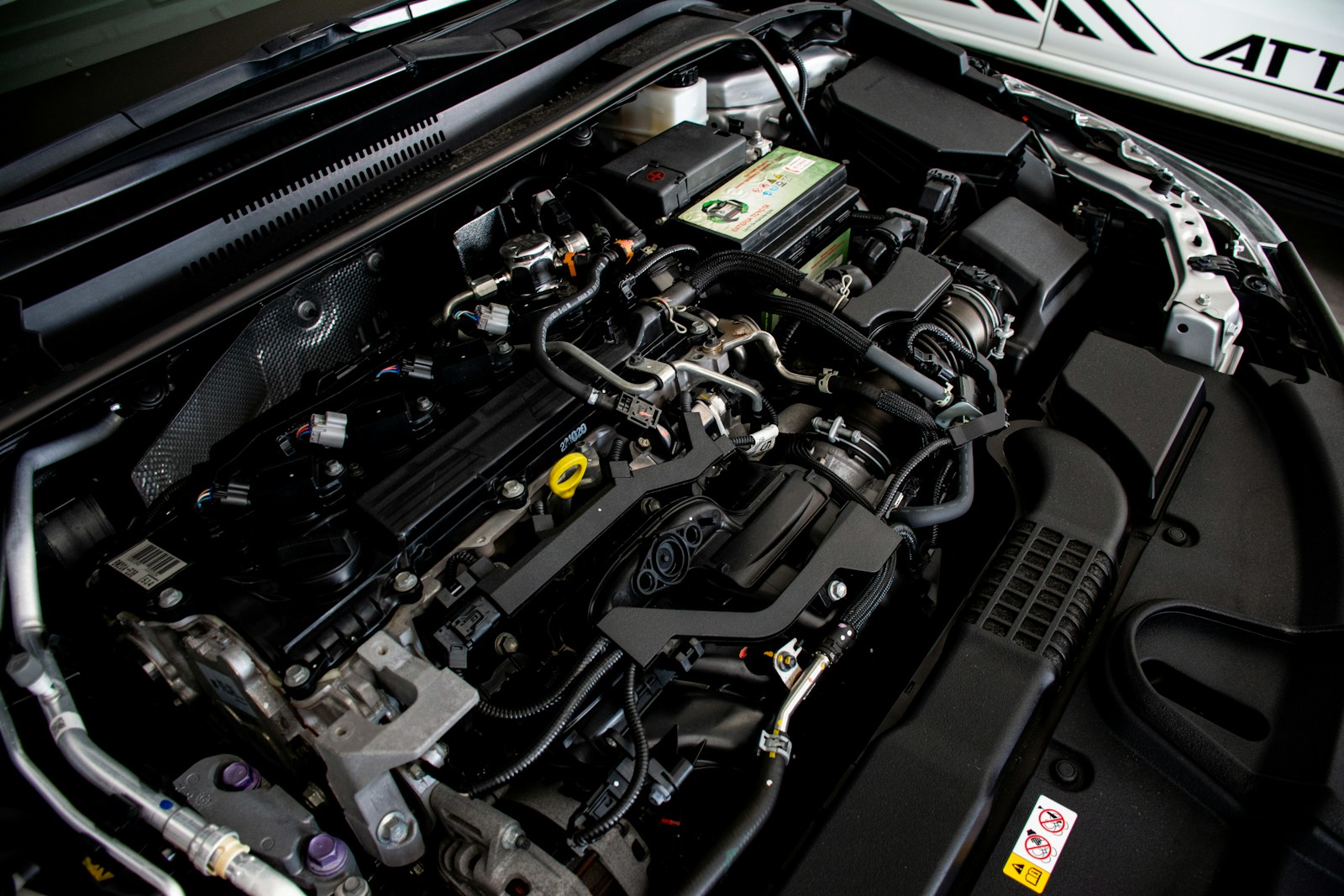
They rolled the truck into a bay and popped the hood, expecting to at least confirm oil level and condition. The tech yanked the dipstick and paused, holding it out like he didn’t want to bring it any closer to his face. Whatever was on it didn’t look like oil so much as the memory of oil—dark, thick, and weirdly gritty.
There’s a particular silence that happens in shops when a simple job turns into a mystery. The tech tried wiping the dipstick on a rag, and it didn’t really wipe; it smeared. He checked the oil cap next, and the underside was coated with sludge that looked like someone had been caramelizing motor oil for dessert.
They still did the scan because that’s what the guy asked for, and sure enough there were codes—misfires, oil pressure warnings in history, cam timing complaints. The kind of codes that don’t show up because a sensor is “dramatic,” but because the engine has been running on borrowed time with a loan shark’s interest rate.
At that point the shop did what shops do when they can smell a disaster forming: they documented everything. Photos of sludge, notes on the condition, and a recommendation that wasn’t subtle—start with an oil and filter change and evaluate from there, but be aware the engine may already be damaged. It was the most diplomatic version of “this thing is dying” they could put on paper.
He wanted a quick fix. The truck wanted mercy.
When they told him what they found, he waved it off like they were trying to upsell him floor mats. He insisted the truck was fine yesterday, that it only started making noise “this morning,” and that they should just replace whatever part was throwing codes. The advisor explained that oil pressure and sludge weren’t a sensor problem, and the tech couldn’t responsibly recommend throwing parts at it.
That’s when the guy started negotiating with physics. He asked if they could “just flush it.” The advisor hesitated, because flushing a heavily sludged engine can be like shaking a rusted soda can and hoping it opens gently—sometimes it dislodges just enough gunk to clog the passages that were barely surviving.
But the guy insisted. He didn’t want a lecture, he wanted a receipt that ended in a couple hundred bucks and a story about how he “caught it in time.” After a lot of “we need you to understand the risk” and a lot of “yeah yeah, just do it,” they got written authorization for an oil service and inspection with explicit disclaimers.
The tech drained what he could, and it came out slow. Not like liquid, more like it was thinking about whether it wanted to cooperate. The filter was heavy, and when he cut it open the media looked like it had been used to strain asphalt.
The scream didn’t start when it broke. It started when he realized it wasn’t their fault.
They refilled it with fresh oil, put a new filter on, and started the engine. It ran rough immediately, like it was waking up in a panic. For a few seconds it sounded almost normal—enough to give the guy false hope when he was watching from the waiting area through the glass.
Then the noise hit. A sharp clatter that turned into a deeper knock, like someone tapping on a door from inside the engine block. The oil pressure light flickered, the idle staggered, and the tech shut it down fast because you don’t “see what happens” when an engine starts announcing its own funeral.
The advisor went out to talk to the guy with that careful tone again, the one people use when they’re walking toward a confrontation they can already smell. They told him the engine had severe internal damage and that the fresh oil didn’t cause it—it just stopped masking it. The guy’s face went from smug to suspicious to furious in about three breaths.
He latched onto the only part of the story that let him be the victim: “It was running when I brought it in.” He said the shop “broke” his truck, that they “messed with something,” that it was a scam to sell him an engine. He got loud enough that other customers started pretending to look at brochures while obviously listening.
He demanded a manager, then demanded a miracle
The manager came out and did the same calm walk-through: the sludge photos, the condition of the filter, the codes, the disclaimers he signed. The manager didn’t raise his voice, which somehow made the guy louder. He started pointing at the bay like he could will the truck back to life through intimidation.
He demanded they put it back the way it was, which is a request that only makes sense if you believe time can be reversed with a torque wrench. He demanded a loaner, then demanded they “eat the cost,” then demanded they call the manufacturer because “this is a defect.” The manager offered a tow to a dealership if he wanted a second opinion, and that suggestion landed like an insult.
Eventually they did what shops have to do when a person won’t stop spiraling: they reduced the conversation to paperwork. Here’s the inspection, here’s the authorization, here’s what we can do next. The next, unfortunately, was a replacement engine or a rebuild—numbers that floated around $9,000 depending on parts availability and how ugly it looked once it came apart.
That was the moment his anger shifted into something sharper. It wasn’t just rage at the shop anymore; it was rage at the fact that his whole “oil changes are a scam” identity had an invoice attached to it. He stared at the estimate like it was written in a language designed to humiliate him.
He didn’t pay for the engine, not then. He paid for the diagnostic and the oil service through clenched teeth, muttering about lawyers and reviews and how he “knows people.” He stomped out, called someone on speakerphone in the parking lot, and talked loudly enough for the front counter to hear phrases like “they blew my motor” and “I’m not paying a dime.”
By the end of the day, the truck was still sitting there, dead quiet, waiting for a tow that hadn’t arrived. The shop had its documentation, the guy had his story, and the engine had become exactly what the estimate implied: a $9,000 paperweight with four wheels attached. And the weirdest part was how he kept circling back to that original brag—as if he could talk his way into a reality where neglect is somehow a badge of honor, instead of a ticking clock that finally ran out in front of witnesses.
More from Steel Horse Rides: