

He rolled into the driveway like he was in a commercial—freshly washed truck, that new-car shine, big grin that said he’d been waiting all day for this moment. She was standing in the doorway with one sock on, dinner half-done, and a kid asking for help with homework, when he shouted for everyone to come outside and “see what Dad did for the family.”
It was a truck-truck, not a practical crossover or a used minivan upgrade. Taller than their old sedan, with chunky tires and a cab that looked like it could swallow their entire garage. He kept talking about safety and space and “not having to worry in winter,” like he’d memorized a brochure on the way home.
She didn’t want to be the wet blanket. Money had been tight, and he’d been complaining about the old car for months, so she tried to match his energy—ran her hand along the door, asked about the mileage, the payment, the plan. He answered everything fast, like he didn’t want any one topic to sit in the air too long, and when she asked why he hadn’t talked to her first, he kissed her forehead and said, “Babe, it’s for us. For the family.”
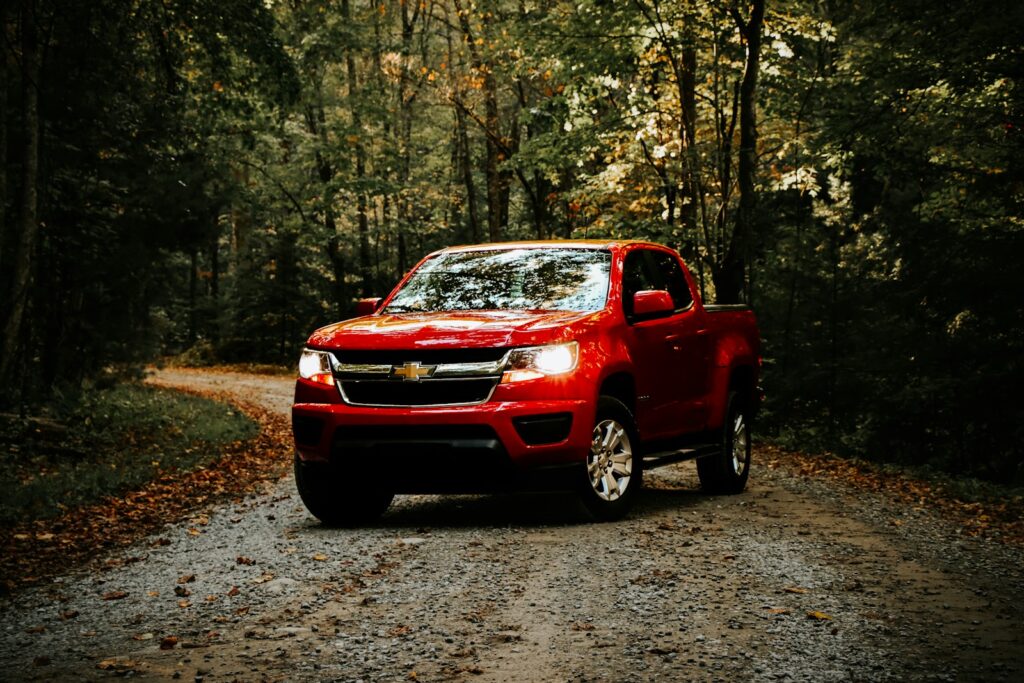
The “family truck” pitch
Over the next couple of days, he leaned hard into the story. He pointed out the backseat legroom, talked about how the kids’ backpacks would fit without spilling everywhere, and mentioned camping trips they could take “this summer.” He even offered to install car-seat anchors, like that was the part she’d be most excited about.
But the vibe didn’t match the details. He wasn’t the type who got giddy over family logistics, and he definitely wasn’t the type who surprised her with large purchases unless there was a reason he didn’t want to discuss. She noticed he kept finding excuses to go “check something” in the truck—adjust the mirrors, pair his phone, wipe a spot off the dashboard—little trips outside that didn’t require her.
Then there was the passenger seat. He kept it oddly clean, like he didn’t want anyone setting anything on it, and when their youngest climbed in with a juice box, he gently but quickly redirected him to the back. It was subtle, but she clocked it the way you clock a new habit in someone you live with.
The first weird moment in the driveway
On the third day, she went out to grab something from their old car and realized her husband had left the truck unlocked. Not wide open, not inviting—just one of those lazy mistakes someone makes when they’re distracted. She told herself she was only going to move the kids’ stuff into the back, to “make it more family,” since he’d been swearing that was the whole point.
She opened the rear door and immediately smelled it: that mix of lake water, sunscreen, and something like bait. Not strong enough to be rotten, but strong enough to not be nothing. It didn’t smell like new upholstery anymore, and that was strange because the truck was barely off the lot.
In the back footwell behind the passenger seat, she found a small mesh bag with a couple of fishing lures tangled together, the kind with bright neon skirts and sharp hooks. Next to it was a folded fishing vest—khaki, pockets everywhere—stuffed like it had been yanked off in a hurry. She just stood there for a second, holding the vest like it might explain itself if she stared long enough.
Fishing gear that “isn’t his”
Her husband did fish, technically, but in the way someone “used to” fish. Years ago he’d had a tackle box in the garage and would go out with his brother once or twice a summer, come home sunburned and tired, talk about how it was “good to get out.” He hadn’t mentioned anything about a trip recently, and he definitely hadn’t gone through the whole performance of buying brand-new family transport and then quietly turning it into a fishing shuttle.
She kept looking, because once your brain catches a thread like that, it’s hard to stop pulling. Under the back seat, she found a cooler—medium sized, the nice kind that actually keeps ice. It wasn’t their cooler; theirs was dented and permanently smelled faintly like onions from the one time someone stored chopped onions in it and forgot.
This cooler was clean and newer than anything they owned. Inside was a half-crumpled gas station receipt and a little packet of those electrolyte drink mixes, the kind people toss into water bottles when they’re trying to look like they work out. It wasn’t proof of anything by itself, but it didn’t match his “work, home, family truck” routine either.
She tried to keep it in the realm of “maybe he’s planning a surprise trip.” But the more she thought about it, the less that theory held. He wasn’t acting like a man excited to surprise his wife with a weekend away; he was acting like a man who needed his wife to stop asking questions.
The sunglasses in the console
It was the center console that did it. She popped it open to see if there were manuals or paperwork in there, because she still didn’t know the exact payment details and he’d been weirdly vague. Right on top, like it had been dropped there without thinking, was a pair of women’s sunglasses.
Not the cheap kind you get at a checkout line. These were oversized, glossy, with a gold accent on the arms, and they looked like they belonged to someone who keeps a lint roller in her bag. They weren’t hers—she didn’t wear that style, and her sunglasses lived on the kitchen counter where everyone could see them.
She sat in the driver’s seat and held the sunglasses in her hands, turning them over like they had a name engraved somewhere. There wasn’t. Just the quiet realization that a stranger had been in the passenger seat of the truck he’d sold as “for the family,” and that stranger had been comfortable enough to leave something behind.
She didn’t confront him immediately, which is the part that makes the whole thing feel so human. She put the sunglasses back exactly where she found them, closed the console, and went back inside to finish dinner like her stomach wasn’t trying to climb out of her throat. She wanted to see what he’d do if he thought he wasn’t being watched.
The confrontation that wouldn’t stay simple
That night, after the kids were in bed, she asked him casually how his day went and whether he’d taken the truck out anywhere. He said the usual: work, a quick stop for gas, home. He didn’t stutter, but he also didn’t look at her when he said it, like he was trying to keep his face neutral.
She asked about the fishing gear. His eyebrows lifted in a way that was almost convincing, like he was surprised she’d even seen it. He said it must’ve been left by the dealership, maybe a previous test driver, and then he laughed—one short laugh—like she was being silly.
She let him finish his little speech, then asked, “So the dealership left a cooler and fishing lures in the back seat and you didn’t notice?” He shrugged and tried to pivot to how busy he’d been. She could feel him choosing words, trying to steer the conversation away from specifics and into vague territory where he could breathe.
Then she asked about the sunglasses. That’s when his face changed, just a flicker, but enough. He said maybe one of the kids’ friends had been in it, or maybe she’d left them there. It was a ridiculous swing—first the dealership, then a child, then her—like he was tossing out whatever might stick.
She told him, flatly, that they weren’t hers. She said it without drama, which somehow made it sharper. He started talking faster, asking why she was “going through his stuff,” turning it into an argument about privacy like the truck wasn’t parked in front of their house and financed with money that affected both of them.
She didn’t yell, not at first. She just asked him to explain, plainly, why a woman’s sunglasses were in his brand-new truck, and why there was fishing gear and a cooler when he hadn’t mentioned fishing. He got angry in that defensive way where the volume rises, not because someone’s confident, but because they need the other person to back down.
Finally, he said the line that made her stop trying to keep it civil: he accused her of “making things up” because she was stressed about money. He said she was looking for a reason to be mad about the truck because she didn’t appreciate him trying to “do something nice.” It was a hard pivot to guilt, and it landed exactly where guilt always lands—in the soft spot where she didn’t want to be ungrateful.
But she had the sunglasses in her mind like a weight. The specific shape of them, how clean they were, how they didn’t belong to any part of her life. And she kept thinking about the passenger seat he wouldn’t let the kids touch, like it was reserved.
By the end of it, he still hadn’t admitted to anything. He slept on the couch, not because she demanded it, but because he stormed out of the bedroom like he was punishing her for asking. She lay there staring at the ceiling, replaying the day he brought the truck home and how carefully he’d sold the story.
The next morning, he drove to work like everything was normal, and she watched the truck disappear down the street with that cooler and those lures still in it. The sunglasses were still in the console, too—either because he hadn’t noticed them yet or because he’d decided to pretend they didn’t exist. And she was left standing in a quiet house, realizing the most unsettling part wasn’t what she’d found in the truck, but how easily he’d tried to make her doubt her own eyes.
More from Steel Horse Rides: