
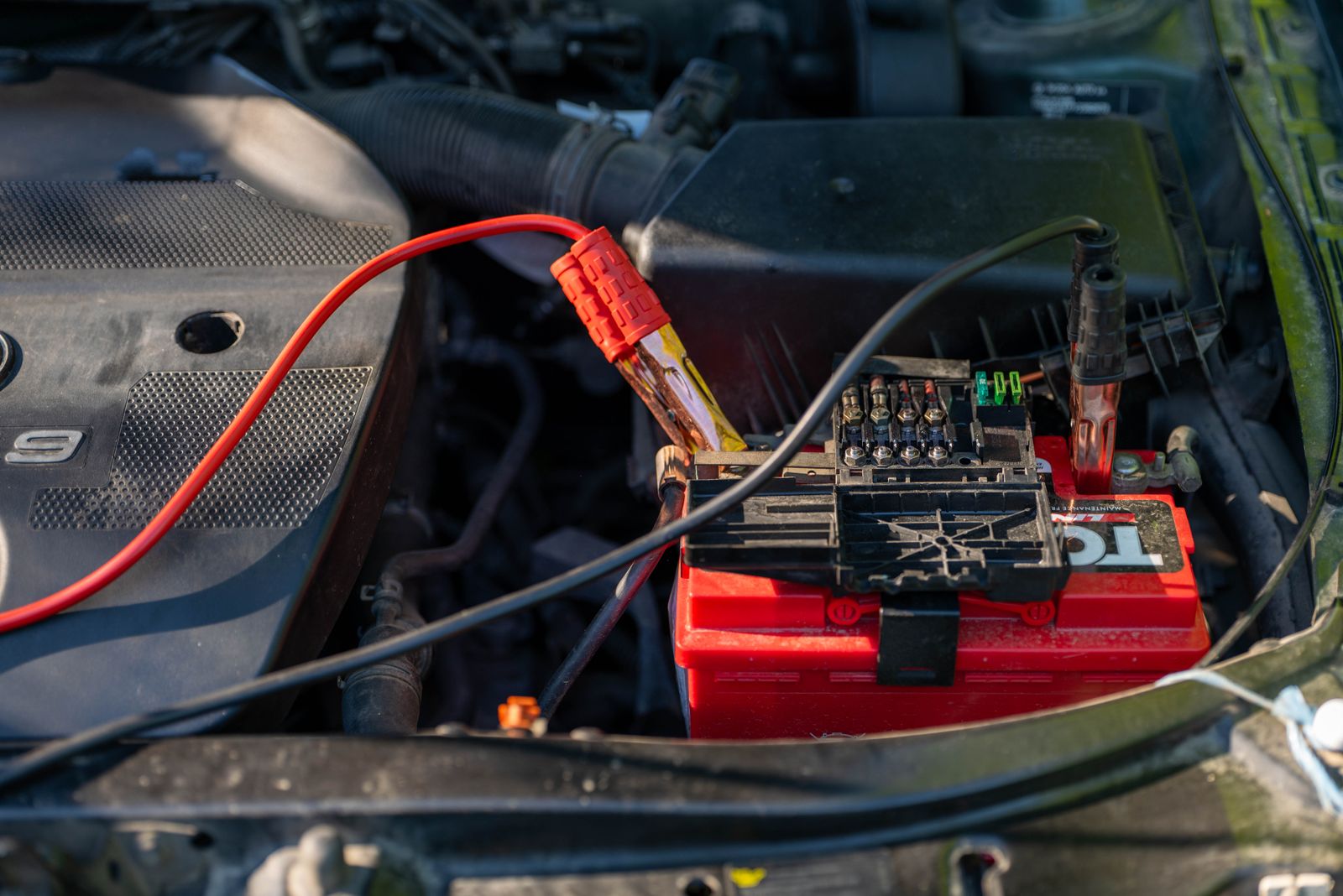

It started the way these things always start: a guy storms into a small auto shop clutching a car battery like it’s evidence in a criminal trial. He didn’t come in asking questions or looking for help. He came in already certain he’d been screwed.
The battery was heavy, scuffed up, and carried that faint metallic stink that hits you when something’s been sitting in the wrong corner of a garage for too long. He slapped it down on the counter with both hands and announced, loud enough for the waiting area to hear, that the shop had “swapped his good battery for this dead junk” during a quick service visit earlier in the week. The vibe shifted instantly from normal Tuesday boredom to full-on awkward theater.
The counter guy—one of those calm, slightly tired employees who’s clearly dealt with every kind of accusation—didn’t argue right away. He just asked for the invoice number, the date, something he could pull up. The customer didn’t have any of that ready, which only seemed to make him angrier, like the shop was supposed to keep track of his life for him.

The accusation gets loud, fast
Once the shop asked for details, the customer leaned into the story. He said he’d brought in a “brand new” battery, barely a few months old, and now his car wouldn’t start. He insisted the shop must’ve swapped it with an older battery off the shelf, the kind that’s already sulfated and dying, and he wanted them to “put it back” like it was a borrowed tool.
He didn’t just say it once, either. He repeated it in slightly different versions, each one more confident than the last, as if repeating a claim makes it more true. He pointed at the grime on the casing and said, basically, “Look at this—this isn’t mine,” like dirt is a serial number.
And because there were other customers sitting within earshot, the performance element kicked in. He talked about “trust,” about how shops “always pull this,” and how he wasn’t going to be “another victim.” The employee kept his voice level, which somehow made the guy push harder, like he needed a bigger reaction to justify his own.
The shop starts asking the wrong questions
Here’s the thing about a battery “swap” accusation: it sounds plausible if you don’t know what’s involved. Batteries aren’t personalized. They’re common. If you’re already suspicious, it’s easy to convince yourself you can’t possibly be wrong.
But the shop also wasn’t new to this. The employee lifted the battery, turned it to find the sticker, and started looking for the date code and any marking that might match what the shop had installed or touched. He asked what brand it was supposed to be. The customer hesitated—just a beat too long—then threw out a brand name like he was guessing on a multiple-choice test.
The employee asked if the customer had the purchase receipt for the “brand new” battery. The guy said he didn’t keep receipts, because who keeps receipts for a battery? Then he pivoted to how he had a bank statement “somewhere” and the shop should just do the right thing and replace it.
That’s when the shop manager came out, not in a dramatic way, just quietly stepping into the situation like someone who’s learned the difference between a complaint and an attempt at intimidation. He didn’t accuse the customer of lying. He just asked a very simple question: “Where did you buy the battery?”
The Marketplace detail slips out
At first, the customer said he bought it “from a guy” and that it was “new.” That phrase—“from a guy”—is always a tell. It’s vague in the way people get when they’re trying to avoid giving a detail that can be checked.
The manager didn’t react, just nodded and asked, “From a store, or…?” The customer, now boxed in by his own story, admitted it was from Marketplace. Still, he said, it was unused. Still, he said, the shop had swapped it.
That admission changed the whole dynamic. You could almost feel the mental math happening behind the counter: if the battery was bought secondhand, then the shop had no chain of custody. The “brand new” claim became a “guy said it was new” claim, which became a “could’ve been sitting on concrete for two years” claim.
But the customer didn’t seem to notice how much ground he’d given up. He doubled down instead, saying he knew what he bought, he knew what he had, and he wasn’t leaving until they made it right. It wasn’t just frustration anymore. It was pride.
The receipt turns out to be a boomerang
The shop offered to test the battery right there, which is the normal move if someone walks in with a no-start issue. But the customer didn’t want a test. He wanted the shop to admit wrongdoing. When they insisted on diagnostics—voltage, load test, alternator check—he interpreted it as stalling.
Then the customer remembered he had proof. He dug through his phone like he was loading a trump card, scrolling hard, thumb flicking faster as his face tightened. He announced he had the receipt, and he was going to show them exactly what he bought.
What he actually had was a screenshot: the Marketplace conversation and the payment confirmation. He shoved the phone across the counter with that aggressive “Look. Right there.” energy, expecting the shop to suddenly go quiet and start apologizing.
Instead, the employee and manager just looked at it, then looked at each other. The screenshot showed the battery listed as used—explicitly used—with a casual line from the seller about it being “good” but pulled from a car that got parted out. There was a date stamp, too, which mattered because it proved the customer bought it recently and didn’t have some long-term “good battery” history to back up his story.
Even worse for him, the listing photo matched the battery sitting on the counter. Same scuff pattern near the handle. Same faded corner sticker. It wasn’t a case of “this could be any battery.” It was clearly that battery.
Watching the story collapse in real time
The manager didn’t gloat. He didn’t raise his voice. He simply slid the phone back and said, “This shows you bought a used battery.” The customer blinked like he’d been hit with a sentence he wasn’t prepared to read.
For a few seconds, he tried to rewrite reality on the fly. He said the seller told him it was “basically new,” that it had “barely been used,” and that it “worked when he bought it.” He shifted from “the shop swapped it” to “the shop must’ve damaged it,” like he was trying different keys in a lock.
The employee offered to test it again, calmly, and even explained how a battery can show decent voltage but collapse under load if it’s failing internally. It was the kind of explanation that usually helps reasonable people. It didn’t help here, because the customer wasn’t looking for clarity—he was looking for a win.
He started arguing about how the shop should’ve warned him. The manager pointed out, gently but firmly, that they hadn’t sold him the battery, and they hadn’t removed it or replaced it during his visit. The paperwork from his service showed exactly what they did touch, and “battery replacement” wasn’t on the list.
That’s when the customer’s anger got quieter, which is often the moment that feels the most tense. Loud anger is simple. Quiet anger is when someone’s deciding whether to admit defeat or do something stupid.
He picked up the battery again, held it like it weighed more than it did, and muttered about how the shop was “covering for each other.” He said he was going to “leave a review,” like it was a threat and not just a thing people do. Nobody stopped him, because there wasn’t anything left to stop—his own evidence had done the work.
He walked out with the same dead battery he came in with, except now he couldn’t even pretend he’d been swapped. The shop went back to its normal rhythm, but the air stayed weird for a while, the way it does after someone tries to stage a moral outrage and accidentally brings the paperwork that disproves it. And the uncomfortable part wasn’t that he got caught—it was how hard he fought to make it someone else’s fault, even after the story stopped making sense.