

When the silver coupe rolled into the shop, it didn’t look like a disaster. It looked like a guy’s pride and joy—washed, waxed, and parked just a little too carefully in the customer drop-off lane, like it was allergic to curb rash. The owner, a late-30s dude in a clean hoodie and expensive sneakers, handed over the key fob with this practiced little smile that said he’d done this before and didn’t want to be talked down to.
He wasn’t there for anything dramatic, at least not out loud. He said the car had started “vibrating a bit” on the highway and braking felt “kind of off” after a long drive. And before the service writer could even finish typing, the guy added—like he was swatting away a fly—“It’s never been raced. I don’t beat on it. I’m not one of those track guys.”
The mechanic who ended up with the ticket—everyone at the shop called him Marco—didn’t say much in response. He’d heard every version of “I drive like a grandma” from people whose tires looked like they’d been used to erase asphalt. He just nodded, wrote down the mileage, and took the keys, figuring it would be the usual: warped rotors, cheap pads, maybe a bent wheel from a pothole the customer “never saw.”
The vibration that didn’t match the story
Marco started with a quick test drive, mostly to reproduce the vibration and see if it was wheel-speed related or brake-related. Within a few blocks, it was obvious the car wasn’t just “a little off.” The steering wheel shimmied under braking like the rotors had been cooked, and the tires made that low, rough hum that usually comes from aggressive wear patterns, not commuter miles.
Back on the lift, the car told on itself in small ways. The front pads were uneven and glazed, the rotors had heat spots, and the fluid in the reservoir looked darker than it should for the mileage on the dash. None of that is a smoking gun by itself—plenty of people ride brakes, tow stuff they shouldn’t, or ignore maintenance—but it didn’t line up with the careful-owner vibe.
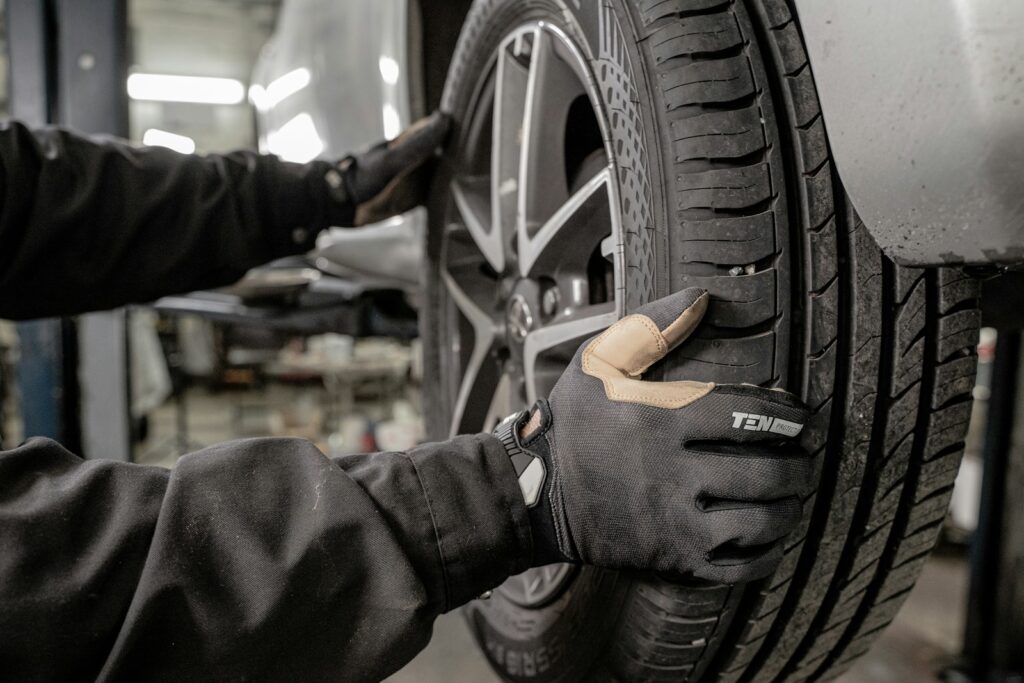
Then Marco got to the tires, and that’s where the ticket stopped looking normal. The outer shoulders were chewed up and feathered, like the car had spent a lot of time loading up in corners. There were tiny melted-looking balls of rubber stuck along the tread edges, the kind of “pickup” you see when a tire gets hot and then grabs debris.
He called the service writer over and just pointed. Not in a “gotcha” way, more like a silent question: how does a never-raced car end up with track marbles glued to the tires? The service writer shrugged, because they both knew the answer people give when they don’t want an answer: “Maybe it’s from the highway.”
Little clues in the wrong places
Marco kept going because the job still needed doing, story or no story. He checked the suspension and immediately noticed the alignment marks on a couple of bolts, the kind you see when someone’s adjusted camber or swapped components recently. The hardware wasn’t fresh-from-the-factory clean either; it had that slight tool-scar look of someone who’s been in there with a wrench.
Inside the wheel wells, there were faint rub marks like the tires had gotten close to the liners under compression. Not catastrophic, but another tiny dot in a picture that was slowly connecting. If the owner truly babied the thing, why was it living on the edge of its clearances?
Marco wasn’t trying to play detective. He was trying to protect himself, the shop, and the customer from the kind of misunderstanding that turns into a shouting match at the counter. If this car had been driven hard, and the customer was pretending it hadn’t, the odds of them blaming the shop later went way up.
So he did what experienced techs do when something feels off: he documented everything. Photos of the tires, photos of the rotors, notes on the fluid, and a quick line about “evidence of heat cycling.” He kept it clinical, because the second you make it personal, customers get weird.
The moment the glovebox popped open
Part of the inspection involved checking for wheel lock key, aftermarket alarm switches, and anything else that could complicate the work. The customer hadn’t mentioned a wheel lock, and Marco wasn’t in the mood to find out the hard way after the car was already back on the ground. He climbed in, reached for the glovebox, and hit the latch.
The glovebox dropped open like it was overstuffed, and a few things slid forward. A folded piece of paper with a big bold number on it landed face-up on the passenger floor mat. Another sheet had the same kind of number, plus what looked suspiciously like a track map printed in the corner.
Marco stared for a second, then picked one up. It was a tech inspection form—date, vehicle info, and a spot for a track official’s signature. The number wasn’t a random scribble; it was the kind of door number you tape to a car for a timed event. Under the paperwork was a roll of blue painter’s tape, the exact kind people use to stick numbers on paint without leaving residue.
And then there were the gloves. Not driving gloves—mechanic-style nitrile gloves and a pair of cheap work gloves with the palms worn shiny. The glovebox looked less like “papers and napkins” and more like a staging area.
The receipt that turned it into a confrontation
Marco could’ve shut the glovebox and pretended he didn’t see anything. He could’ve stuck to the brakes and tires and let the customer keep their story. But then he noticed the last item wedged near the hinge, folded into a tight rectangle like someone didn’t want it floating around.
It was a receipt. Not for parts or gas—an event receipt, printed on stiff paper, with a line item that said “Class Trophy” and a fee next to it. The date was recent enough that the ink still looked crisp, and the location matched the name on the tech inspection form.
That’s the moment it stopped being a hunch and started being a problem. Because “never raced” is one thing when you’re trying to dodge a lecture. “Never raced” while you’ve got track numbers, tire pickup, and a trophy receipt in the glovebox is something else entirely.
Marco walked to the front, showed the service writer the paperwork, and watched the guy’s eyebrows climb. They didn’t laugh. They didn’t high-five. The mood shifted into that cautious, controlled tension shops get when they can smell an argument before it starts.
“That’s not mine,” and other classic lines
When the owner came back later that day, he was still in the same calm, curated mode. He asked how soon it would be done, whether the shop had good coffee, all that small talk that people use when they want to stay in control. The service writer kept it polite and said the tech had some questions about the vehicle history and the brake condition.
Marco came out with the paperwork in his hand, not waving it around like a flag, just holding it. He asked, straightforwardly, if the car had been to any track events recently because the brake wear and tire condition looked consistent with high-heat use. He didn’t accuse him of lying; he gave him a chance to steer the conversation back onto honest ground.
The owner’s face did this quick flicker—surprise, then annoyance, then a tight little smile. “No,” he said immediately, too fast. “Absolutely not. Like I told you, it’s never been raced.”
Marco handed him the tech inspection form and the receipt without saying anything dramatic. The guy looked down, and for a second you could watch the mental math: deny harder, change the story, or get angry. He chose denial first. “That’s not mine,” he said, even though it was in his glovebox. “My buddy must’ve left that in there.”
Marco didn’t push on the buddy story. He just pointed out the tire pickup and the heat spotting on the rotors, and said if the car had seen track time, it mattered because it changed what parts they’d recommend and how they’d warranty the work. That word—warranty—landed like a slap, because suddenly the conversation wasn’t about pride. It was about money and consequences.
The owner’s tone sharpened. He started talking about how he’d “never had this issue” and how other shops didn’t “interrogate” him. He asked if they were refusing to work on the car, and when they said no, they’d work on it, he pivoted to wanting the cheapest option. New pads, quick rotor cut if possible, no fluid flush, “just make it stop shaking.”
The service writer calmly told him they wouldn’t machine rotors that were heat-checked and they wouldn’t put bargain pads on a car that had clearly been run hot. The owner stared at Marco like he was being personally insulted, like the mechanic had chosen this moment to start a character assassination. And Marco just stood there, tired and steady, like a guy who’s seen customers try to argue rubber back into shape.
In the end, the owner agreed to the safer repair, but he did it with that resentful energy of someone forced into honesty by paperwork. He paid, took the keys, and left the receipt and track forms on the counter like trash, as if abandoning them would rewrite the conversation. The weird part was that he didn’t look embarrassed walking out—he looked angry that anyone had made him feel caught, even though the evidence had been sitting in his own glovebox the whole time.
And that’s where the story sticks: not the melted tire edges or the trophy line item, but the way he clung to “never raced” even after it was physically in his hands. The shop didn’t ban him, didn’t blast him, didn’t turn it into a crusade—they just wrote careful notes and braced for the possibility he’d be back, swearing something else was “never” done, while the car quietly carried around proof of the opposite.
More from Steel Horse Rides: