


He’d been watching auction sites the way some people scroll apartment listings at 1 a.m.—half boredom, half hope, half the belief that the universe might accidentally misprice something beautiful. What finally snagged him was a Corvette listed with the kind of description that sounds like a dare: “Minor front-end damage.” Clean title. Runs and drives. A few blurry photos taken from ten feet away, like the car was shy.
The price was stupid low for anything with a crossed-flags badge. He told himself the same thing every bargain hunter tells himself: the seller probably just didn’t want to deal with it. Maybe a fender, maybe a headlight, maybe a cracked bumper cover. He could handle cosmetic. He’d handle it with YouTube, weekends, and the confidence that comes from having successfully replaced a starter once.
When he won the auction, he sent the screenshot to a couple friends like he’d just landed a trophy buck. The reactions were a mix of “no way” and “please don’t die in that thing.” He laughed it off and booked a transport, already picturing the moment he’d pull the cover off in his driveway and neighbors would wander over pretending to check their mail.
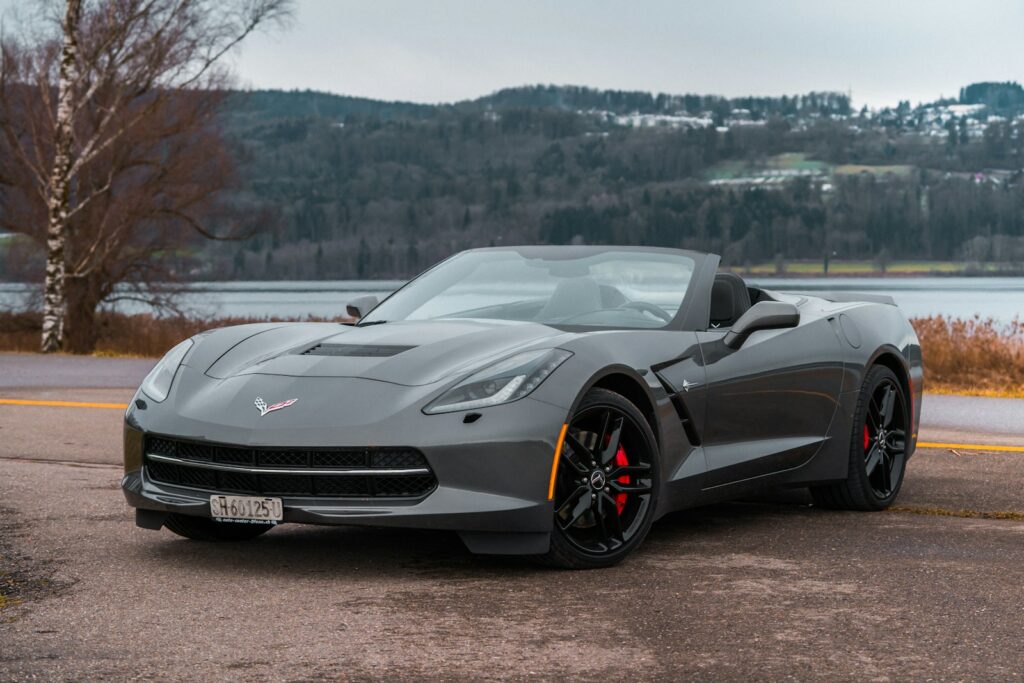
The listing that looked like a steal
The auction write-up was barebones, which somehow made it feel more legitimate. “Minor front-end damage” sat in the same font as the mileage and VIN, like it was just another neutral fact. There were no dramatic notes about frame issues, no “parts only,” none of the red-flag language people learn to fear after five minutes in any car forum.
The photos didn’t help, but not in a way that screamed disaster. The front looked slightly… off. The hood line wasn’t perfect and the driver’s side headlight looked like it was squinting, but plenty of cars look worse after a bad parking job. He zoomed in until the pixels turned into mush and decided what he was seeing was a bumper cover pushed in a bit.
He also noticed something that should’ve bothered him more: the airbags were listed as “unknown.” Not deployed, not intact—unknown. He rationalized it immediately, because that’s what you do when you’ve already started mentally spending the money you “saved.” Unknown could mean the inspector didn’t check, right?
The first hint something wasn’t adding up
The transporter called on delivery day and asked, casually, if he had a forklift. Not in a jokey way, either—like it was a practical question he asked people all the time. The buyer said no, just a garage, a jack, basic tools. There was a pause on the phone that made his stomach tighten before the driver said, “Okay. We’ll figure it out.”
When the truck finally backed in, the Corvette didn’t roll off the trailer like a car. It kind of crabbed down, reluctant, making a sound that wasn’t a squeak or a grind but a dull metal complaint. The front wheels weren’t pointed straight, and the driver was being way too careful for “minor damage.”
Up close, the front bumper cover wasn’t pushed in. It was cracked in multiple directions, like stress fractures in ice. The hood didn’t just sit uneven—it sat proud on one side, like the whole nose of the car had been picked up and shifted.
“Minor” starts to look like “structural”
He did the thing people do when they’re trying not to panic: he started poking at it. The fender liner was torn and hanging, the kind of rip you get when something got forced into the wheel well. The radiator support looked twisted, not smashed like a low-speed tap, but wrung, as if the front had absorbed a long, violent shove.
Then he opened the driver’s door and got hit with that stale, sweet smell that doesn’t belong in a car that “just needs a bumper.” Deployed airbag dust has a particular scent, and it was in there, faint but unmistakable. He leaned in and saw it—the steering wheel airbag had been stuffed back in like a crumpled napkin, the cover not even sitting flush.
He checked the passenger side and found worse. The dash airbag wasn’t just deployed; the dash itself had been cut and reattached like someone tried to perform plastic surgery with a box cutter. The glove box didn’t close. The trim pieces didn’t align. Nothing about it felt like an accident someone was honest about.
The paperwork that tells the real story
Most auction cars come with a little envelope or packet—tow yard receipts, inspection slips, whatever survived the shuffle. His had a handful of papers that looked like they’d been sat on, folded, unfolded, and shoved back in. At the bottom was a police crash report printout, the kind you’d only keep if you forgot it was there.
The speed estimate jumped off the page because it sounded like a typo: 120 mph. It wasn’t phrased like an accusation, either. It read like a conclusion reached by people who measure skid marks for a living and don’t care about anyone’s excuses.
The report described the driver losing control, crossing lanes, and meeting a guardrail so hard the car “rotated” and “came to rest” facing the wrong direction. It mentioned “significant front-end intrusion,” which is bureaucratic language for “the front of this car tried to become the cabin.” He reread that line three times, then went back outside and stared at the hood like it might confess.
The confrontation nobody enjoys
He called the auction company first, thinking maybe there was some mistake, some swapped description. The person on the phone was polite in the way someone is polite when they already know what they’re going to say. “The listing notes reflect the inspector’s assessment at the time,” they told him, as if “minor” was a philosophical opinion and not a claim.
He pushed, pointing out the airbags, the twisted support, the crash report with a triple-digit impact. The response tightened: auctions sell vehicles as-is, where-is. They suggested he file a dispute if he believed the listing was inaccurate, then started reading the policy like it was a script they’d recited to a hundred desperate people.
He tried the seller next, which was technically a salvage broker acting as a middleman. The guy didn’t deny anything, which almost made it worse. He just kept repeating that the car “starts and moves” and that “front damage is subjective.” When the buyer said “subjective doesn’t cover 120 into a guardrail,” the seller went quiet for a beat and then said, “Look, you got it cheap.”
The teardown that made it personal
Once the adrenaline wore off, anger turned into that grim curiosity you get when you realize you’re stuck with something and you might as well know how bad it is. He pulled the bumper cover and found zip ties holding pieces together like emergency stitches. Behind it, the crash bar wasn’t bent—it was folded.
He found fresh undercoating sprayed over wrinkled metal, like someone tried to paint over a bruise. A couple bolts on the radiator support looked new, but the metal they threaded into looked old and stressed, with little spider cracks around the holes. It wasn’t a repair so much as a disguise.
Then he noticed the small things that started to feel eerie. The seatbelt pretensioner had fired and been reset, but not replaced. The steering column had witness marks, the kind you see when the wheel takes a hit. It stopped being “a project car” and started feeling like someone had handed him the aftermath of a really bad night and called it “minor.”
He did the math out loud in his garage, like saying it would make it less true. Even if he sourced used parts, even if he did the labor, he was looking at a pile of money just to get it back to “maybe safe.” Frame measurement alone wasn’t cheap, and every new discovery felt like opening another bill.
He listed it for sale as a parts car and got messages immediately—people asking for the wheels, the seats, the engine. That’s when it hit him that the auction description hadn’t just been optimistic; it had reshaped what the car was in people’s minds. “Minor front-end damage” turns a wreck into a deal, and a deal into somebody else’s problem.
By the end of the week, the Corvette sat in his driveway under a cover again, except now it felt less like a prize and more like evidence. He hadn’t lost a lawsuit’s worth of money, but he’d lost something harder to name—the feeling that he could trust the basic language people use to describe damage. And every time he looked at that slightly cocked hood line, he couldn’t stop thinking about the moment it got that way, and how easily “minor” had papered over a guardrail at 120.
More from Steel Horse Rides: