

The customer rolled into the shop on a tow truck like he was delivering evidence to a courtroom. Mid-40s, clean polo shirt, clenched jaw, the kind of guy who already has his speech rehearsed before his shoes hit the pavement. The driver unhooked the sedan, and the customer didn’t even look at the car—he looked straight at the service counter like it owed him money.
He didn’t start with “Hi.” He started with, “You guys touched my car last month, and now the engine’s dead.” Not “running rough,” not “check engine light.” Dead-dead. He had a receipt in his hand and a tone that said he’d been replaying the alleged injustice on loop for days.
The shop manager didn’t argue right away, which somehow made the guy angrier. He wanted pushback. He wanted someone to say, “No, it’s not our fault,” so he could swing the hammer. Instead, the manager just nodded, asked for the keys, and said they’d need to verify what happened before talking about any “responsibility.”
The customer’s version was airtight (at least in his head)
According to him, the timeline was simple: he’d brought the car in for a routine service not long ago—“oil change and a quick check,” his words—and it had been fine. Then it started making “a weird ticking,” then it stalled, then it refused to start, and now it was sitting on a flatbed. He kept pointing at the receipt like it was a signed confession.
He wasn’t just frustrated; he was offended. He talked loud enough that the waiting area could hear, and he made sure to mention how much he’d spent, how long he’d been a customer “elsewhere,” how he “should’ve known better,” all the usual lines people use when they’re building a case. Every sentence ended with some version of “so what are you going to do about it?”
The shop employees did that careful, professional dance where they acknowledge the problem without accepting blame. The manager asked if he’d had the oil checked since the last visit, if any lights came on, if the car ever overheated. The customer answered like those questions were insults, as if asking for details was the same as accusing him of lying.
They popped the hood and the vibe changed
A tech pulled the car into a bay, and the customer hovered right at the edge of the “employees only” line like a guard dog. He wasn’t allowed past it, but he wasn’t leaving either. Every few minutes he’d mutter something just loud enough to be heard, little jabs about incompetence and “this is why people don’t trust shops.”
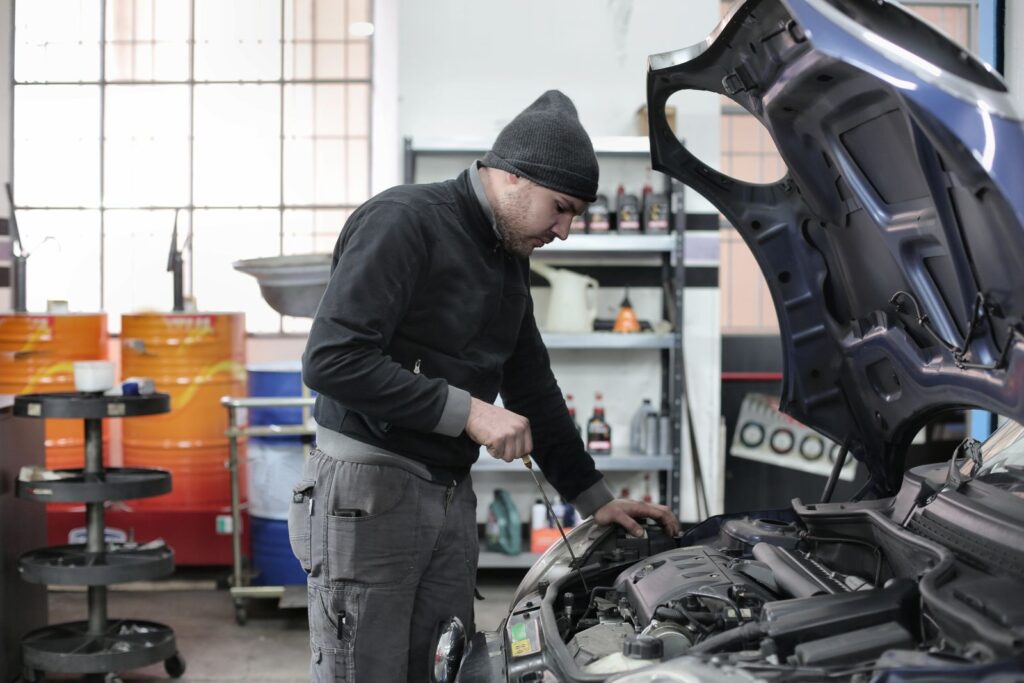
The mechanic started with the basics: battery, fluids, visible leaks, anything obvious that would explain an engine that wouldn’t even crank properly. Then he checked the oil level. Not “a little low,” not “needs topping off.” The dipstick came out looking like it had been dipped in black syrup, and the level was so low it barely registered.
The customer jumped on that immediately. “See? You didn’t put oil in it.” He said it with this triumphant anger, like the whole mystery was solved and now it was time for the shop to pay up. The manager didn’t respond to that part; he just told the mechanic to keep going and document everything.
The oil filter came out like a relic
When an engine dies and the oil is that ugly, a decent shop doesn’t just shrug and guess. They start looking for how it got that way, and whether it was neglect, a leak, or a part failure. The mechanic slid under the car, put a pan down, and went after the oil filter.
This is where the story takes that hard left into absurd. The filter didn’t come off clean. It came off like something that had fused with time itself—caked with grit, the paint burned dull, the surface textured like a fossil. It wasn’t just dirty; it looked like it had been dragged through several winters and then forgotten in a barn.
The mechanic held it up for the manager before he even said anything, and the manager’s face did that tiny tightening thing that means, “Oh… this is going to be a problem.” Not for the shop—just in general. The customer saw them looking at it and barked, “That better be the one you put on.”
The mechanic didn’t match his energy. He just turned the filter so the side faced out, wiped a streak with a rag, and pointed. There was writing on it—faded and half-obscured, but there. The brand didn’t match what the shop used, and neither did the part number format.
The receipt didn’t match reality, and the customer doubled down
Now it turned into a weird standoff where everyone was staring at the same ugly cylinder. The customer’s argument was basically: “I have a receipt, therefore you did this.” The shop’s argument was: “We can literally see the filter, and it’s not ours.”
The manager went inside, pulled up the invoice on their system, and printed it again with details. It listed the oil type, the filter part number they’d installed, and the mileage written down at the time of service. Then he walked back out and asked the customer, calmly, if he’d had anyone else change the oil recently. Not accusing, just asking.
The customer snapped that he wasn’t stupid, he knew what he paid for, and he didn’t have time for “games.” He kept saying the shop was trying to “cover” and “gaslight” him, like he’d rehearsed those words too. The awkward part was that he was using them while the mechanic was holding an oil filter that looked like it predated the car.
So the manager did the thing that tends to either end arguments or make them explode: he asked permission to show the customer something up close. He walked him to the bay edge and, without crossing any safety lines, angled the filter so the customer could read the markings. The customer leaned in, squinted, and his confidence wobbled for the first time.
The timeline came out in fragments
It didn’t turn into a neat confession. It turned into the kind of messy backpedaling people do when they’re trapped between embarrassment and pride. The customer started talking about how his “buddy” had done some work on the car, not an oil change, just “stuff.” Then he mentioned a quick-lube place he’d stopped at “a while ago,” because the line was short and he was in a hurry.
The manager stayed infuriatingly calm and asked what “a while ago” meant. The customer said, “I don’t know, months.” The mechanic, still holding that battered filter like a prop, said something like, “This isn’t months old,” and didn’t elaborate because he didn’t need to. The filter looked like it had survived a small war.
They cut it open, because if you’re already in a fight about responsibility, you might as well go full autopsy. Inside, the filter media was collapsed and clogged, a nasty, compacted mess that suggested the engine had been circulating dirty oil for a long time. The mechanic explained, in plain language, what happens when oil changes don’t happen: sludge, restricted flow, starving bearings, heat, wear, and eventually a catastrophic knock that turns into silence.
The customer tried to pivot again—maybe the shop should’ve caught it last time, maybe they should’ve “warned” him, maybe they should’ve refused to let him drive off. But the invoice mileage was right there, and the engine’s current mileage was way past it. If the shop had actually changed his oil when he claimed, the filter would’ve been clean enough to prove it without anyone saying a word.
What really made it sting was that there was no dramatic “gotcha” moment where the customer apologized and everyone moved on. He got quiet, then angry in a different way—less righteous, more cornered. He started talking about how the car “never used to do this,” how modern engines are “too sensitive,” how he “hardly even drives that much,” as if mileage and time aren’t both things oil cares about.
The manager told him the options: pay for tear-down diagnostics and see if the engine was salvageable, or tow it out and decide what to do next. No free engine, no shop-funded miracle, because the evidence didn’t support his story. The customer stared at the dead car like it had betrayed him, then stared at the filthy filter like it was an accusation with threads.
He didn’t leave yelling. He left tight-lipped, with that same receipt folded smaller now, like it could be hidden if it was small enough. The shop didn’t “win” anything except the right not to be blamed, and the customer didn’t “lose” anything except an engine and whatever pride he’d brought in on that tow truck. The nasty part, the thing that lingered, was how close it came to becoming a full-blown accusation—until one archaeological oil filter turned the whole story inside out and left everyone standing there with nowhere comfortable to put their eyes.
More from Steel Horse Rides: