


She only wanted her car to feel normal again.
The woman had dropped it off for a deep clean after weeks of telling herself she was imagining things—an extra whiff of sweetness when the AC kicked on, a faint chemical floral note that didn’t belong to her detergent or any of the air fresheners she refused to buy. Her husband had brushed it off like she was being dramatic, like cars just “pick up smells.” Still, she booked a detail anyway, partly for peace of mind and partly because she was tired of second-guessing her own nose.
When she picked the car up, it looked incredible. The mats were shampooed, the dash had that matte, not-greasy finish, and the whole interior had that crisp “reset” smell that only happens when someone else does the scrubbing. Then she flipped down the passenger-side visor to check the mirror, and there it was: a lipstick smear, half-wiped, stamped like someone had panicked and tried to erase it with a sleeve.
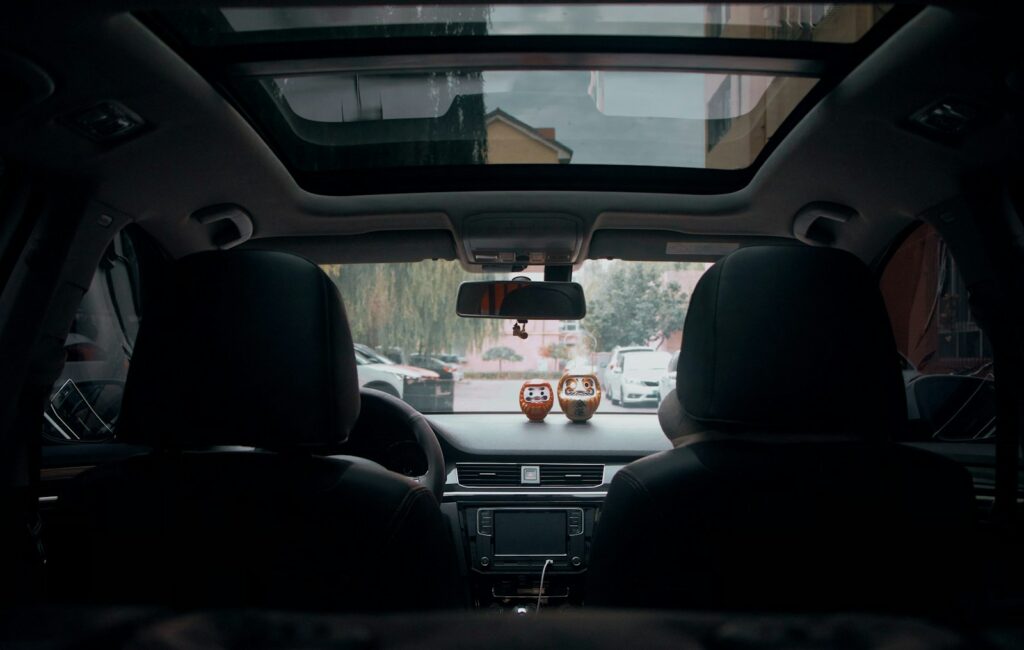
The tiny mark that ruined the whole cleaning
It wasn’t a dramatic red kiss print, the kind you’d see in a movie. It was worse than that: subtle, real, the kind of imperfection that proves a human mouth had been there. Not her shade, either—she knew her shades, knew what she kept in her purse, knew what ended up on her coffee lids and what didn’t.
At first she tried to talk herself out of it. Maybe it was old. Maybe it was from before they bought the car, somehow surviving years of sun and dust, only now uncovered by the detailer’s work. But she’d used that mirror plenty of times; she’d adjusted the visor when she drove into the sun, checked her teeth after lunch, rolled her eyes at herself in traffic. She would’ve seen it.
She didn’t storm back into the shop right away. She sat in the driver’s seat with the visor still down, staring at the smear like it might rearrange itself into an explanation. Then she grabbed her phone, took a photo, and turned the car around.
Back to the shop, and the first round of awkward
The detail shop was one of those places that felt half garage, half waiting room—industrial fans, the smell of tire dressing, a tiny couch near a coffee machine that looked like it was always empty. The woman walked in holding her keys and her phone, trying to keep her voice level. She asked if the passenger visor had been cleaned, like she was just curious, like she wasn’t about to hand someone a grenade.
The guy at the counter—young, polite, clearly trained to apologize reflexively—said yes, they wiped everything down. When she showed him the photo and then walked him out to the car, he leaned in close, his expression changing the second he saw it. It wasn’t confusion. It was recognition, like he’d stepped into a mess he already knew was there.
He did the first thing people do when they’re stalling: offered to clean it again. “We can take care of that right now, no charge,” he said, already reaching for a microfiber cloth from his pocket. She stopped him, because cleaning it wasn’t the point anymore. The point was how it got there and why it hadn’t been dealt with during the detail, unless someone had wanted it missed.
“Was someone in my car?”
She asked it straight, not loud but sharp enough that the guy’s shoulders tightened. “Was someone in my car besides your staff?” she said. He answered too quickly: no, of course not, only employees, the car never leaves the bay. The thing is, he didn’t sound offended. He sounded scared.
That’s when she noticed another detail that didn’t match the “freshly cleaned car” story. The passenger seat was pushed back farther than she kept it, reclined a notch, like someone taller had been lounging there. Maybe a worker vacuuming had adjusted it, sure, but combined with the lipstick, it made her stomach drop in a way she couldn’t talk herself out of.
She asked the guy to pull up the service notes. What exactly had she paid for? The receipt showed the package she’d chosen—interior deep clean, carpet extraction, odor neutralizer. Then there was an add-on line that hadn’t been mentioned on the phone when she booked it: “Special odor treatment – perfume.”
The moment the detailer said too much
She pointed at that line and said she hadn’t requested it. The employee’s face did that weird flicker people get when they’re debating whether lying is easier than the truth. He started to say it was “recommended,” then stopped, then finally admitted that the request hadn’t come from her.
Her husband, he said, had called earlier in the week.
Not to surprise her with a gift certificate or to pay for an upgrade because he was sweet like that. He’d called to pay extra specifically to remove a perfume smell. The employee explained it in the careful, reluctant way someone does when they’re trying not to get dragged into a couple’s war: the husband said there’d been “a spill,” that the smell was “stuck,” that it needed special treatment because his wife was sensitive to scents.
The woman just stood there with her keys digging into her palm. It wasn’t even the idea that perfume could spill; it was the precision of the cover story, how pre-planned it sounded. And now she had a receipt proving a conversation she was never supposed to know happened.
How the story started cracking in real time
She asked the employee if he’d noticed the smell himself. He hesitated again, then admitted yes, it was pretty strong when they first opened the doors. Not “new car deodorizer” strong—like a person had been wearing it, like it had lived in the upholstery for a day. He didn’t say “women’s perfume,” but he didn’t have to; he kept saying “perfume” the way someone does when they’re trying to avoid saying “her.”
She asked if the lipstick had been there when they started. The employee looked down at the ground, and that was basically an answer. He said they cleaned the visor, but sometimes makeup stains set, sometimes they need a stronger product, sometimes they don’t want to risk damaging the fabric. It was a string of maybes tossed out like sandbags against a flood.
Then she asked the question that made everything go quiet: “Did my husband tell you anything else?” The employee swallowed, glanced back toward the shop, and said no. But his voice came out small, like he was hoping she’d stop asking.
She didn’t. She asked who he spoke to, how the payment was made, and whether her husband came in person. The employee confirmed the name on the card matched her husband’s, and that he’d insisted on adding the perfume treatment. The lipstick, he said, wasn’t something her husband mentioned, and he sounded almost apologetic when he admitted that, yes, it was strange.
The car ride home with the wrong kind of clean
She left without letting them wipe the visor again, because she wanted it exactly as it was. That smear had turned into evidence in her mind, something tangible she could point to when she knew she was about to be told she was paranoid. The car smelled “neutral” now, but the neutrality didn’t feel clean—it felt scrubbed, like someone had tried to erase a scene.
When she got home, she didn’t even go inside right away. She sat in the driveway and scrolled back through photos on her phone, looking for anything she’d missed: the day she picked up groceries and noticed the passenger seatbelt was twisted, the time she found a bobby pin in the console and assumed it was hers. Every harmless little detail suddenly lined up like it had been waiting for a headline.
Her husband came out when he heard the car door close. He asked how it went, casual, trying for normal. She handed him the receipt without a word and watched his eyes go straight to the line item like he already knew exactly where the problem was.
He didn’t explode. He didn’t confess. He tried to do something subtler—he laughed once, short and fake, and said he’d only called because he didn’t want her to complain about the smell. He said a coworker had ridden with him, that the coworker “wears too much cologne,” that it got into the seats. When she pointed at the lipstick, he said it must’ve been from the detail shop, like a worker leaned in and brushed it by accident.
And maybe, in another universe, that could’ve been enough to confuse someone. But not with the perfume treatment. Not with him paying extra to remove it. Not with the visor stain that looked exactly like someone had tried to wipe it away before she ever got in the car.
The mess wasn’t that the car had been dirty. The mess was that it was too clean in the exact places it needed to be, and now she had to decide what to do with the kind of suspicion that doesn’t go away even if you scrub harder. She still had the lipstick on the visor, still had the receipt, and still had a husband insisting she was connecting dots that weren’t meant to be seen—while every new “explanation” just sounded like another layer of deodorizer sprayed over the truth.
More from Steel Horse Rides: