

It started like a hundred other gripes that hit a small auto shop on a Monday morning: a guy stomping through the front door with that tight, simmering energy like he’d been rehearsing the argument in the car. He didn’t come in for an oil change or a quote. He came in to accuse someone of stealing from him.
He’d dropped his pickup off the previous afternoon for a basic service—nothing exotic, nothing that should’ve involved a test drive long enough to burn through fuel. But when he picked it up, he swore the gas gauge was lower than it should’ve been. And he wasn’t saying “maybe.” He was saying “I know what you did,” loud enough that the waiting room turned into an audience.
The shop manager—one of those people who can talk down a boiling customer without sounding like they’re backing down—kept asking the same questions. How much gas was in it when you brought it in? Did you take any photos? Did any warning lights come on? The customer didn’t have details so much as certainty, and he kept circling back to the same claim: somebody in the shop siphoned his tank.
The Accusation Gets Personal
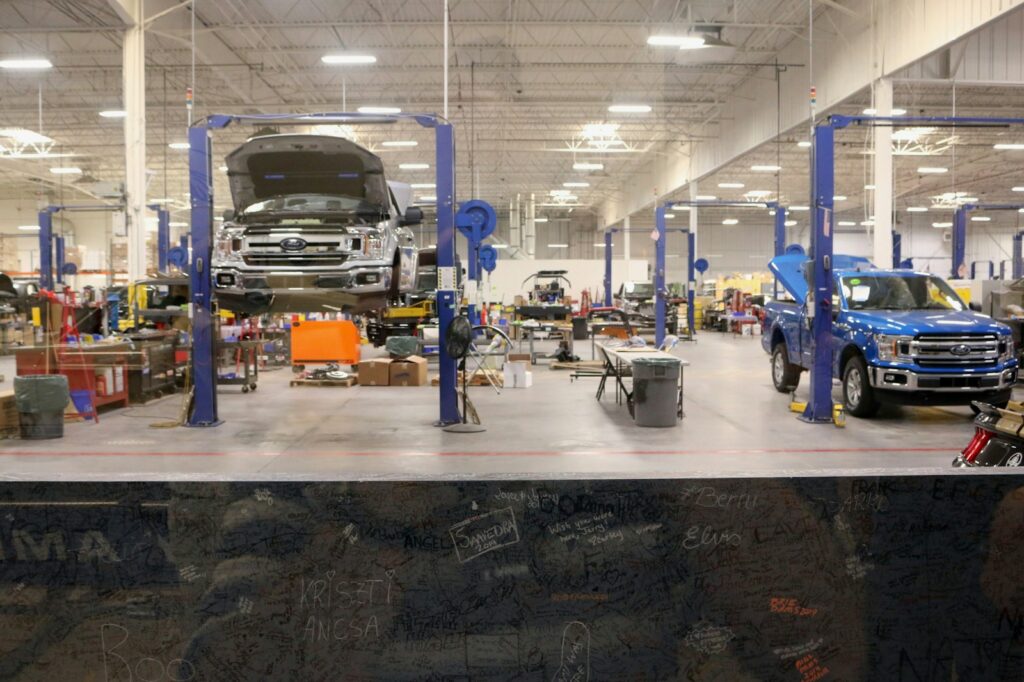
Once the word “siphon” hit the air, the vibe shifted from normal complaint to outright allegation. The customer wasn’t just annoyed about ten bucks of fuel; he was treating it like a character issue. He pointed at the service bays through the window and said something along the lines of, “Don’t play dumb. I know how you guys do it.”
The staff did the usual: they checked the invoice, confirmed what work was done, and asked the tech if the truck was moved beyond the lot. The tech shrugged—yeah, it was pulled in, pulled out, maybe idled a little while they checked something. No one took it for a joyride. No one had any reason to crack a gas cap, and the shop didn’t even keep siphon hoses sitting around like props in a cartoon crime.
But the customer kept pushing for a “real answer,” and it got awkward fast. He was leaning over the counter, voice up, making it clear he wanted someone to admit guilt. When the manager suggested the gauge could’ve been read differently depending on slope, temperature, or how long it sat, the guy snapped back that he wasn’t an idiot and he watched that needle like a hawk.
The Shop’s Calm, Boring Evidence
Some shops would’ve caved just to make the headache go away—hand him a gift card, apologize for “the inconvenience,” and pray he never comes back. This manager didn’t do that, partly because accusations of theft aren’t something you just smooth over. If you let someone walk out believing your techs steal gas, you’re basically volunteering your reputation to be torn apart later.
So the manager did something annoyingly reasonable: he offered to look at the security footage. The shop had cameras pointed at the bays and the lot, mostly for insurance and the occasional “who backed into what” argument. The customer actually seemed energized by that, like he expected a crisp video of a mechanic with a hose and a guilty face.
They pulled up the footage in the back office, and for a few minutes it looked like the shop was about to win by being boring. The truck got parked where it was supposed to be. It got pulled into a bay. The hood went up. The tech moved around the front end, not the rear quarter panel. No one lingered by the fuel door. No suspicious bending, no containers, no late-night creepiness.
And that’s when the manager asked a question that landed with a thud: “Do you have a dashcam?” The customer hesitated, then said yes—front and rear—because he “doesn’t trust people.” The irony didn’t hit him yet, but it hit the room.
The Dashcam Becomes a Second Crime Scene
They didn’t even need to take the truck back apart. The customer went out, climbed in, and started scrolling through the dashcam’s stored clips on the screen like he’d done it a hundred times. The manager and one service writer stood a polite distance away, close enough to see but not so close it felt like they were looming.
At first, it was just normal shop footage: the truck arriving, a bit of the parking lot, the bay door swallowing the view. Then there was a stretch where the rear camera showed the truck sitting in the lot after hours. It was quiet, the kind of stillness that makes you realize how much of your day is noise you’ve stopped noticing.
A figure walked into frame from the side—hoodie, baseball cap, moving with that casual confidence of someone who knows the place. He didn’t look like a shop employee. He didn’t even look like someone trying to hide. He walked right up to the truck’s fuel door, popped it open like it was his own vehicle, and crouched down with a container and a length of hose.
The customer made a sound—not a word, more like a sharp inhale he couldn’t control. He leaned closer to the screen, as if proximity could change what he was seeing. The manager didn’t say anything yet, which somehow made it worse, because the silence left the video to speak for itself.
Recognizing the Hoodie
The camera angle wasn’t cinematic, but it was clear enough. The kid—because the body language screamed teenager—worked fast and practiced, like he’d done it before. He didn’t fumble around, didn’t look over his shoulder every two seconds. He kept the container low, did the siphon routine, and then stood up like he’d just borrowed a pencil.
And then he looked directly toward the rear camera for half a second, either because he heard something or because he was checking for witnesses. That half-second was all it took. The customer’s face changed in a way that was almost physical, like embarrassment and anger fought over the same piece of real estate.
Because it wasn’t a stranger. It wasn’t a shop tech. It wasn’t some thief casing the lot. It was his son.
The customer didn’t announce it dramatically. He just went quiet, jaw clenched, eyes glued to the screen while the kid in the video capped the container and walked out of frame. The service writer glanced at the manager, the kind of look that says, Are you seeing this too? and the manager kept his voice measured when he finally spoke: “That’s not our staff.”
What Do You Even Say After That?
The customer tried to salvage it for about ten seconds. He mumbled something about how the kid must’ve been “messing around” or maybe “checking something.” But the video didn’t leave much room for interpretation; it was siphoning, plain as day. The kid had a dirt bike container—the squat, portable kind people use in garages—and he handled it like a routine.
Now the argument wasn’t about whether the shop stole gas. It was about why the customer’s son had access to the lot after hours. That’s where the shop’s cameras came back into it, because once they rewound a little further, it showed the kid walking in like he knew exactly where to go.
Turns out the customer had dropped the truck off with his spare key inside the vehicle—apparently a habit, apparently something he’d done before because it “makes it easier.” He’d also told his family where the truck would be, and his son, who’d been riding a dirt bike more than the dad liked, solved his fuel problem in the most direct way possible. Not stealing from a gas station. Not asking. Just draining it from Dad’s truck while it sat overnight at a shop.
The customer’s anger didn’t disappear; it just redirected. He wasn’t yelling at the manager anymore, but he still had that buzzing energy, like he needed somebody to fight. He asked the shop to “hold onto” the footage. The manager agreed, but not in a buddy-buddy way—more like a firm boundary: they’d cooperate if needed, but they weren’t getting dragged into a family blowup.
And the most uncomfortable part was that the shop still had to address the original accusation. The manager didn’t gloat, didn’t throw it back in his face, but he did calmly make it clear: if you accuse people of theft, you don’t get to just pretend that didn’t happen once you’re proven wrong. The customer muttered something that might’ve been an apology, the kind that’s more about escaping than owning it, and asked for his keys.
He drove off with the same truck, the same lower gas gauge, and now a whole new problem waiting at home—one that wasn’t going to be solved by yelling at a counter. The shop kept the footage, tightened their “no keys left in vehicle” reminders, and went back to work, but you could tell that accusation left a residue. Not because it was dramatic, but because it was so personal: a guy was ready to ruin strangers over gas, and the truth was it was draining out of his life from much closer than he wanted to admit.
More from Steel Horse Rides: