
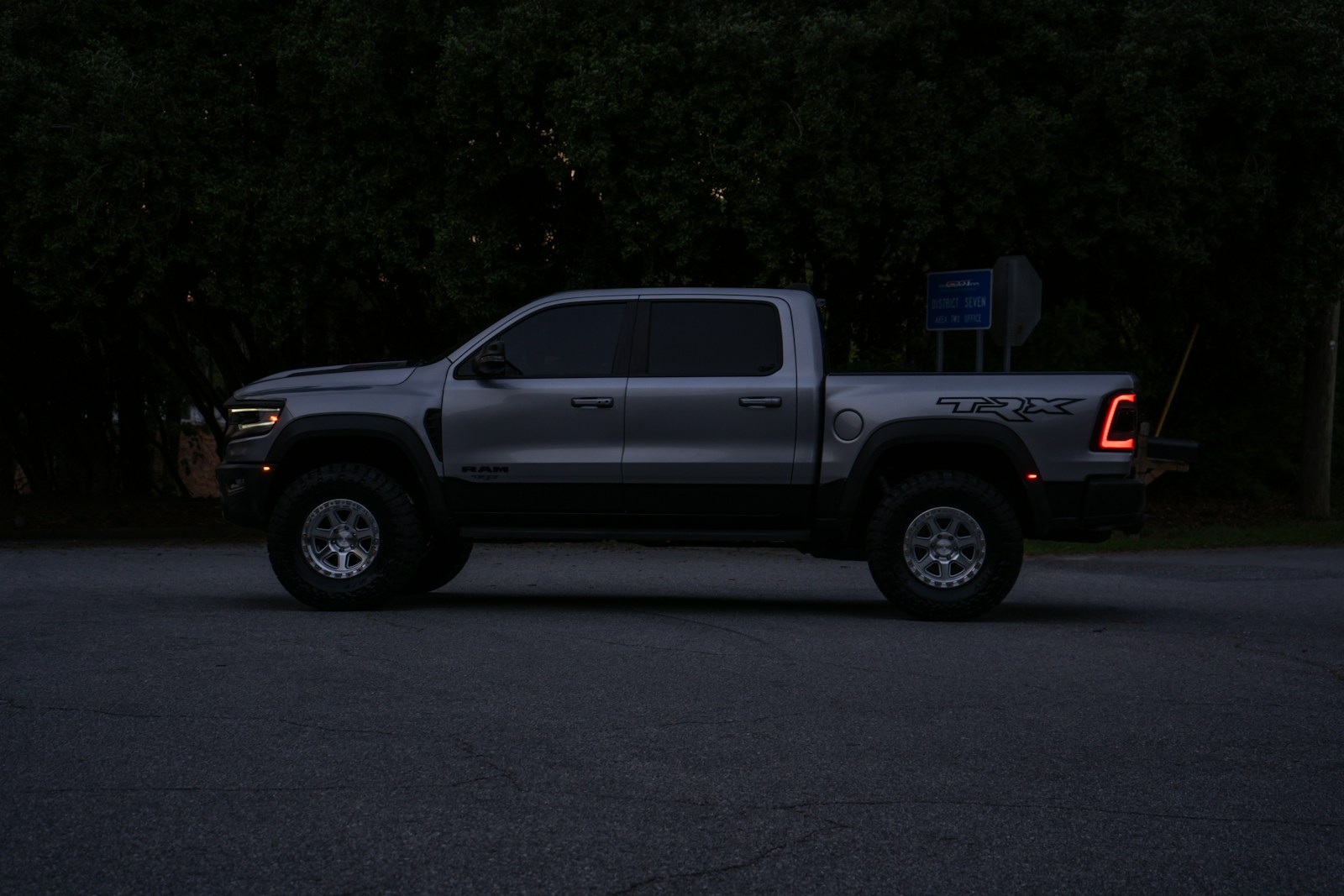

He didn’t even notice it at first. It was late, the kind of late where the parking lot lights feel dimmer than they should, and he was mostly thinking about getting upstairs, feeding the dog, and forgetting the entire day existed.
The truck was parked in its usual spot outside his apartment building, nose-in like always. He hit the key fob, the lights blinked, and that was when the scrape caught his eye—an ugly, fresh-looking streak running along the driver’s side, catching the light at the wrong angle. He stepped closer and felt that cold little drop in the stomach: this wasn’t a stray shopping cart.
He’d had a feeling something like this was coming, which is the part that makes it so weirdly depressing. His ex had been spiraling since the breakup—nothing dramatic in a movie sense, but the kind of constant low-grade chaos that keeps your phone on silent and your curtains drawn. He’d installed a dashcam a month earlier mostly for insurance, telling himself it was just “being responsible,” while quietly hoping he’d never have to use it.

The breakup that didn’t actually end
He and his ex had split a few weeks back, and from the outside it sounded like a standard mismatch. He wanted space, she wanted “closure,” and the definition of closure seemed to keep changing depending on how recently she’d texted. She still had a couple things at his place, which meant she still had an excuse to show up.
At first it was the predictable stuff: “Can I grab my hoodie,” “Did you find my charger,” “We should talk for five minutes.” Then it turned into showing up unannounced and staying in the parking lot with her car running, like she was waiting for him to come outside and play his part. He stopped answering the door, stopped answering most messages, and tried to let it burn out.
There were other tells too—mutual friends warning him she’d been asking questions, his neighbor mentioning someone “looking around” the other night. Nothing he could take to a landlord or the cops without sounding paranoid, but enough to make him double-check his locks. The dashcam went in after she’d left him a voicemail that was less “I miss you” and more “I’m not done with this.”
The damage that didn’t look random
When he got close enough to see the scratches clearly, it was worse than a single line. There were multiple gouges, overlapping and jagged, like someone had gone at the door and fender with a key and got bored halfway through. The paint curled slightly at the edges, bright and raw under the streetlight.
He did that thing people do when they’re mad but trying to stay calm—walking around the truck, hands on his head, checking each panel like maybe it would stop being real if he inspected it thoroughly enough. The passenger side had a couple of smaller hits, too, and there was a deep drag across the back near the taillight. It was targeted, personal, and messy in a way that said whoever did it wasn’t thinking about consequences.
He considered calling the police right there, then hesitated, because he didn’t want to be the guy who calls over a keyed truck with no proof. And then he remembered the little black camera stuck behind his rearview mirror. He got inside, didn’t even take his shoes off, and pulled up the footage on his phone with his thumb already tense over the screen.
The dashcam footage that changed the whole vibe
Dashcam footage at night is always grainy and unsettling, like you’re watching your own life through a security monitor at a gas station. The camera caught his truck sitting still, the empty lot, the swaying shadows from the few trees near the curb. Then headlights washed over the scene, a car rolled in slowly, and parked a little too far away for “just visiting someone.”
Two figures got out. One was smaller and moved with that quick, tight energy of someone already angry, shoulders hunched and purposeful. The other was older, slower, and stood back like she was trying not to be seen but also not trying very hard.
What made his skin crawl was the moment the older woman lifted her arm and a bright beam of light snapped on. She held a flashlight steady, angled perfectly at the truck’s side like she was lighting up a workbench. The younger woman stepped into the beam, reached toward the paint, and started scraping.
It wasn’t ambiguous. You could see the arm motion, the repeated jabs, the way she leaned into it when the key caught. And you could also see the flashlight-holder adjusting her stance to keep the light trained on the exact spot, tracking the movement like a stagehand following an actor.
When “it wasn’t me” stopped being an option
He watched it twice, then a third time, because his brain kept trying to deny what his eyes had already accepted. The younger woman’s face turned slightly toward the camera at one point—just enough for him to recognize the profile, the hair, the way she tilted her chin when she was mad. And the older woman, the one with the flashlight, was her mom.
There’s something uniquely humiliating about realizing you’re not just dealing with an ex’s bad decision, but an entire family participating like it’s a group project. The mom wasn’t trying to pull her daughter away or tell her to stop. She was assisting, calmly, like she’d driven over with the specific intention of making sure her daughter could see what she was ruining.
He didn’t call his ex right away. He sat there with the phone in his hand and let the anger build into something heavier—disappointment, disbelief, that weird kind of grief you get when you realize someone you cared about is capable of being this petty. Then he finally texted her a simple line asking where she was, keeping it neutral on purpose.
She replied quickly, too quickly, like she’d been waiting. “Home. Why?” He asked again, slightly more direct, whether she’d been at his apartment. She denied it immediately, and then added a “stop accusing me” that came with a few extra exclamation points, like punctuation could create an alibi.
The confrontation, the denial, and the flashlight detail
He sent one screenshot first—just the two silhouettes, the beam of light cutting across the truck. Her response shifted from offended to cautious in about thirty seconds. “That could be anyone,” she said, which is a classic line when you know you’re in trouble but want to see how much evidence exists.
Then he sent the clip. Not the whole thing, just enough to show the scratching motion and the mom holding the flashlight steady like she’d done it before. That’s when the messages started coming in bursts: “I can explain,” “We just came to talk,” “It wasn’t like that,” and then, oddly, “Why do you even have a camera in your own car?”
He didn’t respond to that one. He asked a single question instead: why her mom was there. Because that was the part that stuck in his throat, the part that made it feel less like impulsive rage and more like a planned little mission.
The ex tried to pivot to old arguments—how he “made” her feel, how he “never listens,” how this was “what happens when people push someone too far.” The tone kept swinging between apologetic and accusing, like she couldn’t decide whether she wanted forgiveness or a fight. The mom didn’t text at all, which somehow made it worse, like she was above it or like she’d already rationalized her role as “support.”
He ended up calling the non-emergency line anyway, because the reality was sitting right there on his screen: faces, actions, a clear timeline. He also filed an insurance claim, because the scratches weren’t small and the paint repair estimate was going to sting. He saved the original footage in three places, because he’d learned the hard way that people who do stuff like this tend to also do stuff like “accidentally” delete evidence if they ever get access.
The ex shifted again once she realized he wasn’t going to argue. Now it was bargaining—she’d pay for it, she’d “make it right,” can they just handle it privately, please don’t make this a legal thing. Her mom finally called him once, and left a voicemail that was mostly tight-lipped indignation and a suggestion that he was “overreacting” to a “mistake.” The word mistake did a lot of work in that message.
By the next day, he’d blocked both numbers and started documenting everything, because this wasn’t about a truck anymore. It was about how comfortable they were showing up at night, together, and doing something destructive while assuming they’d get away with it. The scratch marks could be repainted, but the image from the dashcam—the mom holding the flashlight steady, patiently, like a crime scene assistant—was the kind of detail that didn’t wash off.
And that’s where the story gets stuck in your head: not just that an ex keyed a truck, but that she brought her mother along to help her see better. It’s the teamwork that lingers, the quiet coordination of it, and the question that hangs there even after the police report and the body shop quote—if they were willing to do that so casually in the dark, what else were they willing to do when they felt justified?
More from Steel Horse Rides: