

He noticed the smell first in the most dismissible way possible: a quick whiff of something hot and plasticky, like a cheap phone charger left on a space heater. It came and went with the airflow when he turned onto his street, just enough to make him glance at the dashboard like it might provide a clue.
The car was running fine. No warning lights, no weird noises, no smoke curling out from under the hood like in a movie. He told himself it was probably a truck ahead of him, or someone burning trash, or his own imagination catching up with the fact that his car was getting older and had started making “character noises” over the last year.
By the time he pulled into his driveway, he’d already decided the smell wasn’t worth turning into a whole thing. He parked, grabbed his bag, and headed inside like a person who absolutely did not have time to babysit a vehicle that, as far as he could tell, was behaving.

The smell that wouldn’t commit to being a problem
The annoying part was that the smell didn’t fully leave him alone. When he opened the door, it puffed up again—stronger now, like heated rubber—then faded once he stepped away. He did the little half-turn back to the car that people do when they’re trying to look responsible without actually committing to being responsible.
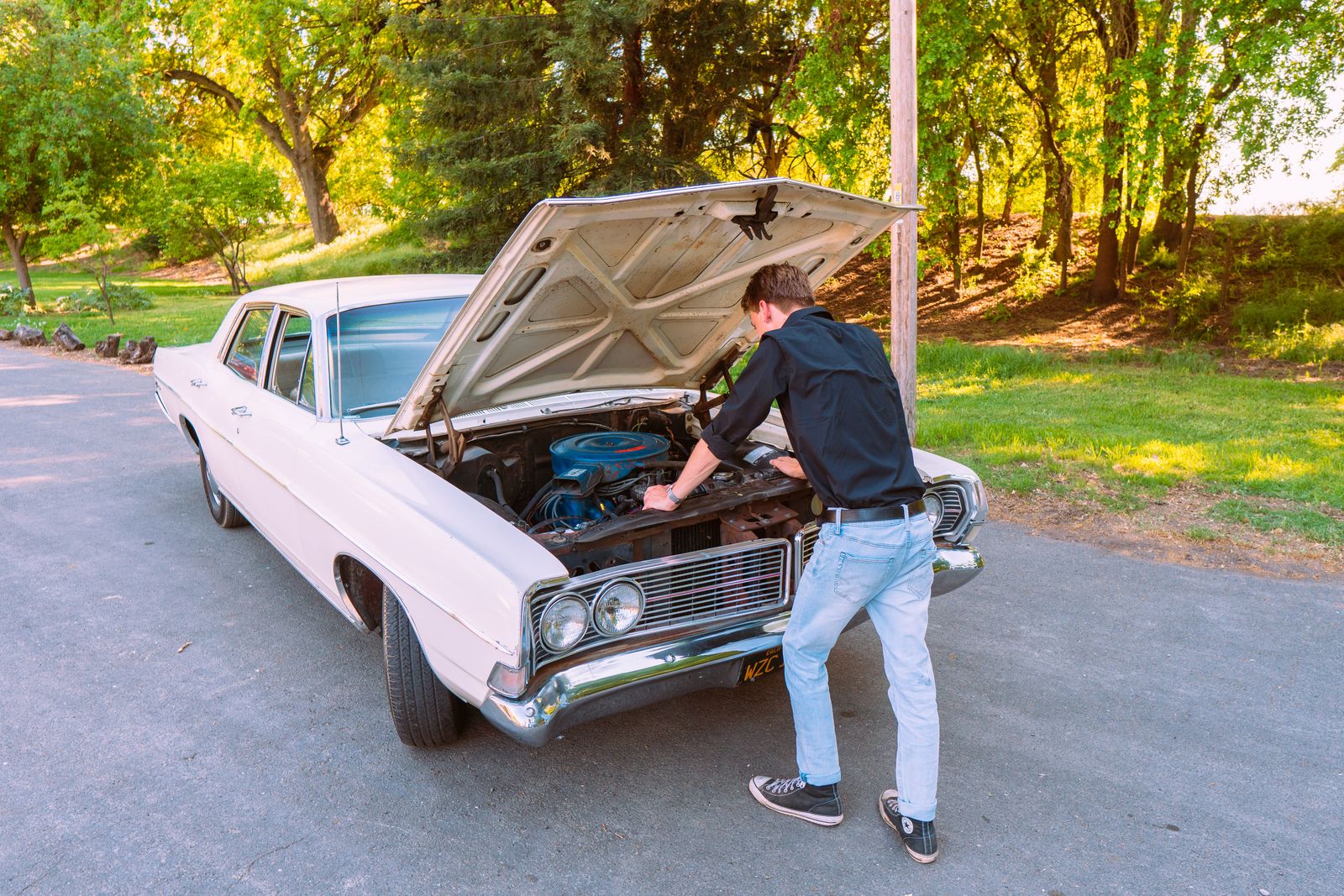
He popped the hood, because that’s what you do when you’re not sure what else to do. Nothing obvious: no flames, no dramatic smoke, no hissing. The engine bay looked like an engine bay—dusty, cramped, and full of parts that all seemed equally capable of ruining your day.
He stood there for a minute with the hood up, sniffing like a confused dog. The smell was there, but not screaming; more like it was lurking, intermittent, and honestly kind of easy to talk yourself out of. He shut the hood, told himself he’d keep an eye on it, and went inside to start dinner.
Everybody has an opinion, nobody has a fire extinguisher
Inside, the smell followed him in a weird psychological way. He kept catching phantom versions of it while he was washing his hands, while he was looking in the fridge, while he was answering a text. Every time he thought about going back out, he had an equal and opposite thought about how ridiculous it would be to hover over a parked car like it was a ticking bomb.
His partner asked, casually, “Is that you? You smell like… burning.” He brushed it off with the same logic he’d used in the driveway: it was probably outside, it was probably nothing, the car was fine. He even made a joke about how everything “smells like burning” once your brain gets bored and starts inventing danger.
Later, one of the neighbors wandered over to grab a package that had been dropped at the wrong house. They did the normal small talk, and then the neighbor, mid-sentence, squinted toward the driveway and said something like, “You guys grilling?” He wasn’t grilling. The neighbor shrugged in a way that made it seem like maybe he was being paranoid too.
That was the thing about the whole lead-up: nobody had a big red moment where they said, “Hey, your car is about to light up.” It was all half-observations, quick sniffs, and mild uncertainty, the kind of signals that are easy to ignore until they aren’t.
The driveway goes from boring to urgent in seconds
A couple hours later, he went to take out the trash. It wasn’t a planned inspection of the car, just a normal loop through the house. When he opened the front door, the smell hit him harder and sharper, like someone had struck a match right under his nose.
He stepped onto the porch and finally saw what his brain had been trying to avoid imagining: a thin ribbon of smoke rolling out from the front of the car. Not a lot at first—just enough to make the streetlights look hazy around the hood line. Then it thickened like it had been waiting for an audience.
He did that frozen, useless half-step forward that people do when their brain is loading an emergency. Then he yelled for his partner, and his voice came out higher than he expected. The trash bag landed on the porch with a soft thud like it was embarrassed to be part of this.
He sprinted down the walkway and yanked the hood release. When he popped the hood, the smoke surged, and for a second he didn’t even see flames—just a rolling gray mass and the smell of something electrical cooking itself to death. Then a flicker of orange showed up near one side, low and tucked back where hands don’t fit.
Panic logistics: water, 911, and the neighbors in slippers
His first move was the classic bad idea: water. He ran for the hose like it was going to solve the universe, but the hose was coiled, and the nozzle was stuck, and the spigot did that thing where it takes a full second to actually give you pressure. By the time he got water flowing, the flames had stopped being a “flicker” and started being a “problem with confidence.”
His partner was already on the phone with emergency services, giving the address, trying to sound calm while staring at their car becoming a torch in the driveway. The operator asked questions that felt absurd in the moment—anyone trapped, any nearby structures, any fuel leaks—like this was a checklist instead of a scene. His partner answered anyway, because that’s what you do when you want to keep your brain from dissolving.
The neighbors started appearing the way they always do when something is on fire: abruptly, underdressed, and holding nothing useful. One neighbor came out in socks with their phone up, then lowered it, apparently remembering that filming your neighbor’s crisis is a weird look. Another guy shouted, “You got an extinguisher?” like he was asking to borrow sugar.
Someone finally did have an extinguisher—a small one from a garage shelf that looked like it had been bought once and never thought about again. They tried it, but it ran out fast, and the spray didn’t reach the deepest part of the engine bay where the fire was feeding. The flames kept coming back, licking up and then dropping down again like they were testing boundaries.
Meanwhile, the hose water mostly turned into steam and made the smoke thicker. The heat was intense enough that everyone started backing up without discussing it. That’s when the fear shifted from “our car is on fire” to “our house is right there,” and suddenly the driveway felt way too close to everything they owned.
After the sirens: what’s left, and what nobody wants to admit
The fire crew arrived fast, but time stretches when you’re watching your property burn. They moved with that practiced speed that makes your earlier flailing look even more pathetic. One of them popped the hood wider with a tool, another aimed the hose directly into the engine compartment, and the fire finally started losing its attitude.
When it was over, the car didn’t look like a car so much as a cautionary object. The front end was charred, the plastic components had melted into odd shapes, and the air still smelled like burnt wiring and hot metal. One firefighter asked when he’d first noticed the smell, and the question landed like a quiet accusation even though it probably wasn’t meant that way.
He admitted the truth: hours ago, on the drive home. He said he’d checked under the hood and didn’t see anything, which sounded weak the moment it left his mouth. The firefighter nodded in that noncommittal way that could mean “happens all the time” or “you got lucky you’re not standing in ashes,” and it was impossible to tell which one it was.
After the trucks left and the neighbors drifted back inside, the couple stood in the driveway staring at the wreck. The adrenaline drained out and left behind the quieter stuff—self-blame, embarrassment, and that sick feeling of realizing how fast normal life can flip. He kept replaying the earlier moment when he’d closed the hood and walked away, like the universe had offered him a chance to rewind and he’d shrugged at it.
They weren’t even arguing in the dramatic way people expect; it was worse than that, all tight voices and clipped questions about insurance, towing, and whether the smell had been stronger at any point. His partner kept saying, “I asked you if it was burning,” not like a lecture, more like a fact that wouldn’t sit down. And he didn’t have a satisfying defense—just the same flimsy explanation that it didn’t look serious until it suddenly, violently was.
By the end of the night, the driveway was stained, the air was still weirdly acrid, and the burned car sat there like a bad decision made solid. The most uncomfortable part wasn’t even the loss of the vehicle—it was the lingering knowledge that he’d noticed the warning, named it in his head, and then chose convenience over uncertainty. Now every time they walked past the front window, they looked out at the husk and had to sit with the same unresolved question: how many other “probably nothing” moments are just waiting for a few hours to prove you wrong?
More from Steel Horse Rides: